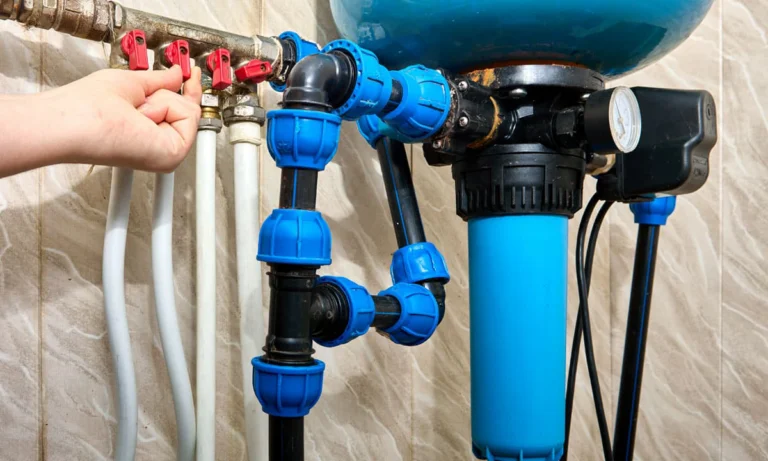
A reverse osmosis (RO) system works by forcing water under pressure through a semi-permeable membrane that blocks dissolved contaminants — including heavy metals, nitrates, chlorine byproducts, fluoride, and many other impurities — while allowing clean water molecules to pass through. The filtered water collects in a small storage tank under your sink and flows out through a dedicated faucet. The concentrated contaminants that couldn’t pass the membrane are flushed down the drain. The result is water that’s significantly purer than what comes straight from the tap.
The Filtration Stages Explained
A standard RO system uses multiple filtration stages, and each does a specific job. A sediment pre-filter goes first, removing sand, silt, and rust particles that could clog or damage the membrane. A carbon pre-filter comes next, reducing chlorine and chloramines — important in Denver, where municipal water is chlorinated. The RO membrane itself is the core stage: it removes the dissolved solids, heavy metals, and most bacteria. A post-carbon polishing filter improves taste before the water reaches your glass. Some systems add a final remineralization stage that adds back trace minerals for a better flavor profile.
Why Denver Homeowners Often Choose RO
Colorado Front Range water is considered moderately hard to hard, depending on which municipality you’re in and the season. It carries dissolved calcium, magnesium, and in some areas elevated nitrate levels from agricultural runoff. Reverse osmosis removes most of these dissolved solids — typically reducing total dissolved solids (TDS) by 90–99% depending on the membrane quality. For homeowners who notice a mineral taste in their tap water or see white scale deposits on fixtures and the kettle, RO is often the most effective solution short of distillation.
What RO Does Not Remove
It’s worth being clear about RO’s limitations. The membrane is highly effective against dissolved inorganic contaminants, but it’s not perfect against every threat. It removes most bacteria but is not reliably effective against viruses, which are small enough to pass through some membranes. It also does not remove dissolved gases like radon or some volatile organic compounds (VOCs) unless a dedicated carbon filter is included in the system. And because RO strips essentially all minerals, the water can be slightly acidic — some homeowners add a remineralization cartridge for taste and pH balance.
- RO systems produce some wastewater — for every gallon of purified water, 2–4 gallons may be sent to drain depending on the system efficiency
- The membrane typically needs replacement every 2–5 years; pre- and post-filters need replacement annually
- Tank-based systems store 2–4 gallons of filtered water; tankless systems deliver on demand but require adequate line pressure
- RO systems slow water flow slightly — running the dedicated faucet fills a glass in seconds, not instantaneously
Installation and Maintenance
Under-sink RO systems connect to your cold water supply line and drain line — a job most plumbers complete in an hour or two. The storage tank sits under the cabinet and a separate filtered-water faucet is installed at the sink. Whole-house RO systems also exist, though they’re far less common residentially due to cost and the volume of wastewater produced. For drinking water and cooking purposes, an under-sink point-of-use system is what most Denver homeowners install.
Is an RO System Right for Your Denver Home?
For most Front Range households, a point-of-use RO system under the kitchen sink is one of the most cost-effective investments in water quality available. The upfront cost is modest, operating costs are low (filter replacements once or twice a year), and the water quality improvement is dramatic — particularly for drinking and cooking. If your household uses a lot of bottled water because you don’t trust the tap, an RO system usually pays for itself quickly and eliminates the plastic waste.
Done’s plumbing team installs and maintains reverse osmosis systems as part of our broader water quality and treatment services. If you’re interested in cleaner drinking water, we can help you choose the right system for your household’s needs and water profile. Visit our plumbing services page to learn more or schedule a consultation.