Backflow preventers should be inspected and tested at least once a year. In Colorado, annual testing is required by most water utilities for any testable backflow prevention assembly — meaning the assemblies that protect the public water supply from contamination. Your local water provider sets the testing schedule and requires documentation from a certified backflow tester. Done!’s licensed plumbers are certified to test and service backflow prevention assemblies throughout the Denver metro.
Why Annual Testing Is Required
Backflow prevention assemblies are mechanical devices with internal check valves, relief valves, and seals that wear over time. An assembly that passed its test last year may have a fouled check valve seat, a weakened spring, or a seal damaged by the freeze-thaw cycles common along the Front Range. The only way to know the assembly is actually working is to test it under pressure — a visual inspection from the outside tells you very little about whether the internal check mechanisms are holding.
Backflow is a real contamination risk. When water pressure in the supply system drops — during a water main break, firefighting operations, or a pressure surge — water can flow backward from a property into the public supply. Without a functioning backflow preventer, irrigation water laced with fertilizer and pesticides, pool chemicals, or process water from a commercial facility can enter the municipal system. Annual testing ensures your assembly actually prevents that.
What Types of Assemblies Need Annual Testing
Not every backflow device requires certified annual testing. Here’s a quick breakdown:
- Pressure Vacuum Breakers (PVBs): The most common backflow prevention device on residential irrigation systems in Colorado. These are installed on the supply line feeding the sprinkler system, typically on an exterior wall or in a mechanical room. PVBs require annual testing and must be winterized before freezing temperatures arrive — a particularly important step along the Front Range where overnight temperatures can drop to single digits during winter cold snaps.
- Reduced Pressure Zone (RPZ) assemblies: Used in higher-hazard applications — commercial properties, irrigation systems with chemical injection, fire suppression connections. Required to be tested annually, and because they have a relief valve that can discharge water, they cannot be installed in a pit or enclosed space where drainage is limited.
- Double Check Valve Assemblies (DCVAs): Used for moderate-hazard connections. Required testing annually.
- Simple atmospheric vacuum breakers and hose bib vacuum breakers: These are non-testable and are not subject to annual certified testing requirements, though they should be inspected periodically for physical damage or deterioration.
What Happens During a Backflow Test
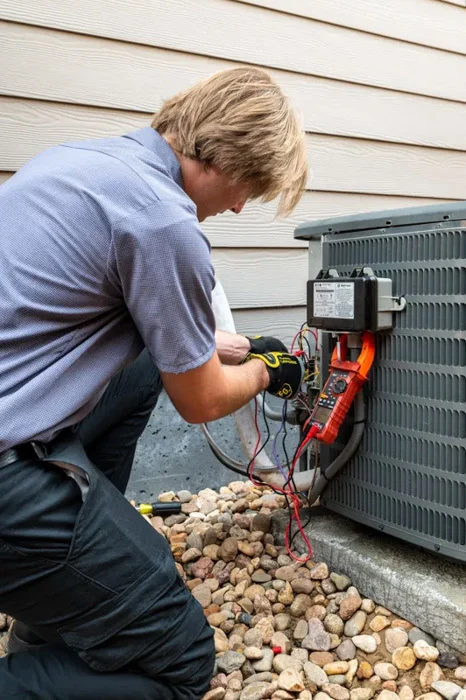
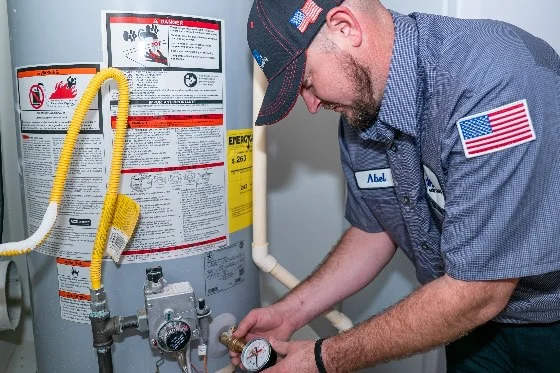
A certified backflow tester connects a differential pressure gauge to test cocks on the assembly and runs a series of checks — verifying that each check valve holds against backpressure, that the relief valve (on RPZ assemblies) opens at the correct differential pressure, and that all shutoff valves function correctly. The entire test typically takes 20 to 30 minutes for a residential PVB. If the assembly passes, the tester completes the required test report and submits it to your water provider. If it fails, the assembly needs repair or replacement before it can be returned to service.
Consequences of Skipping Testing in Colorado
Water utilities in the Denver area track testing compliance by address. Skipping your annual test can result in a notice of violation, fines, and ultimately a water service shutoff until the test is completed and documented. More importantly, an untested and potentially failed assembly provides no actual protection — you won’t know it’s not working until a contamination event occurs.
If you’ve received a test notice from Denver Water, Aurora Water, or another Front Range utility, or if you’re not sure when your assembly was last tested, Done! can schedule a certified test and handle the reporting. Learn more on our pressure and backflow prevention page, or contact our plumbing services team to get on the schedule before your compliance deadline.