Trenchless sewer repair works for the majority of residential sewer problems — root intrusion, cracks, corrosion, and minor joint offsets — but it is not a universal solution. Fully collapsed pipes, severe belly sections, and certain access situations require conventional excavation. A sewer camera inspection is the only reliable way to determine which approach fits your specific line.
What Trenchless Repair Handles Well
Cured-in-place pipe lining (CIPP) is the right tool for pipes that still have a passable channel but are cracked, corroded, or leaking at joints. The epoxy liner seals cracks, bridges minor separations at joints, and creates a smooth continuous interior surface that resists future root penetration. It works in clay tile, cast iron, concrete, and even some older orangeburg pipe, provided the wall isn’t so deteriorated that it can’t hold the liner in place during cure. CIPP is particularly effective for the aging clay tile lines common in Denver’s pre-1980 neighborhoods.
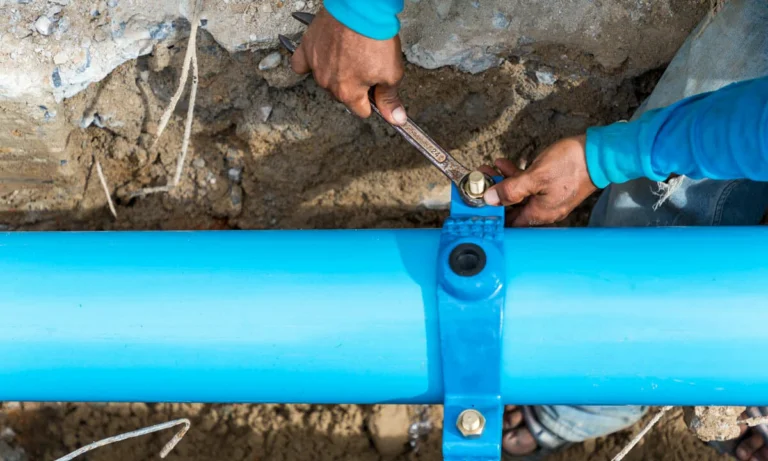
Pipe bursting handles the cases where lining is not viable — when the pipe is too deteriorated or the damage too extensive to use the existing pipe as a form. As long as a cable can be pulled through the pipe, bursting can replace the old line with new HDPE without a full trench. It works in clay, cast iron, PVC, and concrete pipe of most diameters common in residential sewer work.
When Trenchless Is Not the Right Answer
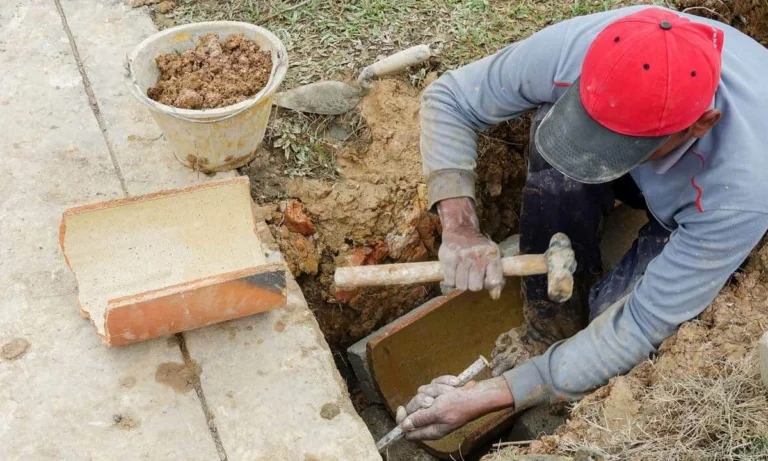
A fully collapsed section with no passable channel cannot be lined and cannot accommodate a pipe bursting cable without first clearing a path — which may require spot excavation at the collapse point. A severe belly — a low section where the pipe sags and holds standing water — cannot be corrected by lining or bursting, because both methods follow the existing pipe path. Fixing a belly requires excavating the sunken section and re-laying the pipe at the correct slope. Similarly, a pipe with significant root intrusion that has completely filled the line may need to be cleared by hydrojetting before a camera inspection can fully assess whether lining is viable.
Access and Geometry Limitations
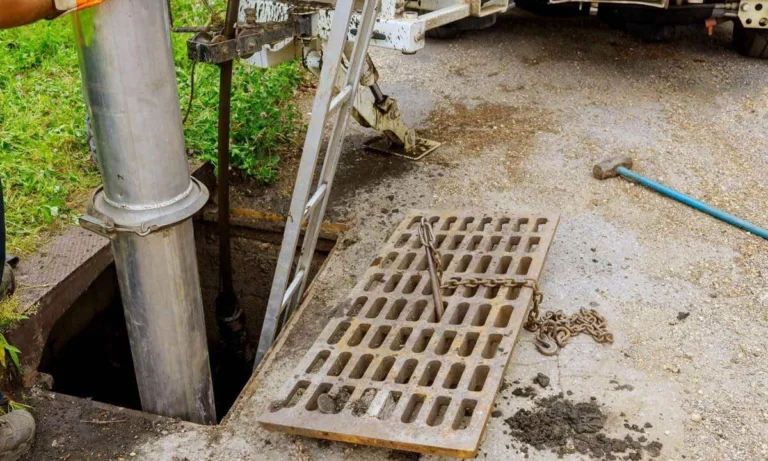
Trenchless methods require a straight or gently curved pipe run with accessible entry and exit points. Very short pipe runs or sections with multiple tight bends may not accommodate the liner or bursting equipment. If your sewer line connects to the city main at an unusual angle or depth, the junction work may require a small excavation even if the main run is trenchless. Done’s technicians identify these constraints during the camera inspection and explain exactly what portion of the repair can be done trenchlessly and what cannot.
How Denver’s Soil Conditions Affect the Decision
Front Range clay soils shift seasonally, which is one reason pipe lining is particularly valuable here — a continuous epoxy sleeve handles minor movement at old joints better than patching individual cracks. However, that same clay can complicate pipe bursting: expanding the pipe outward in dense, saturated clay requires more force and can occasionally affect adjacent lines or structures if they’re very close. Done evaluates soil conditions and proximity to other utilities before recommending bursting in unusual situations.
Getting the Right Answer for Your Line
The camera inspection is the decision point. Done runs the camera, documents what it finds, and gives you a clear recommendation — lining, bursting, spot excavation, full replacement, or some combination — with the reasoning behind it. If pipe lining is viable, you’ll know before any work starts. If the line needs excavation in addition to or instead of trenchless work, that scope is explained up front.
- CIPP lining: best for cracked, corroded, or leaking lines with intact walls
- Pipe bursting: best for severely deteriorated pipe that still has a passable channel
- Fully collapsed sections: require spot excavation before trenchless can proceed
- Belly (sagged pipe): requires excavation to correct grade — trenchless cannot fix slope
- Tight bends and short runs: may limit equipment access
- Camera inspection is always the first step — no responsible recommendation without it
To find out whether your sewer problem is a candidate for trenchless repair, schedule a sewer camera inspection with Done. We’ll show you exactly what the camera finds and recommend the most cost-effective solution for your situation.