A pressure reducing valve (PRV) is a small but critical device installed on your home’s main water supply line that reduces the high pressure from the city main to a safe level for your home’s plumbing system. Most residential plumbing is designed to operate between 40 and 80 PSI; city water mains often deliver 100 PSI or more. Without a functioning PRV, that excess pressure stresses your pipes, fixtures, water heater, washing machine hoses, and appliance supply lines — accelerating wear and increasing the likelihood of leaks and failures. PRVs don’t require intensive maintenance, but they do need periodic attention to function correctly over their lifespan.
Check the Outlet Pressure at Least Once a Year
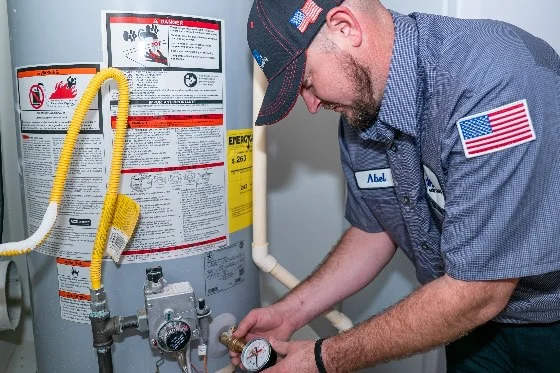
The most important maintenance task for a PRV is simply verifying that it’s still doing its job — keeping water pressure within the target range after the valve. This requires a water pressure gauge, which screws onto any hose bib (outdoor faucet connection) or washing machine supply connection. With the water running slightly, read the pressure. The target is typically 50–60 PSI for most residential applications, though anywhere in the 40–80 PSI range is acceptable per most plumbing codes.
If you read significantly above 80 PSI, the PRV may have failed in the open position or its adjustment may have drifted. If you read very low pressure (below 40 PSI), it may have failed closed or set too low. Either way, the valve needs attention. A pressure gauge is a worthwhile investment for any homeowner — they’re inexpensive, and a two-minute pressure check once a year can tell you a lot about your plumbing system’s health.
Watch for Signs of PRV Failure
Between annual checks, there are observable signs that your PRV may be failing:
- Unusually high pressure at fixtures — faucets that splash aggressively, toilets that refill with a loud rushing sound, showerheads that feel noticeably more forceful than before
- Water hammer — banging or thudding sounds in the walls when a faucet or valve is quickly closed, caused by high-velocity water slamming to a stop
- Leaks at appliance connections — washing machine hoses, dishwasher supply lines, and icemaker lines are vulnerable to high pressure; if these start leaking more frequently, elevated pressure is a possible cause
- T&P valve on water heater dripping — thermal expansion caused by high inlet pressure can trigger the water heater’s relief valve to release intermittently
- Dripping from the PRV itself — the valve may have a small port at the bottom; water discharging from this indicates a failed internal seal
PRV Lifespan and Replacement
A quality PRV typically lasts 7 to 12 years, though some last longer with favorable water quality. In Colorado’s hard-water environment, mineral deposits can accumulate on internal components — the diaphragm, seat, and spring — accelerating wear. If your PRV is approaching 10 years old, proactive replacement is often the smarter call compared to waiting for a pressure spike that damages fixtures or causes a leak.
PRV replacement is not a DIY project for most homeowners. It requires shutting off the main water supply, working with the main shutoff and any bypass configuration, cutting into the supply line, and soldering or fitting the new valve correctly and securely. An improperly installed PRV can leak at connections or fail to regulate pressure correctly. This is work for a licensed plumber.
The Thermal Expansion Tank Connection
If your home has a closed plumbing system — which is required by most modern codes and is common in homes with newer backflow prevention devices — you likely need a thermal expansion tank on your water heater. When a PRV is functioning correctly, it prevents pressure from backflowing into the city main. This means that when your water heater heats water and it expands, there’s nowhere for the pressure to go except into the home’s plumbing. An expansion tank absorbs this pressure safely. If your PRV is being replaced or installed for the first time, confirm that your expansion tank is present and in good condition — they’re often overlooked.
Done’s licensed plumbers serve the entire Denver metro area and handle PRV inspection, adjustment, and replacement as part of comprehensive plumbing service. Learn more on our pressure and backflow page. For broader plumbing system concerns, visit our plumbing services page or our pipes and lines page. If high water pressure has caused appliance or fixture damage, our kitchen and bath plumbing team can help with repairs. Contact Done to schedule a pressure check or PRV service.