A pressure-reducing valve (PRV) is a small but critical device on your home’s main water supply line that keeps your water pressure in a safe, comfortable range — typically between 40 and 80 PSI. If your PRV is failing, you’ll likely notice one of a few symptoms: water pressure that’s suddenly too high or too low, a pressure that fluctuates between uses, a PRV that’s visibly leaking, or a persistent high-pitched whine or hammering sound in your pipes. When these signs appear, the right move is to have a licensed plumber evaluate the PRV and replace it if necessary — this isn’t a DIY repair for most homeowners.
What a PRV Does and Why It Matters
Municipal water supply pressure can range widely — from under 60 PSI to over 150 PSI in some Denver-area neighborhoods, depending on elevation and proximity to a pump station or water tower. Without a PRV reducing that pressure to a safe level, your fixtures, supply lines, water heater, and appliances are under more stress than they’re designed for. High pressure is one of the leading causes of premature fixture failure, running toilets, leaking supply lines, and water heater pressure relief valve discharge. Most plumbing codes require a PRV when incoming pressure exceeds 80 PSI.
Signs Your PRV Is Failing
PRVs typically last 7 to 12 years, though hard water and cycling frequency affect that range. Watch for these symptoms:
- Unusually high pressure: Fixtures that used to feel normal now spray forcefully, or your toilet fills loudly and quickly
- Low or inconsistent pressure: A failing PRV can also stick in a partially closed position, reducing flow throughout the home
- Water hammer: Banging sounds in the pipes when you shut off a faucet — often caused by pressure that’s too high
- Visible leaking at the PRV body or at the threaded connections on either side
- Pressure relief valve discharge: If your water heater’s TPR valve is dripping or discharging, high pressure from a failed PRV is a common cause
What to Do Right Now
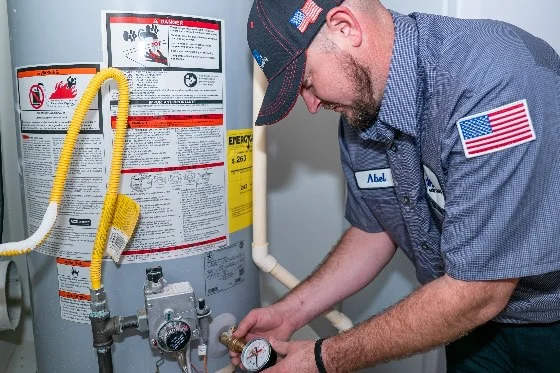
If you suspect PRV issues, you can check your water pressure with an inexpensive gauge that threads onto an outdoor hose bibb — these are available at any hardware store and give you an accurate reading in seconds. Anything above 80 PSI is out of the recommended range and should be addressed. If you’re seeing pressure that’s dramatically high (over 100 PSI) or dramatically low (under 40 PSI), call Done sooner rather than later. High pressure in particular accelerates damage across every water-using appliance and fixture in the home.
In the meantime, avoid adding stress to the system: don’t run the dishwasher and washing machine simultaneously, reduce water heater temperature slightly if the TPR valve has been dripping, and keep an eye on supply lines under sinks and behind toilets for signs of weeping or swelling — these fail first under excess pressure.
PRV Replacement: What’s Involved
A PRV replacement requires shutting off the main water supply to the home, cutting out the old valve, and installing and calibrating a new one. It’s a relatively straightforward job for a licensed plumber — typically completed in an hour or two — but it requires the right tools and knowledge of the correct pressure setpoint for your supply conditions. Done’s pressure and backflow team handles PRV replacements routinely. We also carry expansion tanks and can evaluate whether one is needed alongside a new PRV — in a closed system (common with backflow preventers), thermal expansion from the water heater can cause pressure spikes that a PRV alone won’t fully address.
Denver-Area PRV Considerations
Denver’s varied topography means supply pressure can differ significantly from one neighborhood to the next. Homes at lower elevations relative to the distribution system tend to see higher incoming pressure. Hard water also affects PRV longevity — mineral deposits build up inside the valve seat and diaphragm over time, which can cause the valve to stick or fail to regulate accurately. Done’s plumbers are familiar with pressure conditions across the metro and can set a new PRV to the right target for your specific address and supply conditions.
Don’t let a failing PRV silently damage your fixtures and appliances. Contact Done to schedule a pressure test and PRV evaluation, and see our full plumbing services for everything we handle in Denver-area homes.