In most cases, yes — a smart thermostat can be integrated with your existing HVAC system, and the upgrade is one of the highest-return improvements a homeowner can make. That said, compatibility depends on your specific equipment, wiring, and what features you want to use. Understanding a few basics before you buy will save you frustration and ensure you get the full benefit of the investment.
How Compatibility Works
Smart thermostats communicate with your HVAC equipment through low-voltage wires — typically labeled R, G, Y, W, and C on your existing thermostat’s terminal block. Most forced-air systems (furnace + central AC or heat pump) installed in the last few decades use this standard wiring and are compatible with popular smart thermostats from brands like Ecobee, Nest, or Honeywell Home. The critical variable is the C-wire (common wire), which provides continuous 24V power to keep the thermostat’s screen, Wi-Fi, and sensors running. Many older homes lack a C-wire at the thermostat location, which can require either an adapter kit (included with some models) or running a new wire — a straightforward job for a licensed technician.
Systems That May Require Extra Attention
While most standard systems integrate without issue, a few configurations need closer evaluation:
- Heat pumps with auxiliary heat — Heat pumps use additional wiring (O/B reversing valve wire) that not all smart thermostats support. Make sure the model you choose is explicitly rated for heat pump systems.
- Multi-stage systems — High-efficiency furnaces and two-stage compressors use separate staging wires (W2, Y2) that must be connected correctly for the thermostat to control them properly.
- Boiler / radiant heat systems — Compatibility varies by brand and boiler type; some smart thermostats work well with hydronic systems, others don’t.
- Ductless mini-split systems — Most mini-splits use proprietary controls rather than standard low-voltage wiring. Some brands offer smart thermostat integration through dedicated adapters or Wi-Fi controllers, but it’s rarely plug-and-play.
- Very old systems (pre-1990) — Wiring configurations on older equipment can be non-standard, and some systems simply aren’t compatible with modern smart thermostats.
What Smart Thermostats Actually Do for Your Home
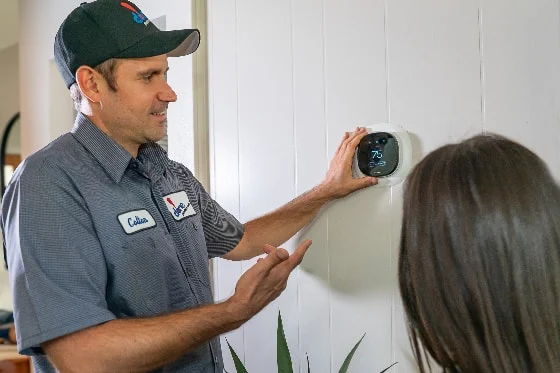
Beyond remote control from your phone, a quality smart thermostat learns your schedule and preferences over time, automatically adjusting to avoid heating or cooling an empty house. This matters especially in Denver and the Front Range, where day-night temperature swings of 30–40°F are common — a smart thermostat can pre-condition your home before you wake up or arrive home without running the system unnecessarily. Most models also provide energy reports showing exactly how much your system is running and what’s driving your utility bill.
Some advanced models include occupancy sensors, humidity monitoring, and integration with smart home platforms like Amazon Alexa, Google Home, or Apple HomeKit. At Denver’s altitude, where heating seasons are long and AC demand peaks hard in late summer, the efficiency gains from smart scheduling can meaningfully reduce annual energy costs.
Professional Installation vs. DIY
Many homeowners successfully install smart thermostats themselves when their wiring is straightforward. However, professional installation makes sense if you’re unsure about your wiring configuration, need a C-wire added, have a heat pump or multi-stage system, or simply want to confirm the thermostat is configured correctly for your specific equipment. An incorrectly wired smart thermostat can damage the control board of your HVAC system — a repair that costs far more than the thermostat itself.
Pairing a Smart Thermostat With a System Upgrade
If your HVAC equipment is aging, a smart thermostat is a reasonable short-term efficiency measure, but pairing it with a newer high-efficiency system unlocks its full potential. Modern variable-speed systems and smart thermostats are designed to work together, communicating in ways that optimize comfort and efficiency simultaneously. Done’s team can help you evaluate whether your current equipment is worth upgrading alongside the thermostat or whether the thermostat alone delivers adequate returns.
If you’re ready to upgrade or want a professional to handle the installation and configuration, Done’s technicians are familiar with all major smart thermostat brands and HVAC configurations across the Front Range. Learn more about our AC maintenance and furnace maintenance services, or contact us to schedule your installation.