Heat pumps should be maintained twice a year — once in spring before cooling season and once in fall before heating season. Unlike a traditional AC that only runs in summer, a heat pump works year-round in both heating and cooling modes, so it accumulates wear and tear on both the indoor and outdoor components twice as fast as a single-purpose system. Skipping annual service doubles the risk of a breakdown during the stretches of weather when you need the system most.
Why Twice-a-Year Matters for Heat Pumps
A central air conditioner sits idle all winter. A heat pump does not. It runs in heating mode through Denver’s cold months — often switching between heating and defrost cycles during subfreezing temperatures — and then transitions to cooling mode as temperatures climb into the 80s and 90s. That continuous operation means the compressor, refrigerant circuit, reversing valve, blower motor, and electrical components all work twice as many hours annually as they would in a standard AC. Twice-yearly maintenance keeps each of those components in check before small issues become mid-season failures.
What a Heat Pump Tune-Up Includes
A thorough heat pump maintenance visit from Done covers both the outdoor unit and the indoor air handler. Here’s what our technicians check:
- Refrigerant pressure check in both heating and cooling modes — low refrigerant degrades performance in both directions
- Inspection and cleaning of the outdoor coil, which collects dust, cottonwood, and debris year-round on the Front Range
- Reversing valve operation check — this valve switches the refrigerant flow direction between heating and cooling and is unique to heat pumps
- Defrost board and defrost cycle testing — critical for winter performance in Denver’s freezing temperatures
- Electrical connection inspection and tightening — loose terminals cause heat and arcing over time
- Capacitor and contactor testing — these components wear with every start cycle
- Blower motor and indoor coil inspection, including evaporator coil cleaning if needed
- Filter check and replacement (or reminder to replace)
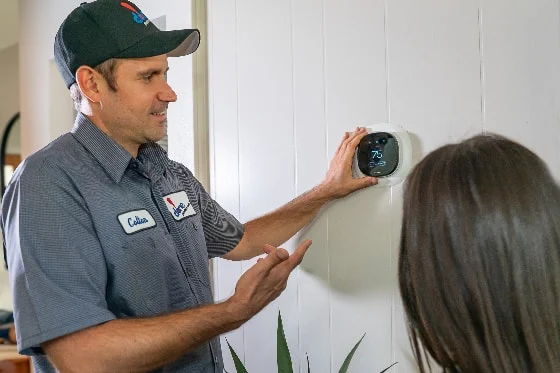
- Thermostat calibration and control verification
Colorado-Specific Maintenance Considerations
Denver’s climate creates a few maintenance challenges that are worth calling out specifically. The Front Range is famously dry, and fine particulate dust — especially during windstorms and the dry spring season — settles on outdoor coil surfaces and restricts airflow. Cottonwood season in late spring sends masses of fibrous material into outdoor units. A technician who knows the local climate will check these things carefully rather than just running through a generic checklist.
Denver’s hard water is another factor for homes with humidifiers tied to the air handler — mineral scale builds on humidifier components and can affect airflow and indoor air quality if not addressed during annual maintenance.
The Cost of Skipping Maintenance
A heat pump that hasn’t been serviced runs less efficiently, costs more to operate, and is statistically more likely to fail. Compressor failures — the single most expensive heat pump repair — are often the downstream result of running a system with low refrigerant, dirty coils, or electrical issues that go undetected for one or more seasons. The cost of two maintenance visits per year is a fraction of a compressor replacement, and most compressor failures are preventable with consistent service.
Care Club Makes It Easy
Done’s Care Club membership is built for heat pump owners who want consistent, properly timed maintenance without having to remember to schedule it. Members receive both seasonal visits, priority scheduling, and member discounts on repairs. It’s the simplest way to protect a heat pump investment over its full service life. Learn more about heat pump services from Done or explore our full maintenance offerings — then contact us to get your system on the schedule.