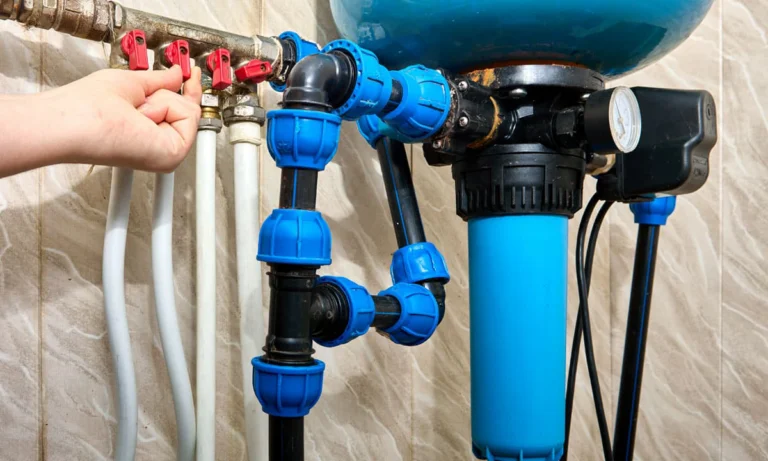
A whole-house water filter treats every gallon of water entering your home — drinking water, shower water, appliance water, all of it — from a single point of entry. The benefits go beyond just better-tasting water at the kitchen sink. Filtered water throughout the home protects appliances and plumbing, reduces exposure to chlorine and other treatment chemicals at the tap and in the shower, and can extend the life of water-using equipment. For Denver-area homeowners dealing with hard water and chloramine-treated municipal supply, a whole-house system addresses real, measurable concerns.
Better Water Quality at Every Tap and Fixture
Unlike a pitcher filter or under-sink unit, a whole-house filter treats water before it reaches any fixture — including showers and baths, where you absorb chlorine and chloramines through your skin and inhale them as steam. Denver Water uses chloramine (a combination of chlorine and ammonia) as a disinfectant, which is effective for water safety but can be a skin and respiratory irritant for sensitive individuals. A whole-house carbon filter rated for chloramine removal eliminates it from your entire water supply. You’ll notice the difference in shower water immediately if you’ve never experienced dechlorinated water before.
Protection for Appliances and Plumbing
Sediment and particulates in water — rust flakes from aging municipal pipes, fine sand, silt — cause abrasive wear on appliance valves, washing machine inlet screens, dishwasher components, and faucet aerators. A sediment pre-filter upstream of all these fixtures protects them from that wear. Over time, this translates to fewer appliance repairs and longer fixture life. It’s the same reason commercial operations invest in point-of-entry filtration — equipment that runs on filtered water simply lasts longer.
Specific Benefits for Colorado’s Water Profile
Front Range water has specific characteristics that make filtration particularly relevant:
- Chloramine content: Denver Water’s chloramine treatment is effective for safety but requires catalytic carbon (not standard activated carbon) for removal. A properly specified whole-house system handles this.
- Seasonal turbidity: Spring snowmelt can temporarily increase sediment and particulate levels in municipal supply. A sediment pre-filter manages this without the homeowner noticing any change.
- Taste and odor: Carbon filtration significantly improves the taste and odor of tap water, which for many families means less reliance on bottled water — a cost and waste reduction.
What a Whole-House Filter Does Not Do
Being clear about limitations helps homeowners make the right investment. A standard whole-house carbon filter does not remove dissolved minerals (hardness — calcium and magnesium), nitrates, fluoride, or heavy metals like lead. It also doesn’t address biological contamination or radon dissolved in water. For hardness — a significant concern throughout the Denver metro, where hard water causes scale buildup in water heaters and pipes — a separate water softener or salt-free conditioner is needed. Many homeowners combine a whole-house filter with a softener for comprehensive treatment.
Long-Term Cost Perspective
The upfront cost of a whole-house filter system is offset over time by reduced bottled water spending, fewer appliance service calls related to sediment and scale, and longer fixture life. There are also ongoing cartridge replacement costs to factor in — a professional installer can give you an accurate picture of what maintenance will cost annually based on your household water usage and local water quality. For most families, the math is favorable over a 5–10 year horizon, especially when combined with a water softener that extends water heater and appliance life significantly.
Done can test your water, recommend the right filtration approach, and install it correctly on your main supply line. See water quality treatment for more, and explore water heater services if hard water scale has affected your water heater’s performance.