Installing a new air conditioner is one of the larger investments you’ll make in your home’s comfort and efficiency, so it’s worth thinking through before you commit to a specific system. The right AC for your home depends on your square footage and layout, your existing ductwork, your efficiency goals, and how Denver’s climate and altitude interact with different equipment types. Getting the sizing and equipment selection right from the start prevents years of comfort complaints and higher-than-necessary energy bills.
Proper System Sizing — Bigger Isn’t Better
An oversized air conditioner is one of the most common installation mistakes, and it creates real problems. An oversized unit cools the space quickly but shuts off before completing a full dehumidification cycle — leaving the air cold but clammy. It also short-cycles, which causes more mechanical wear and reduces the system’s lifespan. An undersized unit runs constantly and never quite catches up on the hottest days. Proper sizing requires a Manual J load calculation that accounts for your home’s square footage, insulation levels, window area and orientation, ceiling height, and local climate data. Don’t accept a contractor who sizes a system based on rules of thumb alone.
Altitude and Denver’s Specific Climate
Denver’s elevation — 5,280 feet above sea level — affects air conditioning in ways that don’t come up in lower-elevation markets. The air is less dense at altitude, which affects refrigerant pressure and the heat transfer dynamics of the refrigerant cycle. Equipment that’s rated at sea level performs somewhat differently here. Experienced Front Range HVAC contractors account for altitude in their load calculations and equipment selection, and they ensure refrigerant charge is set correctly for local conditions. This is one reason local expertise matters in an AC installation — a contractor who primarily works at lower elevations may not calibrate correctly.
Denver also has very low humidity compared to much of the country. While that reduces the latent (moisture-removal) load on your system, it also means the “dry bulb” temperature can feel more extreme than the same temperature in a humid climate. Wide day-to-night temperature swings are common on the Front Range, which is one reason heat pumps have become increasingly popular here — they handle both cooling and heating efficiently, and Colorado’s moderate humidity makes them a strong fit.
Efficiency Ratings: SEER2 and What They Mean
Air conditioners are rated by their Seasonal Energy Efficiency Ratio (SEER2 under the current federal standard). A higher SEER2 rating means more cooling output per unit of electricity consumed. Colorado’s moderate humidity means your system’s performance is primarily driven by sensible (temperature) cooling rather than dehumidification, which is actually favorable for efficiency. Higher-efficiency systems cost more upfront but reduce monthly operating costs — and with electricity prices, the payback calculation is worth running. Done can help you compare options and use our financing options to make a higher-efficiency system more accessible.
Your Existing Ductwork
A new air conditioner is only as effective as the duct system distributing its output. Leaky, undersized, or poorly designed ductwork can waste 20–30% of your system’s cooling capacity before it reaches the living space. Before installing a new unit, have the ductwork evaluated. Done’s team can assess duct condition and, if needed, perform duct repair or replacement as part of the installation project. If your home doesn’t have existing ductwork, or if adding ducts isn’t practical, a ductless mini-split system is worth serious consideration.
Equipment Type: Central AC vs. Heat Pump vs. Mini-Split
The three main options for residential cooling in Denver:
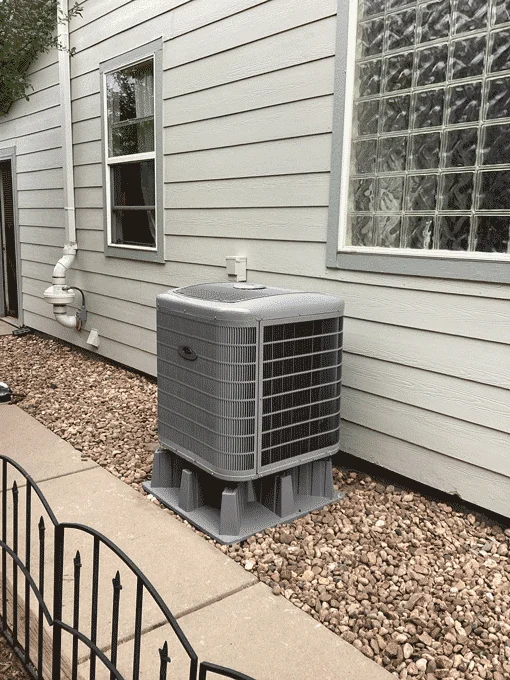
- Central split-system AC: The traditional choice — an outdoor condenser, an indoor air handler or coil, and a duct system. Effective and widely supported, though efficiency depends heavily on duct quality.
- Heat pump: Provides both heating and cooling from a single system. Highly efficient in Denver’s climate and increasingly the preferred choice for homeowners replacing aging separate heating and cooling systems.
- Ductless mini-split: Ideal for additions, finished basements, or homes without duct infrastructure. Individual air handlers in each zone deliver precise temperature control and excellent efficiency.
Ready to explore your options? Visit our AC replacement page or contact Done for a no-pressure assessment and estimate from a licensed technician who knows Front Range conditions.