While waiting for emergency HVAC service, your priorities are keeping everyone safe, minimizing further damage to your home, and stabilizing the indoor temperature as much as possible until the technician arrives. The right steps depend on whether you’re dealing with a heating failure, a cooling failure, or something that involves a potential safety hazard like a gas smell or carbon monoxide alarm.
If You Have No Heat in Winter
Colorado winters move fast — a cold snap can drop outdoor temperatures to single digits overnight, and an unheated home can reach dangerous indoor temperatures in a matter of hours. Here’s what to do while you wait:
- Close off unused rooms to concentrate whatever warmth remains in a smaller space
- Use safe supplemental heat sources — electric space heaters with auto shut-off are the safest option; never use gas stoves, ovens, or propane heaters indoors
- Let faucets drip slightly if indoor temperatures are approaching 40°F — this prevents pipes from freezing, especially in exterior walls and under-sink cabinets
- Open cabinet doors under sinks on exterior walls to let warmth reach the pipes
- Layer up and have blankets accessible, especially for children, elderly family members, and pets
- Know the location of your main water shut-off in case a pipe does freeze and burst
If Your AC Is Down During a Heat Event
Denver summers can be brutal, and afternoon temperatures above 95°F are not unusual. A home without AC in that heat can become dangerous, particularly for infants, elderly residents, and people with heart conditions or respiratory issues. While you wait for the technician, try to keep indoor temps as low as possible.
Open windows during the cooler overnight and early morning hours, then close them and draw the blinds before 9 a.m. to trap cooler air inside. Box fans in windows — one blowing air in on the shaded side of the house, one exhausting hot air on the sunny side — can help circulate air. Avoid running appliances like ovens, dishwashers, and dryers during the hottest part of the day as they add significant heat. If indoor temperatures are reaching unsafe levels (above 90°F) and you have vulnerable people in the home, consider going to a friend’s house, a library, or a public cooling center until the repair is complete.
If You Smell Gas or Your CO Detector Is Going Off
These are not wait-at-home situations. If you smell natural gas or your carbon monoxide detector is alarming, leave the home immediately — do not stop to gather belongings, do not turn lights on or off (electrical sparks can ignite gas), and do not use your phone until you are outside. Once you are safely away from the building, call 911 or your gas utility’s emergency line. Your local utility can dispatch immediately to shut off the gas at the meter. Only after emergency responders have cleared the scene should you call Done for HVAC follow-up service.
General Tips While You Wait
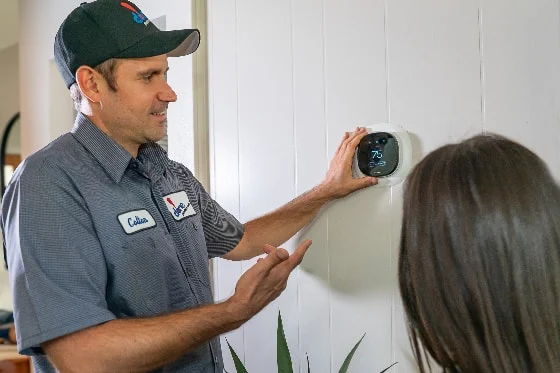
Check your thermostat batteries — a surprisingly common cause of apparent system failures is dead thermostat batteries. Check your circuit breaker panel for tripped breakers, and check that the disconnect switch near your outdoor unit hasn’t been accidentally switched off. Check your air filter — a severely clogged filter can trigger safety shut-offs on both furnaces and air conditioners. These quick checks sometimes resolve the issue before the technician arrives, and if they don’t, they give the technician useful information when they show up.
If the system is making unusual noises or producing a burning smell, turn it off at the thermostat and the circuit breaker. Running a failing system can cause additional damage that increases the repair cost. Our emergency AC repair and emergency heating repair teams will diagnose and repair the problem when they arrive — and if a system is beyond repair, we can walk you through replacement options on the spot so you’re not left without a plan.