Updated: February 4, 2026
Toilets are designed to need a certain amount of water in the bowl to flush correctly. This amount is different depending on the shape of the toilet and the size of the tank, but there are some telltale signs if your bowl needs to be adjusted. If the toilet bowl doesn’t clear when you flush, you may not have enough water in the bowl. If the water level in the bowl seems to be drastically too high or too low, then you might have a clog or another problem. Luckily for you, the plumbing professionals of Done Plumbing, Heating, Cooling & Electric are here to help you find that perfect fill.
Tips for the Toilet Water Level
A normal toilet water level should sit high enough in the bowl to fully cover the drain opening and create a proper seal, while the tank water level should stop about one inch below the top of the overflow tube.
Check the Water Level in the Tank
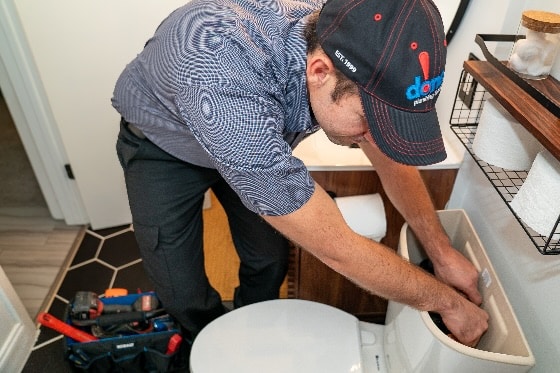
The first thing I recommend is to check the water level in the toilet’s tank. If the bowl water level is too low after flushing, it often means the tank isn’t releasing enough water to refill the bowl properly. Simply lift the cover and check to see where the water falls in relationship to the fill tube. The water level should be about a half inch below the top of the fill tube. To adjust the tank’s water level, first adjust the fill valve. This is done by moving the float that’s attached to the valve in the direction you want the water level to go, so raising it raises water levels and vice versa. Move the valve to the right level with the attached screw or clip device or by simply sliding it, depending on the type you’ve got. Moving the float changes the amount of pressure needed to close the fill valve and therefore how much water is added. Once you’ve adjusted the float, do a few test flushes and see if this has solved your problem. This process allows you to adjust the water level in the toilet bowl by controlling how much water enters the tank during each flush. Keep adjusting until the bowl level is where it needs to be.
Check the Internal Hardware
When you check the tank, you may find that the parts inside are broken or simply worn out. If your float doesn’t actually float anymore, it needs to be replaced. The valve arm might also be broken or bent incorrectly. If it looks bent, try reshaping it. A cracked fill tube might make your toilet run or overfill. All of these pieces are easy to replace without having to change everything inside of the toilet tank, and they can be purchased at your local hardware store. Another possibility is that the flapper isn’t correctly adjusted. The flapper releases water into the tank to start the flushing process, and if the hardware or chain used to control it is out of alignment, it can put the wrong amount of water into the bowl. Adjusting the chain is an easy matter of changing which link is attached to the flapper.
Check for Toilet Bowl Clogs
If the water level in your toilet changes suddenly and is either unusually low or high, this can indicate a clog. Try using a plunger to dislodge anything caught in the drain. Partial blockage will cause bowl water levels to drop, while complete blockage will make water levels rise. If the plunger doesn’t resolve the clog, you may have to clear the line another way. Using an auger is one option, and you can try this by inserting it into the drain until it gets to the clog, then cranking it until the auger clears the blockage.
Sudden changes in toilet bowl water level are not normal and often point to a clog or venting issue. Another possibility is that the vent opening on the roof is blocked or has debris in it. Use a garden hose to clear the vent and remove any debris like sticks and leaves. If none of this solves the problem, you may have to clear the line manually. Turn off the water and hold down the flapper to force it to flush without refilling. Then, wearing a glove, reach into the toilet to remove whatever is causing the clog.
If you’ve tried all of these steps and still can’t resolve the issue, it’s time to call a trusted plumber for Denver homeowners. Contact Done plumbing 24/7 to schedule service and have the problem fixed safely and correctly.