Your water heater is one of the hardest-working appliances in your home — it heats water dozens of times a day, every day, for a decade or more. Like any appliance under that kind of continuous load, it accumulates problems quietly: sediment builds up, the anode rod corrodes away, pressure relief valves stiffen, connections loosen. Professional maintenance catches these issues before they become failures — and in many cases, it extends the useful life of the unit by several years, which means you get more value from an appliance you've already paid for.
Sediment Flushing Is Essential in Colorado's Hard Water
Denver and the Front Range have notably hard water — high concentrations of dissolved calcium and magnesium that leave mineral deposits wherever water sits or heats. In a tank water heater, those minerals settle to the bottom as sediment over time, forming an insulating layer between the burner (or heating element) and the water above it. The heater has to work harder and longer to heat through that crust, driving up energy consumption and putting thermal stress on the tank liner. Left unaddressed for years, sediment buildup can crack a tank's glass lining, accelerate corrosion, and shorten the unit's life dramatically. An annual flush removes accumulated sediment before it reaches that stage.
The Anode Rod: Your Heater's Sacrificial Shield
Most homeowners have never heard of their water heater's anode rod, but it's the single component most responsible for how long the tank lasts. The anode rod — typically magnesium or aluminum — hangs inside the tank and corrodes preferentially, attracting the electrochemical attack that would otherwise eat the steel tank walls. When the rod is fully consumed, the tank itself becomes the target. Depending on your water chemistry and usage, anode rods need inspection every two to four years and replacement when substantially depleted. In Colorado's hard water, rods can deplete faster than average. A professional maintenance visit includes checking the rod's condition and replacing it when needed — something most homeowners would never do on their own simply because they don't know it exists.
Pressure Relief Valve Testing
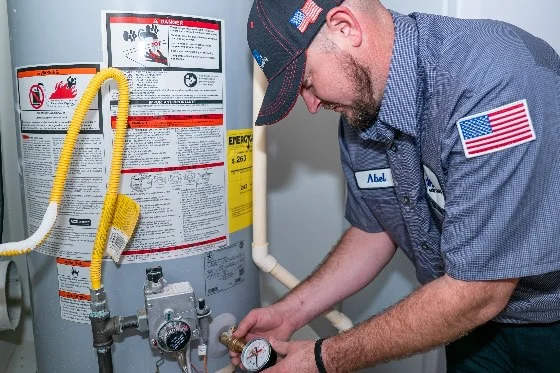
The temperature and pressure (T&P) relief valve is a safety device — its entire job is to open and release pressure if the tank overheats or over-pressurizes, preventing a potentially dangerous failure. T&P valves can become stuck in the closed position from mineral scale or corrosion, which means they won't open when they actually need to. A professional maintenance visit includes testing the valve to confirm it opens and reseats properly. This is a short check that most homeowners skip, and it's one of the most important safety verifications on the unit.
Efficiency Checks and Early Problem Detection
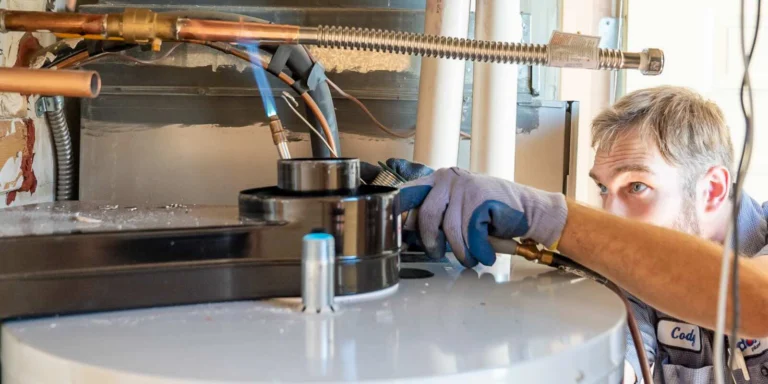
A professional water heater maintenance visit also gives a licensed plumber eyes on the full unit: the condition of supply and discharge connections, signs of early corrosion around fittings, the state of the expansion tank (required in closed plumbing systems, which most Colorado homes now have due to backflow prevention requirements), and whether the thermostat is set appropriately. The standard 120°F setting balances comfort, energy efficiency, and the prevention of scalding — some units drift from that setting over time. Catching a loose connection or a weeping fitting during maintenance costs a fraction of what addressing water damage costs later.
- Annual sediment flush — critical in Colorado's hard-water conditions
- Anode rod inspection and replacement when depleted
- T&P relief valve test — confirms the safety device will actually work
- Connection and fitting inspection — catches early leaks before they worsen
- Thermostat verification and efficiency check
- Expansion tank inspection where applicable
Maintenance Pays for Itself
A water heater that is properly maintained routinely reaches or exceeds its rated service life. One that is never serviced often fails before it should — sometimes catastrophically, with a leaking or burst tank that damages flooring, walls, and anything stored in the utility room. The cost of an annual maintenance visit is a fraction of the cost of an emergency replacement, and a small fraction of the cost of water damage remediation. Done's Care Club membership makes scheduling water heater maintenance straightforward and ensures it stays on your calendar each year without having to remember to book it.
Schedule your water heater maintenance today through Done's water heater maintenance page, or learn about our Care Club membership for ongoing maintenance coverage across your home's systems. For full water heater service details, visit our water heater services hub.