Same-Day Service
Most service calls handled same-day across the Denver metro — and we answer the phone 24/7.


Denver Hard Water Demands Regular Maintenance
Denver’s tap water is among the harder in the Front Range — high in dissolved calcium and magnesium that settles as scale inside your water heater tank and on heating elements. Left unchecked, that sediment layer forces the unit to burn more energy to heat the same amount of water, shortens the life of heating elements, and eventually cracks tank liners from excess heat. Annual maintenance is the simplest, least expensive way to prevent all of that.
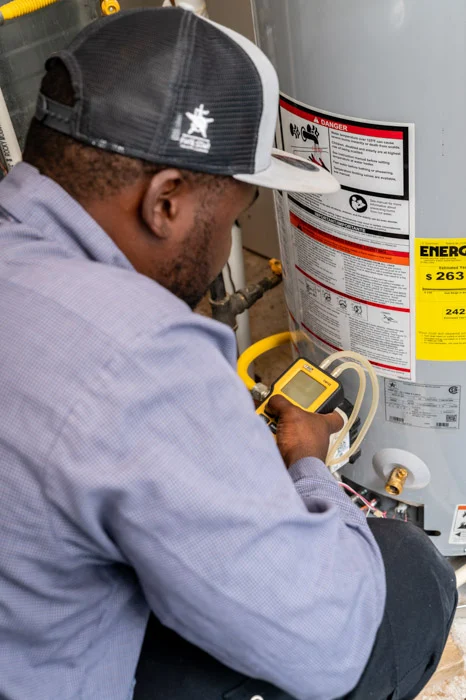
Done’s water heater maintenance visit covers a full flush to remove sediment, an anode rod inspection (the sacrificial component that prevents tank corrosion), thermostat calibration, and a T&P valve test. It’s also a good opportunity to catch small issues before they turn into an emergency call. Learn more about the full range of water heater services we offer, or call 833-539-9153 to get on the schedule today.
Overdue for Maintenance?
Most water heaters in Denver should be serviced once a year. These are signs yours may be overdue.
That knocking sound when the burner fires? That's hardened scale being heated and cracking. It means sediment has built up to the point where it's audible — and it's working your unit harder than it should.
If your tank takes noticeably longer to reheat after a shower or load of laundry, sediment insulating the heating elements is the likely culprit. A flush often restores recovery speed.
In Denver, annual maintenance isn't optional — it's how you protect your investment. If you can't remember the last time your water heater was serviced, it's time.
Faint rust or murky color in hot water can mean the anode rod is depleted and the tank interior is beginning to corrode. Catching this early is the difference between a rod replacement and a full tank replacement.
What's Included
Our maintenance visit is a thorough inspection and service — not a quick once-over.
Scheduling Is Easy
Annual maintenance takes about an hour and can be scheduled at your convenience — no emergency required.
Call 833-539-9153 or book online. We offer flexible scheduling including evenings and weekends — pick a time that works for you, not just us.
Your Done technician shows up on schedule, reviews your unit's age and history, and gets to work. No hard selling, no unnecessary add-ons.
We flush the tank, inspect the anode rod, test safety components, check connections and venting, and calibrate the thermostat. You'll know exactly what was done and why.
We'll tell you the condition of your unit and flag anything that warrants attention in the near future — so you can plan ahead rather than react to an emergency.
Save on the work your home needs most.
Clear any clogged drain
Tank or tankless water heater replacement
Flush, inspect, and extend your water heater's life
Any plumbing, sewer or drain service
Most service calls handled same-day across the Denver metro — and we answer the phone 24/7.
Flat-rate pricing approved before work begins — no surprises on the invoice.
Fully licensed, bonded, and insured — plumbing, HVAC, and electrical under one roof.
If it isn't right, we make it right — backed by our workmanship guarantee.
Denver's hard water is hard on water heaters. One maintenance visit a year makes a real difference — call 833-539-9153.
Don't just take our word for it — hear from our satisfied customers
Maintenance Membership
Total home service care, on a schedule.
Members get priority scheduling, seasonal tune-ups, an annual whole-home safety inspection, and exclusive discounts — for less than the cost of a single emergency call.
Once a year is the standard recommendation, but Denver’s hard water — which is high in calcium and magnesium — makes annual flushing especially important here. If your unit has never been flushed and is several years old, we may flush it twice in the first year to clear heavy buildup before moving to an annual schedule.
The anode rod is a metal rod (usually magnesium or aluminum) suspended inside your tank. It attracts corrosive minerals in the water and corrodes itself so the tank walls don’t. Once the rod is depleted — typically every 3–5 years, sometimes sooner in hard water — the tank itself starts to rust from the inside. Replacing the rod is far less expensive than replacing the tank.
You can, but there are a few things to be careful about: sediment-clogged drain valves that fail when opened, hot water burn risks, and T&P valve testing that requires knowing what to look for. Many homeowners prefer to have a licensed plumber handle it — it’s affordable and you get a full safety inspection included. Schedule with Done and we take care of the whole thing.
Yes — especially in Denver. Sediment buildup is a leading cause of premature water heater failure, and hard-water scale accelerates element burnout. Annual flushing removes that sediment before it causes damage. Homeowners who maintain their units regularly typically get several additional years of service compared to those who don’t.


