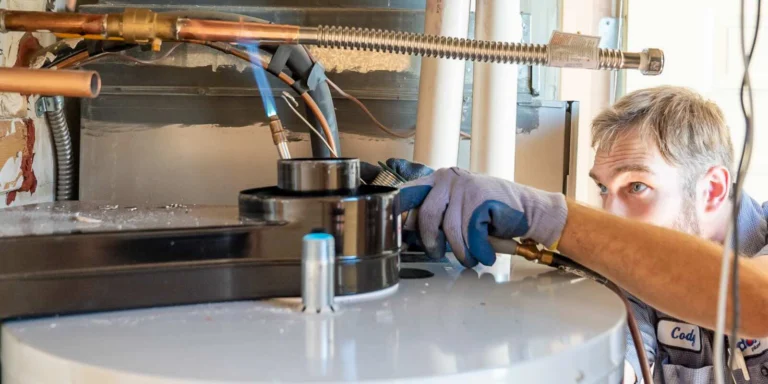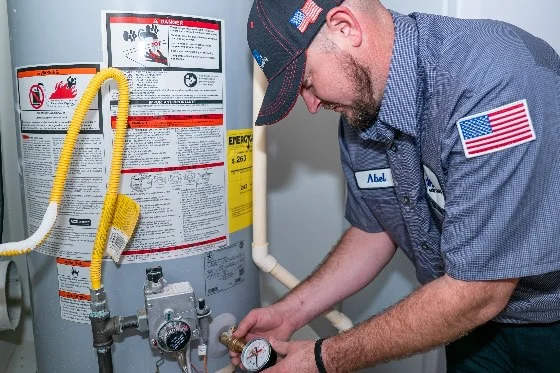
Installing a tankless water heater is a fundamentally different project than swapping in a new tank-style unit — and in most cases, it’s more involved. A traditional water heater replacement is relatively straightforward: disconnect the old unit, position the new one in the same spot, reconnect the same water lines and venting, and you’re done. A tankless installation often requires upgrading the gas line or electrical panel, rerouting venting, and potentially adding a dedicated circuit or larger gas supply. Done correctly, it’s absolutely worth the investment — but homeowners should go in with realistic expectations about scope and cost.
Gas Supply: Tankless Units Demand More Capacity
A traditional 40- or 50-gallon gas water heater typically draws around 30,000–40,000 BTUs. A whole-house tankless unit draws anywhere from 150,000 to 200,000 BTUs at peak demand — because it heats water on the fly rather than maintaining a stored supply. That means the existing gas line feeding your old tank heater is very often undersized for a tankless unit. A plumber or gas fitter will need to assess the line diameter and run from the meter to determine whether it can handle the load. Upsizing the gas line is common and adds to the project cost, but it’s non-negotiable for safe, proper operation.
Venting: Different Design, Different Rules
Traditional tank heaters use a single-pipe atmospheric vent that exhausts combustion gases upward through the roof. Most tankless units use direct-vent or power-vent configurations — typically a two-pipe concentric system that draws combustion air from outside and exhausts separately. This means the existing B-vent flue from the old tank heater likely can’t be reused. New stainless steel or PVC vent runs (depending on the unit type) need to be installed, which may require penetrating a wall or extending to a new termination point on the exterior. At Denver’s altitude, combustion air and proper venting are especially important for efficient and safe operation.
For Electric Tankless: Panel and Circuit Requirements
Electric tankless heaters — which are more commonly used as point-of-use units than whole-house heaters — require a dedicated circuit, and a whole-house electric tankless unit can draw 150+ amps. Most homes simply don’t have that capacity to spare. An electric tankless installation almost always requires an electrician to evaluate the panel, and panel upgrades or dedicated sub-panels are common. If you’re considering electric tankless as a whole-house solution, factor in both the electrical upgrade cost and the impact on your electric bill.
- Tankless units are wall-mounted and free up the floor space your old tank occupied — often a major benefit in smaller utility rooms
- A condensate drain line is required for condensing tankless models (the most efficient type)
- Cold-climate installations on the Front Range may benefit from recirculation pump installation to reduce wait time for hot water at distant fixtures
- Colorado’s hard water can damage tankless heat exchangers — a pre-filter and annual descaling are strongly recommended
- A permit and inspection is required for tankless installation in most Colorado jurisdictions, just as with tank heaters
Timeline Comparison
A straightforward tank-to-same-tank replacement typically takes 2–3 hours for an experienced plumber. A tank-to-tankless conversion usually takes a full day or more, sometimes spread over two visits if gas line work or electrical upgrades require coordination with other trades. If your home needs a gas line upgrade and new venting runs, expect the project timeline to expand accordingly. It’s not a same-day swap — plan accordingly and don’t wait until you have no hot water to start the conversation.
Done’s plumbing team handles full tankless water heater conversions in the Denver metro, including gas line assessment, venting, and coordinating any electrical needs. Visit our tankless water heater page to learn more about the benefits and what installation involves, or check out our water heater replacement page for the full picture.