Done! Plumbing ensures proper faucet and fixture installation through licensed plumbers who verify water pressure, check supply line compatibility, and test for leaks before leaving your home. Every installation follows manufacturer specifications and local Denver plumbing codes. The result is a fixture that functions correctly from day one — no drips, no loose connections, and no callbacks.
What Proper Installation Actually Involves
Installing a faucet or fixture sounds simple, but there are several steps where shortcuts lead to problems. A professional installation starts with shutting off the water supply and relieving pressure from the lines. The plumber inspects the shutoff valves themselves — in older Denver-area homes, original shutoff valves can be corroded or partially seized, and replacing a failing valve during a faucet swap saves you from a future emergency.
Supply lines are checked for condition and proper sizing. Braided stainless lines are far more reliable than the old plastic or chrome-slip varieties and are standard practice for any lasting installation. Thread sealant or plumber’s tape is applied correctly to all threaded connections — over-tightening or under-sealing are the two most common causes of slow drip leaks that go unnoticed until they damage a cabinet.
Colorado’s Hard Water and Why It Matters at Installation
Denver and the surrounding Front Range have notably hard water — high in calcium and magnesium from the Rocky Mountain snowmelt that passes through limestone and mineral-rich soil before it reaches your tap. Over time, mineral scale builds up inside faucet aerators, valve seats, and cartridges. A Done! plumber accounts for this at installation by confirming the fixture’s internal components are appropriate for hard-water environments and by noting where a water softener or filtration system might extend the life of your new fixture significantly.
If your home already has a water treatment system, the plumber checks that incoming pressure and flow rate are still within the fixture’s rated specs after the treatment equipment. This is a detail many installers overlook but it affects how the faucet performs for years.
Pressure Testing and Final Checks
Once the fixture is seated and supply lines are connected, the water is restored slowly and the plumber watches for weeping at every joint — under the sink, at the shutoff valves, and at the supply line connections. The fixture is cycled through its full range: hot, cold, and mixed. For kitchen faucets with pull-down sprayers, the hose weight and retraction are adjusted. For bathroom faucets, the drain stopper mechanism is set for the correct lift travel so it seats and seals properly.
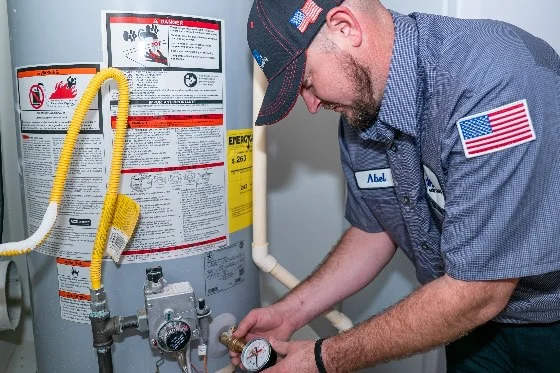
Water pressure at the fixture is also confirmed. The Denver metro area generally maintains municipal pressure between 60–80 PSI, but homes with pressure-reducing valves (PRVs) that are aging or misadjusted can deliver too-high or too-low pressure to new fixtures. Done! plumbers carry gauges and flag any pressure issues they find so you can address them before they damage the fixture or your supply lines.
What Done! Installs and What to Expect
- Kitchen faucets and pull-down sprayers — including single and dual-handle configurations
- Bathroom vanity faucets — standard, vessel, and widespread
- Utility and laundry room faucets
- Shower and tub trim kits and valve cartridges
- Garbage disposals and dishwasher drain connections
- Toilet fill valves, flappers, and complete toilet replacements
For most standard faucet replacements, the job is completed in a single visit. More involved work — like replacing an in-wall valve or converting a two-handle fixture rough-in to a single-handle — may require additional planning, but Done! will walk you through the scope before any work begins.
Warranty and Workmanship Guarantee
Done! stands behind every fixture installation with a workmanship guarantee. If a connection leaks or a component fails due to installation error, the team returns to make it right. This matters because even a slow drip under a kitchen sink — left undetected — can saturate cabinet flooring and subfloor, leading to mold and structural repair costs that dwarf the original plumbing job.
Homeowners who want ongoing peace of mind for all their home systems can also ask about the Done! Care Club membership, which includes priority scheduling and maintenance benefits across plumbing, HVAC, and electrical.
Ready to upgrade a faucet or fixture in your Denver-area home? Visit our kitchen and bath plumbing page to learn more, or contact Done! to schedule your installation today.