Yes — there are meaningful federal tax credits available for installing renewable energy and high-efficiency equipment in your home, and Colorado residents may qualify for state-level incentives on top of those. The most significant federal program is the Inflation Reduction Act’s expanded residential clean energy credits, which took effect in 2023 and run through 2032. These aren’t small credits — some cover 30% of installed costs with no upper dollar cap, which makes them genuinely worth factoring into any major home energy upgrade decision.
Federal Residential Clean Energy Credit (25D)
The Section 25D Residential Clean Energy Credit covers 30% of the cost of installing qualifying systems, with no dollar maximum. Eligible equipment includes solar panels (photovoltaic systems), solar water heaters, small wind turbines, geothermal heat pumps, fuel cells, and battery storage systems with at least 3 kWh capacity. This credit applies to the full installed cost — equipment plus labor — and is nonrefundable, meaning it reduces your tax liability dollar-for-dollar but won’t generate a refund if it exceeds what you owe.
Geothermal heat pumps are worth highlighting for Colorado homeowners specifically. At 5,280 feet, Denver’s altitude affects air-source heat pump efficiency in extreme cold — geothermal systems avoid that limitation because they draw heat from the earth rather than the air. The 30% federal credit makes the higher upfront cost of geothermal more manageable.
Energy Efficient Home Improvement Credit (25C)
This is a separate credit — also expanded under the Inflation Reduction Act — that covers 30% of costs for specific home efficiency upgrades, with annual dollar caps by category. Qualifying improvements include:
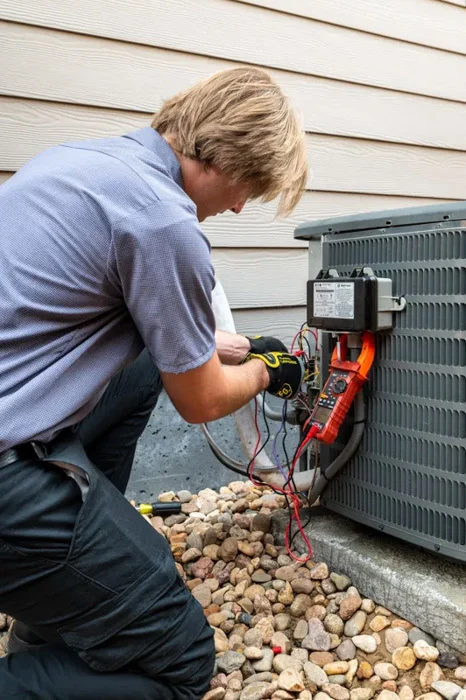
- Heat pumps and heat pump water heaters — up to $2,000 credit annually
- Central air conditioners, furnaces, and boilers meeting efficiency thresholds — up to $600 per item
- Electrical panel upgrades to support qualifying equipment — up to $600
- Insulation and air sealing — 30% of costs, up to $1,200
- Energy audits — up to $150
The annual cap structure means homeowners can strategically spread upgrades across multiple tax years to maximize credits. For example, a heat pump installation one year and a panel upgrade the next year can each generate their own credit rather than being capped together.
Colorado State and Utility Incentives
Colorado offers additional incentives beyond the federal credits. Xcel Energy customers may qualify for rebates on qualifying heat pumps, high-efficiency furnaces, smart thermostats, and other equipment. Black Hills Energy and other Colorado utilities have similar programs. The Colorado Energy Office also administers programs that can help offset costs, particularly for income-qualified households. These rebates are separate from and stackable with federal tax credits, so the combined savings can be substantial.
Colorado also exempts solar energy systems from both sales tax and property tax reassessment — meaning a solar installation won’t increase your property tax bill even though it adds to your home’s value, and you won’t pay sales tax on the equipment.
Heat Pumps: The Sweet Spot for Colorado Homeowners
Modern cold-climate heat pumps have become far more viable in Colorado’s climate than older models were. A qualifying heat pump installation can earn the $2,000 annual 25C credit plus applicable utility rebates, and it shifts your home heating and cooling toward electricity — which matters increasingly as Colorado’s grid gets cleaner over time. If you’re already replacing an aging furnace or AC, a heat pump is worth evaluating financially alongside a traditional replacement.
Important Notes Before You Claim Credits
Tax credit rules change, income limits and phase-outs can apply to some programs, and not every product that sounds efficient qualifies for every credit. Always confirm that specific equipment meets the efficiency requirements for the credit year you’re claiming, and consult a tax professional about how credits interact with your individual tax situation. Manufacturers typically provide documentation confirming a product’s eligibility.
Done can help you identify qualifying heat pumps, heat pump water heaters, and high-efficiency heating and cooling systems that make the most of available credits. Visit our heat pump page to learn about eligible systems, or our heating services page for high-efficiency furnace options. Our financing page covers payment options that can bridge the gap between installation and your tax credit refund.