Yes — Done installs, services, and repairs water softeners for Denver-area homeowners. Water softener work falls under our plumbing services, and our licensed plumbers handle both the supply-line connections and the drain line tie-in that every softener system requires. Whether you’re adding a new unit, replacing an aging softener that’s no longer keeping up with Colorado’s notoriously hard water, or troubleshooting a system that’s running through salt too fast or leaving scale behind, we can help.
Why Water Softening Matters on the Front Range
Denver-area water is drawn primarily from mountain snowmelt, but by the time it reaches residential taps it carries significant dissolved minerals — primarily calcium and magnesium carbonate — picked up as water percolates through limestone and dolomite geology. Denver Water regularly measures hardness in the range of 6 to 15 grains per gallon depending on source blending and the time of year, which is classified as moderately hard to very hard.
At those hardness levels, scale accumulates inside water heater tanks and tankless heat exchangers, reducing efficiency and shortening equipment life. It also deposits on faucet aerators, showerheads, dishwasher spray arms, and the heating elements inside appliances. Colorado’s dry air means water evaporates quickly on surfaces, leaving concentrated mineral deposits behind faster than homeowners in more humid climates experience.
What a Water Softener Installation Involves
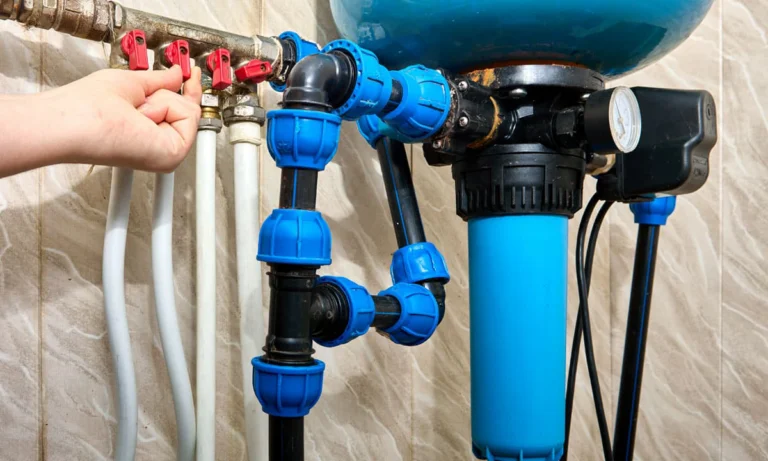
A whole-house ion-exchange softener requires a bypass valve on the main supply line, inlet and outlet plumbing connections, a drain line for backwash cycles, and a dedicated electrical outlet for the control head. Most installations also require planning around whether to soften the outdoor hose bibs and irrigation lines — softened water isn’t ideal for landscaping, so many systems include a dedicated unsoftened bypass for those outlets.
Done’s plumbers size the softener to your household’s water usage and incoming hardness level, which varies by neighborhood and season. Undersized units regenerate too frequently and run through salt quickly; oversized units sit in standby too long between cycles, which can allow bacteria to establish in the resin bed. Getting the sizing right at installation saves money on salt and extends the resin’s useful life.
Common Water Softener Problems We Repair
Softeners are generally reliable, but a few failure modes show up regularly in Colorado homes:
- Salt bridges: A hard crust forms across the top of the brine tank, leaving an air gap below it. The softener thinks the tank is full of salt but isn’t actually drawing brine — scale returns to the fixtures
- Resin bead fouling: Iron in the water supply coats resin beads over time, reducing their ion-exchange capacity; iron-out treatments or resin replacement restore function
- Control valve failures: The motorized valve that initiates regeneration cycles can stick or fail, causing the system to regenerate continuously (wasting water and salt) or not at all
- Drain line clogs: Backwash water carries mineral waste to a floor drain or utility sink; a clogged drain line causes the regeneration cycle to back up into the brine tank
- Bypass valve leaks: The saddle connections that tie into copper or PEX supply lines can develop pinhole leaks, especially after years of thermal cycling
Water Softeners as Part of a Broader Water Quality Plan
A softener addresses hardness minerals but doesn’t remove chlorine, chloramines, sediment, or other contaminants that affect taste and odor. Many Front Range homeowners pair a whole-house softener with a carbon filtration stage or a reverse-osmosis system at the kitchen tap for drinking and cooking water. Done can evaluate your water and recommend a combined approach if your goals include both scale prevention and improved taste.
If you’re unsure whether a softener is the right solution or want to understand all your options — including salt-free conditioners and template-assisted crystallization systems — our team can walk you through the trade-offs based on your specific water chemistry and usage patterns.
Schedule Your Water Softener Service
Hard water quietly damages plumbing and appliances over years, so the payoff from addressing it comes in avoided repair costs as much as in the day-to-day comfort of softer water on skin and hair. To learn more about water softener installation or to schedule a service call, visit our water quality and treatment page, or explore water heater services if you’re already seeing scale buildup affecting your hot water equipment. Financing options are available for new system installations.