Yes — there are several safe, straightforward checks a homeowner can do before calling a technician. Start with the thermostat, the filter, and the circuit breaker. Many “furnace problems” turn out to be one of these three, and resolving them takes only a few minutes. That said, anything involving gas lines, heat exchangers, or electrical components inside the unit should be left to a licensed professional.
Start With the Basics: Thermostat and Power
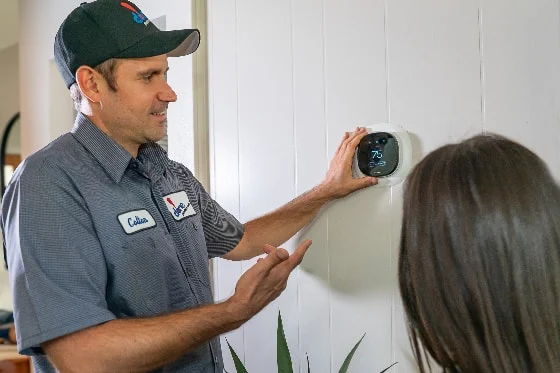
Check that your thermostat is set to HEAT and that the temperature is set above the current room temperature. It sounds obvious, but thermostats get bumped or accidentally switched to COOL or OFF — especially if you have kids or recently changed batteries. Speaking of batteries: a low-battery thermostat can produce erratic behavior or fail to signal the furnace at all. Swap in fresh batteries and see if the system responds.
Next, go to your electrical panel and look for a tripped breaker on the furnace circuit. Reset it once. If it trips again immediately, stop — a repeatedly tripping breaker means there is an electrical fault that needs a technician’s diagnosis, not more resets.
Check the Filter — This One Matters More Than You Think
A clogged air filter is the single most common cause of furnace problems in Denver-area homes. Colorado’s dry, high-altitude air carries a surprising amount of fine dust and particulate — especially during wildfire smoke season and the windy spring months. A filter that is choked with debris restricts airflow so severely that the heat exchanger overheats and the furnace shuts itself off on a safety limit. Pull the filter out and hold it up to a light. If you cannot see light through it, replace it before doing anything else. Standard 1-inch filters should be changed every 1–3 months in Colorado homes.
Check the Furnace Switch and Gas Supply
Most furnaces have a wall switch nearby that looks like a standard light switch — it is easy to accidentally flip it off. Make sure it is in the ON position. Then locate your gas shutoff valve on the supply line leading to the furnace and confirm it is open (handle parallel to the pipe = open; perpendicular = closed). If other gas appliances in your home are working normally, your gas supply is likely fine.
Look at the Furnace Itself: Error Codes and Indicator Lights
Modern furnaces have a small LED indicator light — sometimes visible through a sight glass on the cabinet door — that flashes an error code when something is wrong. Count the flashes and compare them to the code chart printed inside the furnace door or in your owner’s manual. Common codes point to issues like a failed ignitor, a pressure switch fault, or a flame sensor that needs cleaning. These codes tell you exactly what the technician will need to diagnose, and sharing them when you call for service can speed things up.
What You Should NOT Try to Fix Yourself
Colorado requires licensed contractors for gas line work, and for good reason — a gas leak or a cracked heat exchanger is a carbon monoxide risk. Do not attempt to relight a pilot on an older unit if you smell gas. Do not open the heat exchanger compartment or attempt to bypass a safety switch. If your furnace is short-cycling (turning on and off rapidly), producing a yellow or flickering burner flame instead of steady blue, or making loud banging or screeching noises, those are signs of a problem that needs professional evaluation.
- Thermostat set to HEAT, temp above room temp, fresh batteries
- Breaker not tripped (reset once only)
- Air filter clean and seated properly
- Furnace power switch is ON
- Gas shutoff valve is open
- Error code noted from LED indicator
If you have worked through this list and the furnace still will not run, it is time to call a pro. Done’s technicians are available for emergency heating repair when you need heat fast, and routine furnace repair appointments are easy to schedule. A Care Club membership also includes priority service and annual maintenance to catch problems before they leave you in the cold.