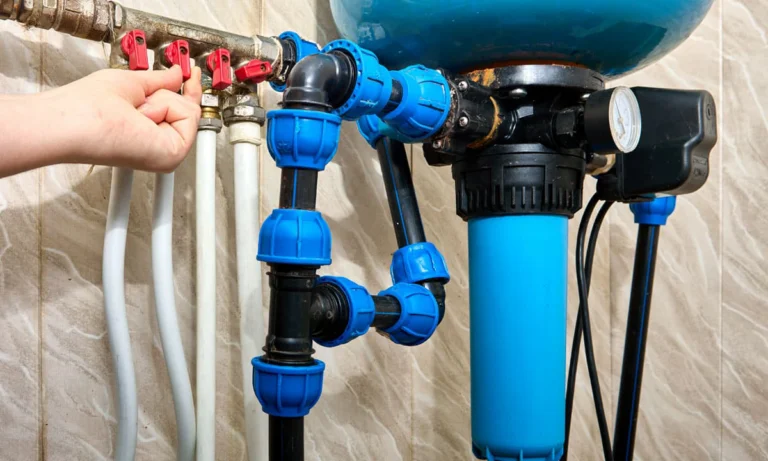
Salt-free water conditioners — sometimes called no-salt softeners or water conditioners — do work, but they work differently than traditional ion-exchange water softeners, and the distinction matters for Colorado homeowners dealing with hard water. A true ion-exchange softener removes calcium and magnesium ions from the water by replacing them with sodium ions, which prevents scale from forming anywhere in your plumbing system. A salt-free conditioner doesn’t remove the minerals — instead, it alters their crystalline structure so they’re less likely to stick to pipe walls and heating surfaces. The minerals stay in the water; they’re just in a different form.
Why Hard Water Is a Particular Issue in Colorado
Denver and the Front Range draw water from mountain snowpack, but by the time it reaches homes it picks up significant mineral content — particularly calcium and magnesium carbonate. Water hardness across the Denver metro varies by utility and neighborhood, but it’s generally considered moderately to very hard. That hardness shows up as white scale on showerheads and faucets, shortened water heater life (minerals insulate the heat exchanger and force the unit to work harder), spotty dishes and glassware, and soap that doesn’t lather well. For Denver homeowners, hard water treatment isn’t a luxury — it’s a practical investment in appliance longevity and energy efficiency.
What Salt-Free Conditioners Actually Do
Salt-free systems use one of several technologies — template-assisted crystallization (TAC), electrically induced precipitation, or magnetic conditioning — to change how the minerals behave. TAC systems are the most studied and generally considered the most effective of the salt-free options. Instead of removing hardness minerals, TAC converts them into microscopic crystals that pass through the plumbing without adhering to surfaces. Independent testing suggests TAC systems can meaningfully reduce new scale formation, though results vary with water chemistry and flow rate.
What they do not do: soften the water in the traditional sense. Your soap will still not lather as vigorously. Spots on dishes and glass are still possible. Existing scale in pipes and appliances is not removed — it just stops accumulating (to varying degrees). If you’re looking for the skin and hair feel that comes with genuinely soft water, a salt-free conditioner won’t deliver it.
Who Should Consider a Salt-Free System
- Homeowners who want scale protection without the ongoing cost and hassle of buying and hauling salt bags
- People on low-sodium diets who prefer not to add sodium to their drinking water
- Households in areas where salt-discharge is restricted by local ordinance (some Colorado municipalities have moved in this direction)
- Homeowners with a private well where the added sodium from a traditional softener could affect the water chemistry in problematic ways
How to Decide What’s Right for Your Home
The right answer depends on your water hardness level, what problems you’re actually trying to solve, your maintenance preferences, and your budget. A water test is the starting point — it tells you exactly how hard your water is and what other contaminants might be present (iron, pH issues, chlorine taste). Done offers water quality assessment and can walk you through the options: traditional ion-exchange softener, salt-free conditioner, whole-house filtration, reverse osmosis for drinking water, or a combination system.
We don’t push a single solution — we match the technology to your actual water quality data and your household’s priorities. If scale protection is the main goal and you want a low-maintenance system, a salt-free conditioner may serve you well. If you want genuinely soft water throughout the house, a traditional softener is the more reliable choice. Either way, we install, maintain, and service both types.
To learn more about water treatment options for your home, visit our water quality and treatment services page. For a broader look at plumbing solutions Done offers, see our plumbing services. We can also discuss financing options if you’re weighing a whole-house water treatment investment.