Yes — water pressure booster pumps work, and they work well when the problem is genuinely low incoming pressure from the municipal main. A properly sized booster pump can raise household pressure from an inadequate 30–40 PSI to the comfortable 50–70 PSI range that makes showers satisfying and fills tubs at a reasonable rate. Done’s plumbers install and service booster pumps throughout the Denver metro, and we also diagnose low-pressure complaints to confirm a booster pump is actually the right solution before recommending one.
How a Booster Pump Works
A water pressure booster is an inline pump installed on the main cold-water supply line where it enters the home — typically in the mechanical room, crawlspace, or utility area near the main shut-off. The pump draws water from the supply at whatever pressure the street main provides and boosts it to a higher, consistent target pressure before it reaches your fixtures. Most residential boosters include a pressure tank (similar to what’s used on well systems) that holds a reserve of pressurized water, so the pump doesn’t have to run every time you open a tap.
Modern booster systems use variable-speed pump motors that ramp up and down with demand rather than cycling on and off at a fixed point. This extends pump life, reduces noise, and maintains more consistent pressure as demand varies — running one shower vs. running three at once doesn’t create the same pressure drop as it would with an older single-speed system.
When Low Pressure Isn’t a Booster Problem
A booster pump only helps when the issue is insufficient incoming pressure. Several common low-pressure complaints have different causes — and installing a booster won’t fix them:
- Mineral scale restricting supply lines: Colorado’s hard water deposits calcium inside supply pipes and fixture shut-off valves over years. A booster pump can’t push water through a line that’s 60% blocked with scale — the pipes need cleaning or replacement
- Pressure reducing valve (PRV) set too low: Most Front Range homes have a PRV at the main to protect interior plumbing from high street pressure. If yours is set at 35 PSI when it should be at 55–65 PSI, adjusting or replacing it costs far less than a booster system
- Partially closed shut-off valves: A main shut-off or branch shut-off that was never fully reopened after a repair restricts flow and mimics low pressure
- Galvanized pipe corrosion: Older Denver homes with galvanized steel supply lines often experience progressive flow restriction as rust accumulates inside the pipe; repiping solves the problem where a booster pump cannot
Diagnosing the Real Cause of Low Pressure
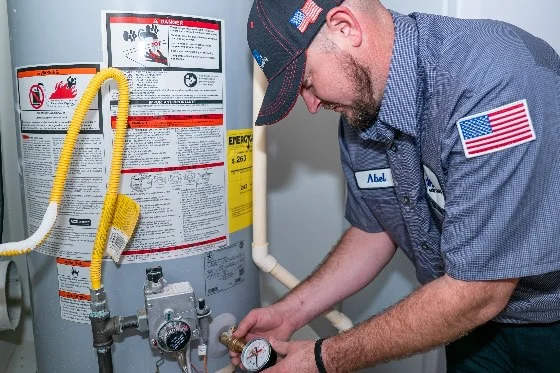
Done starts with a pressure test at the main to determine what the municipal supply is actually delivering to your home. If the incoming pressure is adequate (typically 40–80 PSI) but fixtures still feel weak, we investigate the distribution system — PRV setting, line scale, and valve positions. If incoming pressure is genuinely low (below 40 PSI consistently, not just during peak demand hours), a booster pump is likely the right answer.
Pressure at the street in Denver varies by neighborhood and elevation within the service area. Homes at the top of a hill served by a lower-elevation main can have chronically low pressure that a booster pump directly addresses. Homes in flat neighborhoods with good main pressure but old galvanized supply lines need repiping, not a booster.
Installation Considerations
A booster pump requires electrical power at the installation location. The pump should be installed after the PRV (if present) but before the water heater and all branch lines so it benefits the whole house. Done’s plumbers size the pump to your home’s fixture count and peak demand, set the target output pressure to a safe range (most residential systems target 55–65 PSI, staying well below the 80 PSI maximum that Colorado plumbing code generally references), and verify the system is operating correctly before completing the job.
Booster pumps require minimal ongoing maintenance but should be inspected periodically — the pressure tank diaphragm can lose its pre-charge over time, which causes the pump to short-cycle and wear faster. Done includes booster system checks in plumbing service visits.
Schedule a Pressure Evaluation
If weak pressure is affecting your household — frustrating showers, slow-filling tubs, or a dishwasher that takes forever — start with a proper diagnosis before spending money on a solution. Done’s plumbers identify the real cause and recommend the most cost-effective fix. Visit our pressure and backflow service page to schedule an evaluation, or explore our full plumbing services if you have related concerns like scale buildup or aging supply pipes. For new system installations, financing options are available.