Keeping your cooling system running efficiently over time comes down to two things: consistent homeowner habits between service visits, and annual professional maintenance that catches what you can’t see or measure yourself. Done’s technicians have serviced thousands of Front Range systems and the pattern is consistent — the systems that last 18–20 years are almost always the ones that got regular filter changes and annual tune-ups. The ones that fail at 10–12 years are often those that ran until something broke.
Filter Changes: The Highest-Impact Habit
No single maintenance task does more for long-term efficiency than changing the air filter on schedule. A clogged filter restricts airflow across the evaporator coil. Restricted airflow causes the coil to get colder than designed, often leading to ice formation that further blocks airflow, pushing the system into a cycle of degrading performance. In severe cases ice can damage the evaporator coil or cause liquid refrigerant to return to the compressor — something compressors are not designed to handle. On the Front Range, change your 1-inch fiberglass or pleated filter every 30–60 days. Thicker 4-inch media filters can go 6–12 months, but check the manufacturer’s recommendation. Denver’s wildfire smoke seasons (increasingly common in late summer) can clog filters faster than normal — check yours after any significant smoke event.
Annual Professional Maintenance Is Not Optional
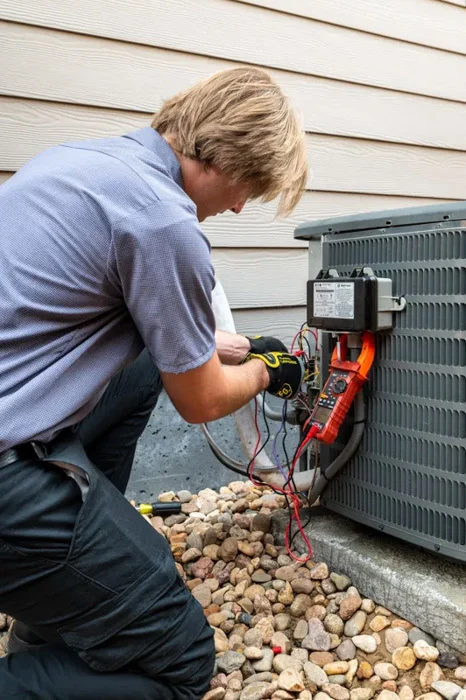
The most efficient-running systems are serviced professionally every year. An annual AC tune-up from Done catches refrigerant leaks before the charge drops low enough to stress the compressor, cleans condenser coils to restore full heat-transfer efficiency, and identifies electrical components that are trending toward failure. Each of these contributes directly to efficiency: a dirty condenser coil can reduce system capacity by 20–30 percent. Low refrigerant makes the compressor run hotter and work harder for the same output. A weak capacitor causes the compressor to struggle at startup, drawing high amperage each time it starts. None of these show up on your thermostat — they show up on your electric bill and in shortened equipment life.
Colorado-Specific Efficiency Challenges
Front Range homeowners face a few efficiency challenges that are specific to Colorado’s climate. The intense UV at altitude degrades the insulation on refrigerant lines running between your indoor and outdoor units — when line insulation cracks and falls away, the refrigerant lines absorb heat from the outdoor air before the refrigerant reaches the indoor coil, reducing the system’s effective cooling capacity. Check the foam insulation on the larger (suction line) copper pipe at your outdoor unit periodically and let Done know if it looks cracked or missing during a service visit. The wide day-night temperature swings here (it’s common to drop 30–40 degrees from afternoon to overnight) also mean your system works hard during the heat of the day and then sits idle overnight — make sure your thermostat setback program takes advantage of those cool overnight hours.
Duct Condition Matters More Than Most Homeowners Realize
In a typical Front Range home with ductwork in unconditioned spaces (attic or crawlspace), duct leakage can waste 20–30 percent of the air your system conditions before it ever reaches the living space. Even if your AC unit itself is performing perfectly, leaky ducts mean you’re paying to cool your attic. Done offers duct inspection and repair services for homeowners who suspect duct issues. Signs include rooms that never cool properly despite a working system, unusually high electric bills, and excessive dust accumulation around supply registers. A duct assessment paired with sealing or replacement can dramatically improve system efficiency without touching the AC equipment at all.
Thermostat and Controls: Getting the Programming Right
A programmable or smart thermostat that takes advantage of Colorado’s cooler nights is one of the simplest efficiency wins available. Set the thermostat to allow the home to warm slightly while you’re away during the workday, then pre-cool in the late afternoon before the household is home — rather than running at full cool all day. Avoid setting the thermostat dramatically lower when you arrive home thinking the system will cool faster; it won’t (AC removes heat at a fixed rate regardless of the setpoint) and it’ll just overshoot your comfort target. Also consider indoor air quality upgrades like better filtration or ventilation — a well-ventilated home that flushes cool overnight air in can reduce daytime AC run time significantly.
For consistent long-term efficiency, the best move is joining Done’s Care Club maintenance plan so annual tune-ups happen automatically. Contact Done to schedule this year’s maintenance visit or to ask about efficiency upgrades for your cooling system.