Your water heater needs maintenance when you notice any of these: rumbling or popping sounds during heating cycles, water that takes longer than usual to get hot, inconsistent hot water temperature, rust-colored or cloudy water at the tap, visible corrosion or moisture around the unit, or a water heater that’s more than a year past its last service. In Denver’s hard-water environment, these signs tend to appear sooner than in softer-water regions because mineral scale builds up faster and takes a harder toll on the unit. The good news is that maintenance is straightforward and genuinely extends the life of the equipment.
The Sounds Your Water Heater Makes
A healthy water heater is quiet. It hums slightly when the burner fires or the element activates, and then settles into silence. Sounds that signal a maintenance need:
- Popping or crackling: Water trapped under a layer of calcium scale at the tank bottom is boiling and bursting through that crust during heating cycles. This is the most common sediment-related sound and a clear sign the tank needs flushing.
- Rumbling: Similar cause — heavy sediment shifting as hot water circulates. Often worse in tanks that haven’t been serviced in several years.
- Hissing or whining (electric heaters): Can indicate scale buildup on the heating elements, which reduces efficiency and can cause element failure.
- Ticking or knocking in the pipes: Sometimes heat-expansion sounds from supply pipes — generally not a heater problem, but worth noting if new.
Changes in Hot Water Performance
Hot water that used to last through a full shower but now runs out halfway through is one of the more disruptive signs of a water heater in decline. In a tank heater, sediment at the bottom displaces water capacity and insulates the burner, so the effective usable hot water volume shrinks even though the tank size hasn’t changed. In a tankless heater, scale on the heat exchanger reduces its ability to transfer heat to the water rapidly, leading to output temperatures that fall short of the setpoint.
Inconsistent temperature — hot, then lukewarm, then hot again in a single shower — can point to a thermostat failing to hold its setpoint, a partially scaled element in an electric heater, or a pilot and thermocouple problem in a gas unit. Each of these is a maintenance or repair item that gets addressed during a professional service visit.
Visible Signs at the Heater
Walk over to the unit and take a look. Rust-colored staining on the outside of the tank body, particularly near the top or around pipe connections, can signal corrosion. Moisture or mineral residue around the temperature and pressure (T&P) relief valve may mean the valve has been weeping — either because tank pressure is cycling near the valve’s threshold, or because the valve itself is starting to fail. A T&P valve that weeps frequently should be tested and likely replaced; these valves are a critical safety component.
Any active dripping from the tank body itself — not just condensation — is serious. Tank leaks don’t self-repair and typically signal the end of the unit’s service life. But moisture at the supply connections, drain valve, or T&P valve can often be addressed without replacing the unit.
What Professional Maintenance Includes
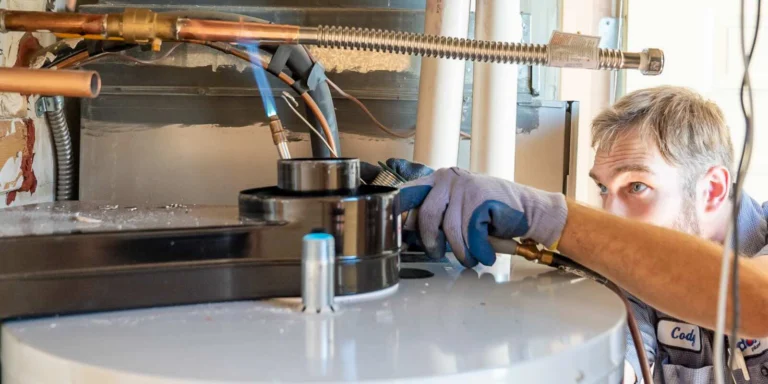
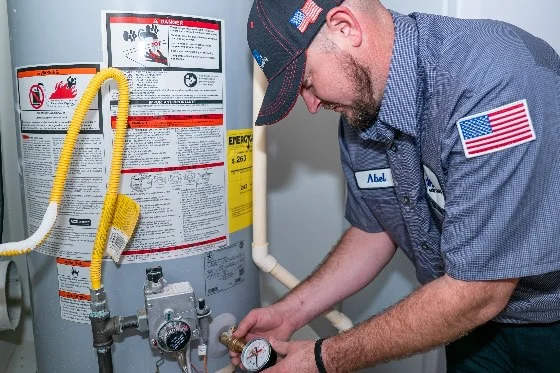
A professional water heater maintenance visit typically covers: flushing sediment from the tank, inspecting and testing the T&P relief valve, checking and replacing the anode rod if depleted, inspecting gas connections and burner operation (gas units), testing electric elements and thermostat accuracy (electric units), checking the flue for proper draft (gas units), and a visual inspection of all connections and the tank body. This takes less than two hours and gives you a full picture of the heater’s condition.
The anode rod deserves specific mention. This magnesium or aluminum rod sacrificially corrodes inside the tank to protect the steel lining. In Denver’s hard water, it depletes faster than in soft-water regions. A fully consumed anode rod leaves the tank lining to corrode directly — which is often what leads to premature tank failure. Checking it every two to three years and replacing it when depleted is one of the highest-value maintenance actions you can take.
How Often Should You Schedule Maintenance?
Annual maintenance is the standard recommendation for tank water heaters in hard-water areas, and Done’s Care Club membership makes that easy to keep up with. Tankless water heaters benefit from annual descaling as well — the heat exchanger in a tankless unit is particularly vulnerable to scale in Colorado’s mineral-heavy water. If you’re not sure when your heater last had a service visit, schedule one now and use it as your reset point going forward.
Done’s team handles water heater maintenance across the Denver metro. If the inspection reveals your heater is past its prime, we can walk you through replacement options including tank, tankless, and heat pump water heaters — with financing available.