If your home consistently has low water pressure that can’t be fixed by adjusting the pressure reducing valve (PRV) or clearing mineral buildup from fixtures, a booster pump is the right solution. A water pressure booster pump installs on your main water line and uses an electric motor and pressure tank to increase flow throughout the house. It’s an effective fix for homes at the end of a municipal supply line, properties served by a well, or any situation where incoming pressure is simply too low to serve multiple fixtures at once.
First, Diagnose the Real Cause of Low Pressure
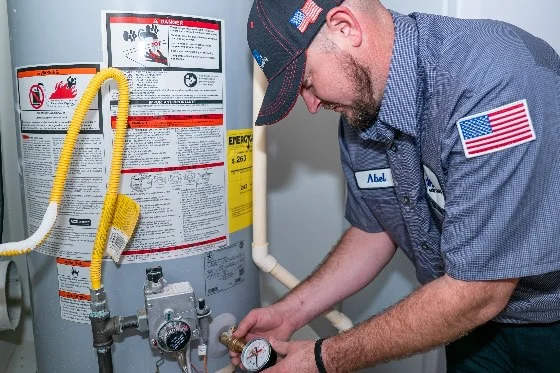
Before investing in a booster pump, confirm that low pressure is actually the problem — and not just the symptom of a different issue. Use a water pressure gauge (available at hardware stores) screwed onto an outdoor hose bib to measure your static pressure. Normal residential pressure runs between 40 and 80 psi. If you’re in that range, the issue may be a partially closed main shut-off valve, a failing PRV, mineral-clogged aerators or fixtures (very common with Denver’s hard, mineral-rich water), or corroded galvanized pipes restricting flow. A booster pump won’t help any of those problems.
How a Booster Pump Works
A residential booster pump system has two main components: the pump itself (typically a centrifugal pump) and a small pressure tank (bladder tank). The pump draws water from the supply line and pushes it through the system at higher pressure. The bladder tank stores a reserve of pressurized water so the pump doesn’t have to cycle on every time you open a faucet — this extends motor life and prevents pressure fluctuations. Most modern booster pumps are variable-speed, meaning they ramp up and down based on demand rather than running at full speed constantly.
Where the Pump Is Installed
The booster pump installs on the main cold water line after it enters the home — typically in the utility room, basement, or mechanical room. It goes after the main shut-off valve and PRV (if you have one) but before the water branches out to individual fixtures and the water heater. The pump requires a dedicated electrical connection, usually a standard 120V outlet. If your utility room doesn’t have a convenient outlet nearby, an electrician will need to add one.
- Never install a booster pump before the PRV — the pump needs regulated pressure to operate correctly
- Size the pump for your household’s peak demand — a plumber can calculate this based on fixture count and flow rates
- Make sure your home’s plumbing can handle the increased pressure — older supply lines and valves may not tolerate sustained high pressure
- Set final pressure to no more than 80 psi to protect appliances, water heater connections, and fixture supply lines
- Check that your water heater’s expansion tank is properly sized for the new higher pressure environment
Colorado-Specific Considerations
In the Denver and Front Range area, some neighborhoods — especially those at higher elevations or at the far end of aging municipal distribution lines — experience chronically low pressure during peak morning and evening demand. A booster pump is often the most practical solution in these cases. Colorado’s hard water also means booster pump check valves and impellers can accumulate scale over time; annual maintenance helps keep the system running efficiently.
Maintenance and Long-Term Performance
A booster pump is a mechanical and electrical system that requires occasional maintenance to stay reliable. The bladder tank needs to maintain the correct pre-charge pressure (typically around 2 psi below the pump’s cut-in pressure) — if the bladder fails or loses pressure, the pump will short-cycle constantly, wearing out the motor prematurely. Check valves inside the pump body can also accumulate mineral scale over time, particularly in Denver’s hard water environment. An annual inspection by a plumber familiar with pump systems will catch these issues before they cause a failure.
Done’s plumbing team can assess your water pressure situation, determine whether a booster pump is the right fix, and handle the full installation. Visit our pressure and backflow services page or our general plumbing services page to learn more, and contact us to schedule a diagnostic visit.