A ductless mini-split installation involves mounting an indoor air-handling unit on a wall or ceiling, placing an outdoor compressor unit in a suitable location, and connecting the two through a small conduit that carries refrigerant lines, a power cable, and a condensate drain line. The process requires no ductwork at all — that’s the defining advantage. A Done! technician can typically complete a single-zone installation in one day, and multi-zone systems usually take one to two days depending on the number of indoor units and the complexity of the runs.
Step 1 — Site Assessment and Equipment Selection
Before any work begins, a Done! comfort advisor evaluates the spaces you need to condition. Square footage, ceiling height, window area, insulation quality, and sun exposure all affect the capacity calculation. Colorado homes at elevation require slightly different sizing than comparable homes at sea level — the reduced air density at 5,280 feet and above affects both heat transfer and equipment performance, so undersizing is a real risk if the installer uses a standard sea-level load calculation.
You’ll also choose the indoor unit style — high-wall cassette (most common), ceiling cassette, floor-mounted, or concealed ducted — and the number of zones. A multi-zone system uses one outdoor unit connected to multiple indoor units, each independently controlled. This is ideal for homes being converted from window units, additions, converted garages, or rooms that were always too hot or too cold in a traditionally ducted home.
Step 2 — Mounting the Indoor Unit
The indoor air handler is mounted on an exterior wall (most commonly) so the refrigerant line set has the shortest possible path to the outside. A mounting bracket is secured to wall studs, and the unit is hung on the bracket. The technician then drills a hole — typically 2.5 to 3 inches in diameter — through the wall to route the line set and wiring. The hole is sleeved and sealed against weather, insects, and air infiltration. Proper sealing here is important in Colorado, where temperature extremes can cause expansion and contraction that opens up gaps if the penetration isn’t done correctly.
Step 3 — Running the Line Set and Wiring
The refrigerant line set — a pair of insulated copper tubes (liquid and suction lines) bundled with the power and communication cables and the condensate drain — runs from the indoor unit through the wall penetration to the outdoor unit. Outside, the lines are typically covered by a line-set cover (a UV-resistant PVC channel) to protect against Colorado’s intense high-altitude UV radiation, which degrades unprotected insulation quickly.
A dedicated electrical circuit is required for each outdoor unit. Done!’s licensed electricians handle this as part of the installation — the circuit is sized to the equipment’s specifications and a disconnect box is installed near the outdoor unit per code.
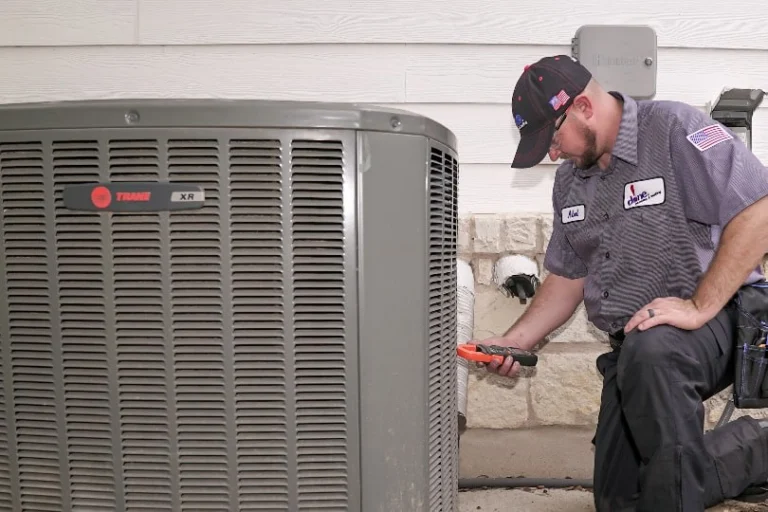
Step 4 — Installing and Commissioning the Outdoor Unit
- The outdoor compressor is set on a concrete pad or wall-mounted bracket — elevated to keep it above typical snow accumulation levels in Colorado
- Refrigerant line connections are made and the system is pressure-tested and evacuated to remove moisture and air from the lines
- Most modern mini-splits come pre-charged from the factory; longer line runs may require additional refrigerant to be added by the certified technician
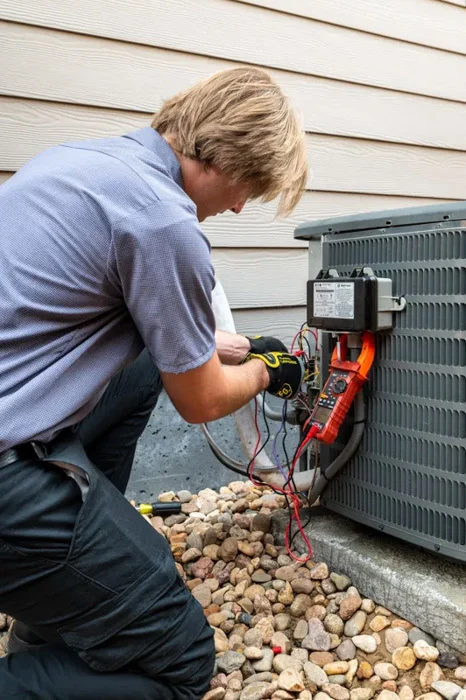
- The system is powered on and run through a full commissioning cycle — cooling, heating, fan speeds, and dehumidification modes are all verified
- Condensate drainage is confirmed flowing properly
What Makes Mini-Splits a Strong Choice in Colorado
Many mini-split systems are heat pumps, providing both heating and cooling from a single system. Modern cold-climate heat pumps maintain full heating capacity down to temperatures well below zero — a meaningful advantage given Colorado’s hard freezes. They’re also highly efficient, reducing energy costs compared to electric baseboard heat or window air conditioners, and their inverter-driven compressors modulate output to match the load rather than cycling on and off like traditional systems.
For homes with boilers, in-floor radiant heat, or no existing ductwork, a mini-split is often the most practical way to add cooling without a major renovation.
Explore your options on our ductless mini-split page, or learn how mini-splits fit into a broader heat pump strategy. Ready to move forward? Contact Done! to schedule a free in-home assessment.