Trenchless sewer repair is a category of techniques that fix or replace a damaged sewer line from the inside out — without digging a long trench across your yard to expose the pipe. Instead of excavating, technicians access the existing pipe through one or two small entry points and either install a structural liner within the old pipe or pull a new pipe through the old one. The result is a repaired or fully replaced line with minimal surface disruption. For homeowners with landscaping, driveways, sidewalks, or mature trees over their sewer lateral, trenchless methods can mean the difference between a contained plumbing repair and a project that tears up the entire yard.
The Two Main Trenchless Methods
Cured-in-place pipe lining (CIPP) is the most common trenchless repair method. A flexible liner saturated with epoxy resin is inserted into the damaged pipe and inflated against the pipe walls, then cured using hot water, steam, or UV light. Once cured, the hardened liner forms a new structural pipe inside the old one — sealing cracks, blocking root entry points, and bridging joint offsets. CIPP is ideal for pipes with cracks, root intrusion, and deterioration that are still structurally intact enough to hold the liner in place during installation. It is not suitable for pipes that have already collapsed or that have severe joint separation.
Pipe bursting takes a different approach: a bursting head is pulled through the existing pipe, fracturing the old pipe outward into the surrounding soil while simultaneously pulling a new HDPE pipe in behind it. This method works well when the existing pipe is too deteriorated for lining — including Orangeburg, severely corroded cast iron, or collapsed clay tile — and it results in a fully new pipe rather than a rehabilitated one. Pipe bursting requires a small entry pit at each end of the section being replaced, but nothing like the trench that traditional excavation requires.
How Trenchless Differs From Traditional Excavation
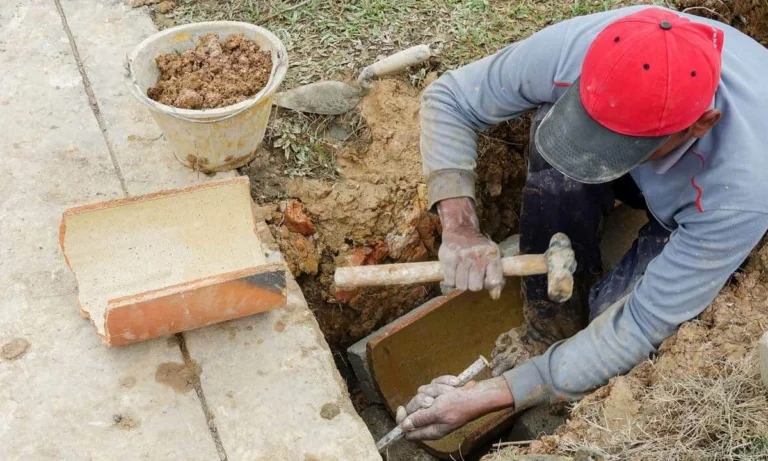
- Excavation (traditional): A trench is dug along the entire length of the damaged section — often 4 to 8 feet deep and spanning the full yard, driveway, or walkway over the pipe. The old pipe is removed and replaced with new pipe, the trench is backfilled, and surface restoration (grass, concrete, pavers) must follow.
- Trenchless: Access is limited to one or two small pit excavations, typically at cleanouts or the start and end of the repair section. The yard, driveway, and landscaping above the pipe remain largely intact.
The practical differences matter a great deal on a typical Denver-area residential lot. Mature landscaping in established neighborhoods, concrete driveways, decorative hardscaping, and detached garages often sit directly over sewer laterals. Traditional excavation in these situations means significant restoration costs on top of the pipe repair itself. Trenchless methods avoid most of that collateral disruption entirely.
When Trenchless Is — and Is Not — the Right Call
Trenchless repair works best when the pipe still has its basic shape — cracks, root intrusion, and corrosion are all good candidates for lining or bursting. When a section has fully collapsed, is severely misaligned due to soil movement, or has a significant belly that needs to be corrected (trenchless methods cannot change the pipe’s elevation profile), traditional excavation may be unavoidable for that section. A thorough sewer camera inspection before any repair is essential — it tells the technician exactly which sections have which problems, making it possible to choose the right method for each part of the line rather than defaulting to one approach for the whole run.
What to Expect From Done’s Trenchless Services
Done uses both CIPP lining and pipe bursting depending on what the inspection findings indicate. The process starts with a camera inspection to map the damage, followed by thorough cleaning (usually hydro jetting) to prepare the pipe walls, and then the selected trenchless repair method. A post-repair camera inspection confirms the liner or new pipe is properly seated and the line is flowing correctly. For cost questions, the scope — pipe diameter, depth, length, and access conditions — determines the estimate, so Done provides site-specific pricing after the inspection. Visit our trenchless pipe lining page for more detail, or contact us to schedule an evaluation.