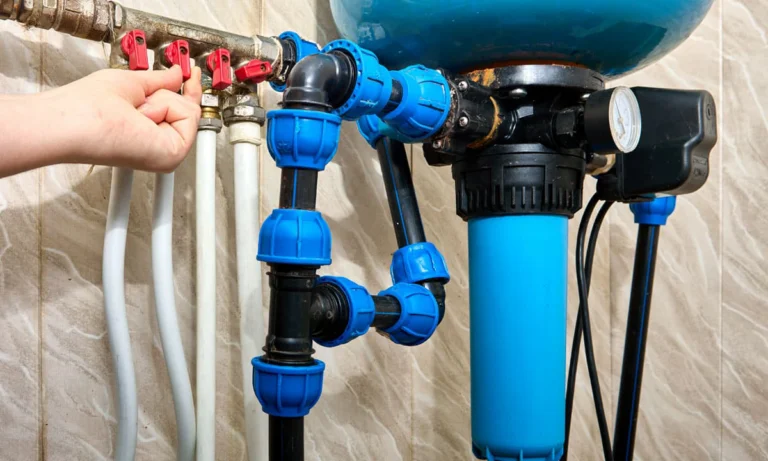
Yes — a whole-house water treatment system typically pays for itself over time through reduced plumbing repair costs, extended appliance life, and lower energy bills. The math is most favorable in hard-water markets like Denver, where untreated water deposits mineral scale throughout your plumbing system continuously. Done installs water softeners, filtration systems, and combined treatment solutions, and can help you evaluate whether a system makes financial sense for your household before you commit.
The Real Cost of Untreated Hard Water
Denver-area water is consistently hard — moderately to very hard depending on the source blend and season. Every gallon of water flowing through your pipes deposits a small amount of calcium and magnesium carbonate as it heats up and evaporates. Over months and years, that scale accumulates inside water heater tanks and heat exchangers, on faucet aerators and showerheads, inside dishwasher spray arms, and within the water lines themselves.
The energy penalty is measurable. Research from water treatment industry groups suggests that scale buildup of as little as a quarter-inch inside a water heater tank can increase energy consumption by 25–40% (verify with your utility or a current industry study, as figures vary by methodology). Even if the real-world impact in your home is on the lower end of that range, the effect compounds over the heater’s entire service life — and Colorado’s hard water is actively shortening that life at the same time.
Appliance Life and Repair Frequency
Water heaters are the most affected appliance, but the impact extends further:
- Dishwashers: Scale clogs spray arms and fills the heating element housing, reducing wash performance and triggering heating element failures
- Washing machines: Mineral deposits in the water inlet valve and drum reduce efficiency and increase detergent consumption — soft water requires significantly less detergent to achieve the same cleaning result
- Coffee makers and refrigerator ice makers: Scale clogs internal water lines and heating elements, shortening appliance life
- Faucets and fixtures: Aerators and cartridges wear faster in hard water; scale on ceramic disc valves prevents a clean shutoff, creating drips that waste water over time
- Showerheads: Flow restriction from mineral buildup reduces pressure and eventually forces replacement
Upfront Cost vs. Long-Term Return
Water treatment system costs vary depending on the type and scale of the solution. A whole-house ion-exchange water softener represents a meaningful upfront investment; a point-of-use reverse osmosis system under the kitchen sink is a more modest starting point. Done doesn’t publish standard pricing because the right solution depends on your water chemistry, household size, and which fixtures and appliances you’re trying to protect — and we’d rather give you an accurate quote than a number that doesn’t apply to your situation.
What we can say honestly: the break-even timeline is typically shorter for households with newer, high-cost appliances (tankless water heaters, high-end dishwashers) that hard water would otherwise damage, and longer for households with older appliances already showing scale-related wear. A Done plumber can look at your water heater, fixtures, and appliances and give you a realistic picture of what untreated water is already costing you in energy and wear — which makes the investment decision easier to evaluate.
Beyond the Dollars: Quality-of-Life Benefits
Soft water lathers more easily with soap and shampoo, leaves less residue on skin and hair, and eliminates the white spotting on glassware, shower doors, and faucet handles that is nearly universal in Denver homes. These aren’t financial savings, but they’re real daily improvements that most households appreciate quickly after installation. For homeowners who also add a filtration stage or reverse osmosis system, improved taste and odor of tap water often reduces or eliminates spending on bottled water — a straightforward financial offset.
Getting the Right System for Your Home
Done can assess your water quality and recommend a treatment approach — whether that’s a traditional salt-based softener, a salt-free conditioner, a whole-house carbon filter, a reverse osmosis drinking water system, or a combination. The goal is a solution sized correctly for your household that protects what you’ve already invested in appliances and plumbing. Visit our water quality and treatment page to learn more and schedule a consultation. Financing options are available for whole-house system installations, and Care Club members receive plumbing inspections that help track how your water quality is affecting fixtures over time.