A pressure reducing valve (PRV) is a small but critical device that steps down the water pressure coming from the municipal supply line before it enters your home’s plumbing. Most home plumbing systems are designed to operate safely between 40 and 80 psi. If your supply pressure regularly exceeds 80 psi — which is common in many Denver metro neighborhoods, particularly homes in lower-elevation areas or near booster pump stations — you likely need a PRV or may need to replace a failing one. High water pressure silently damages fixtures, supply hoses, water heaters, and appliances over time.
Signs Your Home May Have High Water Pressure
The most obvious clue is pressure that simply feels strong — water that blasts out of the showerhead at full force, or faucets that spit and splash even at moderate settings. But many symptoms of high pressure are quieter and easier to mistake for other problems. Watch for these warning signs:
- Banging or knocking pipes (water hammer) when you shut off a faucet quickly
- Repeatedly failing faucet cartridges, washers, or valve stems — these wear out much faster under excessive pressure
- Supply hoses behind toilets or under sinks that look bulged or have failed prematurely
- A water heater pressure relief valve that drips or has discharged — the T&P valve opens when pressure or temperature is excessive
- Appliances like dishwashers or washing machines that cycle through components faster than expected
How to Test Your Water Pressure
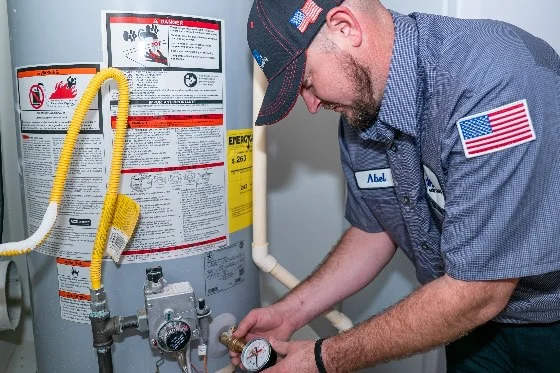
A simple hose bib pressure gauge — available at any hardware store for under $15 — threads onto an outdoor spigot and gives you an immediate reading. Test in the morning before significant water use in the house. If you read above 80 psi consistently, your system is running too high. If you’re already seeing symptoms of high pressure but your reading seems normal, test at different times of day — municipal pressure can vary significantly, especially in the evening when demand drops and pressure climbs.
A licensed plumber can do a more thorough pressure evaluation, check whether an existing PRV is functioning properly (they can fail open, passing full supply pressure, or fail partially closed, restricting flow), and measure pressure at multiple points in the system.
How a PRV Works and Where It’s Installed
A pressure reducing valve is typically installed on the main water supply line just inside the point where water enters the home — often near the main shutoff valve. Inside the valve is a spring-loaded diaphragm that throttles down incoming pressure to a preset level, typically 50–60 psi. Most PRVs have an adjustment screw that allows a plumber to fine-tune the output pressure. The valve operates automatically and requires no manual intervention once set.
PRVs typically last 10–15 years before the internal diaphragm or spring wears out. A failing PRV can allow pressure to creep up gradually, which is why high-pressure symptoms sometimes appear in homes that had a PRV installed years ago and assumed everything was fine.
Colorado-Specific Considerations
Denver’s geography creates pressure variation throughout the metro area. Homes in lower-lying neighborhoods or developments served by booster pumps frequently see supply pressure above 100 psi. Colorado also requires an expansion tank on the cold water supply line in “closed” plumbing systems whenever a PRV is installed — because the PRV prevents pressure from being relieved back into the municipal main, thermal expansion from the water heater has nowhere to go without an expansion tank. Installing a PRV without the proper expansion tank can cause pressure relief valves to weep and eventually fail.
When to Call a Plumber
If your pressure test reads above 80 psi, if you’re experiencing the symptoms described above, or if your home is older and has never had a PRV inspected, it’s worth having a professional assessment. Done’s plumbers can test your pressure, evaluate your existing PRV if you have one, and install or replace the valve along with any required expansion tank. Learn more on our pressure and backflow page, or explore our full range of plumbing services. Contact Done to schedule a pressure evaluation.