The clearest signs that you need a water softener are visible in your home every day: white scale deposits on faucets and showerheads, spots on dishes and glassware after washing, soap that doesn’t lather well, dry skin or dull hair after showering, and a water heater that runs noisier than it used to. In Denver and across the Front Range, hard water is essentially the default — the region’s water supply carries elevated levels of calcium and magnesium that leave these calling cards throughout the house. A water test can confirm exactly what you’re dealing with, but the symptoms alone are often enough to make the call.
What Makes Water “Hard”
Water hardness is measured in grains per gallon (GPG) or milligrams per liter (mg/L). Water under 1 GPG is considered soft; 7 GPG and above is classified as very hard. Denver’s municipal water hardness varies by source and time of year but frequently falls in the moderately hard to hard range — generally somewhere between 5 and 15 GPG depending on the specific utility and neighborhood. That’s enough to cause the classic hard-water problems over time, even if it seems manageable in the short term.
Colorado’s water starts as Rocky Mountain snowmelt — naturally soft — but picks up minerals as it travels through limestone and other sedimentary rock on its way to reservoirs and treatment plants. By the time it reaches your tap, it carries a meaningful mineral load.
Signs You Have Hard Water
- White, chalky buildup on faucet aerators, showerheads, and around the base of fixtures — this is calcium carbonate scale.
- Spots and film on dishes and glassware even after running the dishwasher — hard water leaves mineral deposits as it dries.
- Reduced soap lather — calcium and magnesium ions react with soap to form soap scum rather than foam, so you use more soap and feel less clean.
- Dry skin or brittle hair after showering — the mineral film left on skin and hair disrupts moisture retention.
- Stiff, rough laundry — hard water leaves residue in fabric fibers that accumulates over repeated washings.
- Shortened appliance life — scale inside your water heater, dishwasher, and washing machine reduces efficiency and causes premature failure.
How to Confirm It With a Water Test
If you want a number rather than just a collection of symptoms, a water hardness test is easy and inexpensive. Basic hardness test strips are available at hardware stores and provide a fast result. For a more complete picture — especially if you’re considering a whole-home treatment system — a professional water quality test covers hardness along with pH, chloramine levels, iron content, nitrates, and other parameters that affect which treatment approach makes the most sense.
Iron is worth mentioning specifically because Denver-area homes on well water or with older iron pipes can have elevated iron levels that interact poorly with standard salt-based softeners. If your water has a reddish tint or rust staining in toilets, you may need a system that addresses iron in addition to hardness.
What a Water Softener Does — and What It Doesn’t Do
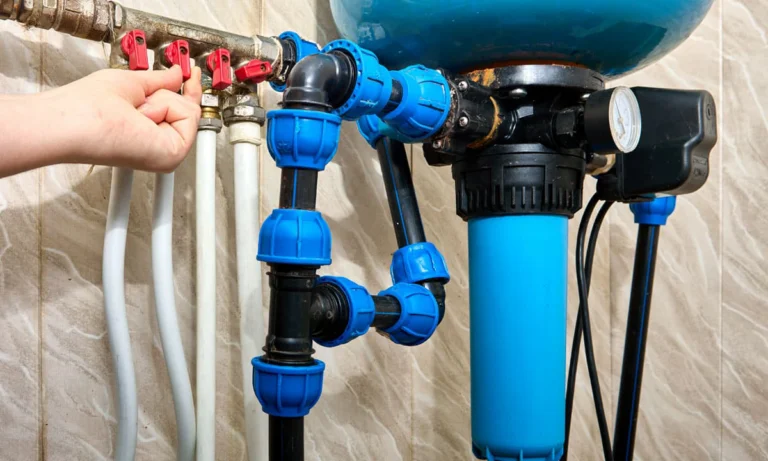
A conventional ion-exchange water softener replaces calcium and magnesium ions in the water with sodium ions using a resin bed that regenerates periodically with a salt solution. This is highly effective at eliminating scale, improving soap lather, and protecting appliances — but it does add a small amount of sodium to the water. For most people this is imperceptible and inconsequential. For those on a sodium-restricted diet, a potassium chloride softener is an alternative, or a point-of-use reverse osmosis system for drinking water can remove the added sodium at the tap.
A softener does not filter out chloramines, nitrates, heavy metals, or bacteria — it only addresses hardness minerals. If your water quality concerns go beyond hardness, a softener can be paired with a carbon filter or an RO system for comprehensive treatment.
Is a Water Softener Worth It?
For most Denver-area homeowners with moderate to hard water, yes. The investment pays back through longer appliance life, reduced water heater energy consumption, less cleaning time and fewer descaling products, and improved comfort. The Done team can test your water, recommend the right system size and type for your household, and handle the full installation. Visit our water quality and treatment page for details, or explore water heater services if you’re also concerned about what existing scale has done to your tank. Financing options are available at our financing page.