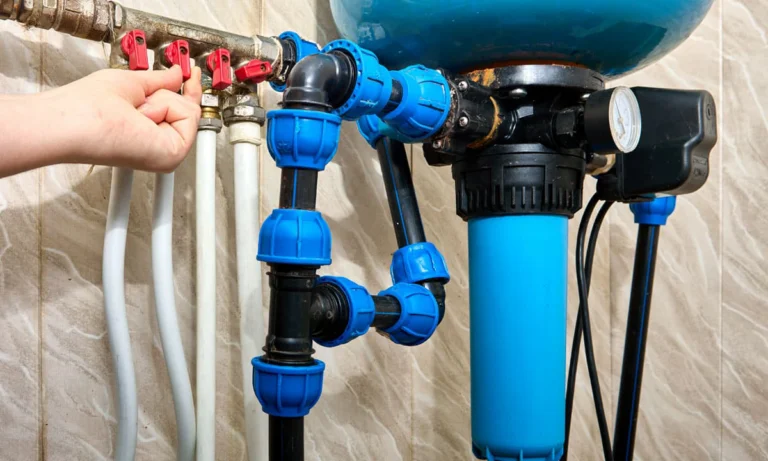
A water conditioning system treats your home’s water supply to remove or neutralize contaminants, minerals, or chemical compounds that affect water quality, taste, or the health of your plumbing and appliances. The term “water conditioning” is broader than “water softening” — a softener specifically removes calcium and magnesium ions using ion exchange, while a water conditioning system might include softening, filtration, UV disinfection, carbon treatment, or some combination. In Denver and across the Front Range, where hard water and chlorine are the most common homeowner concerns, a water conditioning system is one of the most impactful improvements you can make to your plumbing system’s long-term health.
Ion Exchange: How a Traditional Water Softener Works
The most widely installed water conditioning technology for hard water is the ion exchange resin softener. Inside the softener tank is a bed of small plastic resin beads that carry a negative electrical charge. Calcium and magnesium ions — the minerals that cause hard water scale — carry a positive charge and are attracted to and held by the resin as water flows through the tank. Sodium ions (from salt pellets added to the brine tank) replace the calcium and magnesium, softening the water before it enters your home’s distribution piping.
Over time the resin beads become saturated with calcium and magnesium and can’t attract more. This triggers a regeneration cycle — typically set to run at night — in which the softener flushes concentrated salt brine through the resin bed, rinsing the calcium and magnesium off the beads and replacing them with sodium again. The brine flush exits through the drain. The system then refills the brine tank and is ready for another cycle.
Alternative Conditioning Technologies
Salt-based ion exchange is effective but does add sodium to the treated water — a consideration for households with sodium-restricted diets, and for those who prefer not to discharge brine into their sewer. Several alternative approaches have become popular:
Template-assisted crystallization (TAC) / salt-free conditioners: These don’t remove calcium and magnesium but instead convert them into microscopic crystals that no longer stick to pipe walls or form scale. The minerals remain in the water but in a form that passes through the plumbing harmlessly. These systems use no salt and produce no waste water. They’re highly effective at preventing new scale but don’t remove existing scale.
Activated carbon filtration: Carbon filters remove chlorine, chloramines, VOCs, and many organic compounds that affect taste and odor. They’re often paired with a softener or TAC conditioner in a multi-stage system.
Reverse osmosis (RO): RO forces water through a semi-permeable membrane that blocks dissolved solids, heavy metals, nitrates, and many other contaminants. Typically used under the kitchen sink for drinking water rather than for whole-home treatment, since it produces water slowly and generates reject water.
Why Water Conditioning Matters Especially in Colorado
- Front Range water hardness typically runs 150–300+ ppm depending on municipality and season — significantly above the 60–120 ppm range considered “moderately hard”
- Hard water scale on water heater heating elements and tank walls reduces efficiency and shortens equipment life significantly
- Scale in showerheads, faucet aerators, and dishwasher spray arms is a recurring maintenance nuisance that conditioning eliminates
- Soft or conditioned water uses less soap and detergent — noticeably less, which partially offsets the cost of the system over time
Sizing, Installation, and Maintenance
The right system size depends on your home’s water hardness level (a plumber can test this), the number of people in the household, and flow rate requirements. An undersized softener will regenerate too frequently or fail to keep up with demand; an oversized one wastes salt. Most residential systems install in a few hours in the utility room or wherever your main water supply enters the home, with a connection to a drain for regeneration discharge.
Maintenance on a salt-based system means keeping the brine tank stocked with softener salt (typically 40 lb bags added every month or two depending on usage) and an annual check of the resin bed and control valve. Salt-free and carbon systems have lower maintenance demands — typically just periodic media replacement every few years.
Done installs and services water conditioning systems throughout the Denver metro. Learn more on our water quality and treatment page, or if you’re also concerned about water heater scale damage, visit water heater services. Contact Done to schedule a water quality assessment.