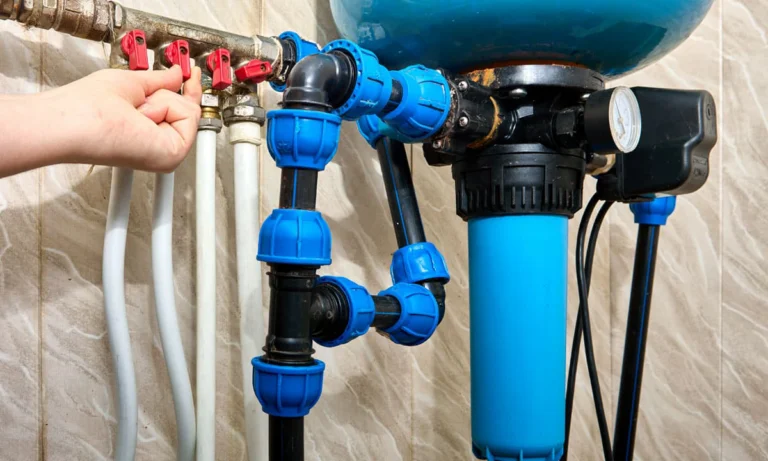
A water softener removes hardness minerals — primarily calcium and magnesium — from your water supply through a process called ion exchange. Hard water flows into a tank filled with resin beads that are coated with sodium ions. As water passes through, the calcium and magnesium ions bond to the resin and the sodium ions are released in their place. The result is soft water that flows throughout your home without leaving scale deposits on fixtures, pipes, and appliances. Periodically, the resin bed is regenerated using a salt brine solution, which flushes the captured minerals down the drain and recharges the beads for the next cycle.
Why Hard Water Is a Problem on the Front Range
Denver and the surrounding Front Range metro area have notably hard water. The water picks up calcium and magnesium as it percolates through Colorado’s limestone and rock formations before reaching the treatment plant. Hard water isn’t a health hazard, but it’s hard on your home. Scale builds up inside water heater tanks, reducing efficiency and shortening lifespan. It clogs showerheads and aerators, dulls fixtures, leaves soap scum that’s difficult to rinse, and makes laundry look dull and feel stiff. Over years, scale accumulation in supply lines can noticeably restrict flow.
The Ion Exchange Process in Detail
The mineral tank is the heart of the system. It’s filled with small polystyrene beads, each carrying a negative charge that naturally attracts positively charged ions. Sodium ions (from the salt) are pre-loaded onto the beads. When hard water flows through, the doubly-charged calcium and magnesium ions displace the single-charged sodium ions because they bond more strongly to the resin. Soft water exits the tank with trace amounts of sodium added — not a significant amount for most people, but relevant for those on sodium-restricted diets.
The brine tank holds the salt used for regeneration. During a regeneration cycle (typically set to run at night, once every few days), a concentrated salt solution is drawn through the mineral tank. The high sodium concentration overpowers the calcium and magnesium ions, flushing them off the resin and down the drain. The beads emerge recharged with sodium and ready for another cycle.
Salt-Based vs. Salt-Free Systems
Traditional ion-exchange softeners use sodium or potassium chloride salt. Salt-free “conditioners” are also marketed as water softeners, but they work differently — they use a physical process called template-assisted crystallization (TAC) that converts hardness minerals into crystals that don’t stick to surfaces. Salt-free systems reduce scale but don’t actually remove calcium and magnesium from the water. For homes with high hardness levels common in parts of the Denver metro, a true ion-exchange softener typically performs better at protecting water heaters and appliances.
- Most Denver-area water registers between 8 and 15+ grains per gallon (gpg) of hardness — a plumber can test yours precisely
- Softener size (grain capacity) should match your household’s daily water usage and the hardness level
- Demand-initiated regeneration systems are more efficient than time-clock models — they only regenerate when needed
- Keep a separate unsoftened tap for outdoor irrigation — plants don’t need soft water and the sodium in softened water can affect soil over time
- Many homeowners pair a softener with a reverse osmosis drinking water system for the best of both: soft water throughout the house and pure drinking water at the kitchen tap
Protecting Your Water Heater and Appliances
One of the most compelling reasons to install a water softener in Colorado is water heater protection. Scale buildup from hard water forces a water heater to work harder, drives up energy costs, and can reduce tank life by years. A softener installed on the main supply line protects the heater, dishwasher, washing machine, and every fixture in the house from the inside out.
Ongoing Maintenance: Salt and Service
Water softeners require minimal but consistent maintenance. The primary task is keeping the brine tank stocked with softener salt — sodium chloride or potassium chloride pellets, available at hardware and home improvement stores. How quickly you go through salt depends on your water hardness and household usage. Beyond salt, every few years the resin bed itself can become fouled with iron or other contaminants and may benefit from a resin cleaner treatment. The brine tank should also be inspected periodically for salt bridges (a crusty layer that forms above the water level and fools the system into thinking the tank is full when it isn’t). A plumber or water treatment technician can walk you through the basics during installation.
Done installs and services water softeners and other water treatment systems throughout the Denver metro. Learn more about our water quality and treatment services, or visit our water heater services page if you’re concerned about what hard water has already done to your tank. Contact us to schedule a water hardness test and get a recommendation for your home.