A well-maintained residential boiler typically lasts 15 to 30 years — significantly longer than most forced-air furnaces. Cast iron boilers on the longer end of that range are common in older Denver-area homes, and some remain in service well past 25 years when they’ve been properly serviced. The key variables are fuel type, water quality, maintenance history, and whether the system experienced overheating events or prolonged operating issues that stressed the heat exchanger.
Why Boilers Often Outlast Furnaces
Boilers operate in a relatively controlled, closed-loop environment. The same water circulates continuously — unlike a forced-air furnace that pulls in and expels combustion gases and circulates outside air through a heat exchanger. A well-maintained boiler system with treated water experiences less corrosion and fewer contaminant-related failures. Cast iron sections are extremely durable under steady thermal cycling, which is why boilers from the 1980s and earlier are still operating in many Colorado homes.
Modern high-efficiency condensing boilers use stainless steel or aluminum heat exchangers and are more sensitive to water chemistry and pH. They’re far more efficient — AFUE ratings of 90% and above compared to older cast iron units in the 70–80% range — but they require more attention to water quality to reach their full service life.
The Role of Water Quality in Boiler Longevity
Colorado’s hard water is a meaningful factor for boiler systems. When system water with high mineral content is heated repeatedly, calcium and magnesium precipitate and form scale on heat exchanger surfaces. Scale is a thermal insulator — even a thin layer significantly reduces heat transfer efficiency — and it accelerates corrosion underneath. In a closed loop system with proper inhibitor chemistry, this is manageable. Systems that were never treated, or that had repeated water additions (indicating a slow leak somewhere in the system), accumulate scale and corrosion damage faster.
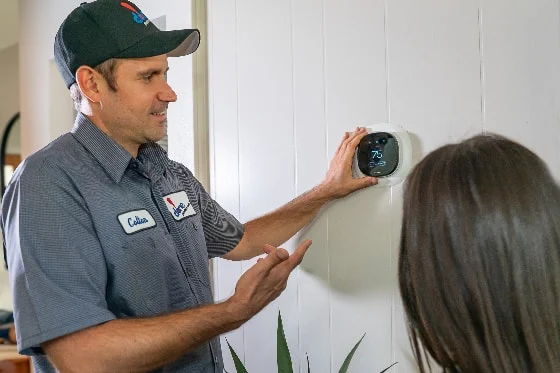
A Done! technician performing a boiler tune-up will test system water pH and inhibitor levels, check for signs of corrosion in the expansion tank and at heat exchanger connections, and note any indicators that the water chemistry has been problematic. Catching and correcting these issues adds years to a boiler’s life.
Warning Signs That a Boiler Is Nearing End of Life
- Visible rust staining or mineral deposits around connections, the pressure relief valve, or the heat exchanger
- Pressure relief valve discharging repeatedly — indicates either high system pressure or a waterlogged expansion tank
- Boiler cycling on and off frequently (short cycling) due to a cracked heat exchanger or failing aquastat
- Uneven heat across zones — radiators or baseboard units that no longer get hot suggest circulation problems, often from sludge or failing zone valves
- Increasing fuel consumption without a change in weather patterns or thermostat settings
- Visible cracks or weeping in cast iron sections — this is typically a replacement indicator, not a repair
Repair vs. Replace: The 50% Rule and Age Considerations
A common guideline is this: if a repair costs more than 50% of what a comparable new boiler would cost, and the existing unit is more than 15 years old, replacement usually makes more economic sense over a 5- to 10-year horizon. An aging boiler that needs a major heat exchanger repair today will likely need another significant repair within a few years, while a new unit comes with a full warranty and the efficiency gains of modern equipment.
That said, a 20-year-old cast iron boiler that has been well maintained, shows no corrosion in the sections, and needs only a burner component or circulator pump replacement may be worth repairing. The decision is unit-specific, and Done!’s technicians give you an honest assessment — including the age and condition of the unit alongside the repair cost — so you can make the call that makes sense for your situation.
Extending Boiler Life With Annual Maintenance
Annual boiler service should include cleaning burners, testing safety controls (high-limit, pressure relief), checking flue draft and combustion efficiency, inspecting the heat exchanger for cracks, testing expansion tank pre-charge pressure, and reviewing system water chemistry. At altitude, combustion tune-up is particularly important — burner air-to-fuel ratios that work at sea level may produce excess carbon monoxide at Denver’s elevation if not properly adjusted for the lower oxygen content of the air.
Visit our boiler repair page to learn about service options, or explore our heating maintenance programs. If your boiler is showing its age, contact Done! for a professional assessment and honest replacement recommendation.