Furnace repair cost in the Denver area varies widely depending on what failed, what parts are needed, and how long the repair takes. A minor fix like a flame sensor cleaning or an ignitor replacement is a very different cost from a heat exchanger replacement or a control board failure on an older system. Done provides a diagnostic assessment and a clear quote before any repair work begins — you will know the cost before you approve the work.
The Diagnostic Visit: What You Pay to Get Answers
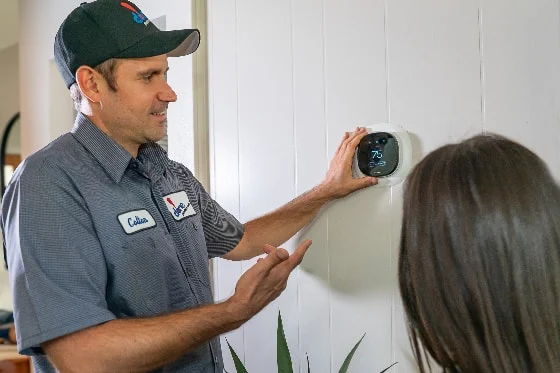
The first step in any furnace repair is diagnosis. A technician visits your home, evaluates the system, identifies the fault, and provides a repair recommendation with pricing. Done charges a service/diagnostic fee for this visit — that fee is disclosed upfront when you schedule. The diagnostic step is non-negotiable for any honest repair: a furnace can present the same symptoms (no heat, short-cycling, lockout) from a dozen different causes, and guessing at the fix without proper diagnosis wastes your money and may not solve the actual problem.
What Makes Repair Costs Vary
The biggest drivers of repair cost are parts and labor. Some components — a standard hot-surface ignitor, a flame sensor, a pressure switch — are relatively inexpensive and quick to swap. Others — an inducer motor assembly, a gas valve, a control board, or a heat exchanger — are more expensive parts that also take more time to replace. Labor time is affected by how accessible the failed component is inside the cabinet, whether additional components need to be removed to reach it, and whether any related adjustments or testing are needed after the repair. The brand and model of your furnace also affect parts cost: some manufacturers have better parts availability and pricing than others.
Emergency Repairs Cost More — Here’s Why
If your furnace fails during a Colorado cold snap and you need same-day or after-hours service, expect to pay a premium over standard scheduling. Emergency dispatch requires technicians to be available outside normal business hours, and that availability has a cost. Done is transparent about emergency service pricing when you call. The premium is real, but so is the alternative — a Denver home without heat when overnight temperatures drop below freezing can develop frozen pipes within hours, which is a far more expensive problem than an emergency HVAC call.
When Repair Cost Should Trigger a Replacement Conversation
Not every repair is worth making. A useful benchmark: multiply the age of your furnace (in years) by the estimated repair cost. If the result exceeds $5,000, replacement is usually the more sensible financial path. More concretely, if a repair quote approaches half the cost of a comparable new system — or if your furnace has already had significant repairs in the past two years — Done will tell you that honestly. Spending repair dollars on a system that is likely to fail again in another season is not a good investment, and Done’s technicians are straightforward about where that line is.
Care Club Members Pay Less for Repairs
Done’s Care Club maintenance membership includes discounts on repair parts and labor for members, in addition to the annual tune-up and priority scheduling. For homeowners with aging systems who expect they may need service calls over the next few years, the membership can pay for itself with a single repair visit.
- Diagnostic fee charged upfront and disclosed when you schedule
- Parts cost varies widely: ignitor and flame sensor are low; heat exchanger and control board are high
- Labor time depends on component accessibility and repair complexity
- Emergency and after-hours service carries a premium
- Age × repair cost over $5,000 generally favors replacement
For a straightforward repair quote, schedule a diagnostic visit through Done’s furnace repair page. If your furnace is out and you need help fast, emergency heating repair is available. And if the repair quote gives you pause, ask Done for an honest comparison against replacement options — the conversation is free.