A furnace tune-up is a professional maintenance visit where a licensed HVAC technician inspects, cleans, and tests your heating system to make sure it’s operating safely and efficiently before or during the heating season. It’s not just a filter change — a thorough tune-up covers combustion, electrical, mechanical, and safety systems. Most Denver-area homeowners should schedule one annually, in the fall, before temperatures drop and the furnace has to carry the full load of keeping the house warm.
What a Furnace Tune-Up Includes
The exact checklist varies slightly by company and system type, but a complete furnace tune-up from a reputable contractor covers all of the following areas:
- Heat exchanger inspection: Checked for cracks or holes. A compromised heat exchanger can allow combustion gases — including carbon monoxide — to enter your home’s airstream. This is the most critical safety check of the visit.
- Burner and ignition system: Burners cleaned, igniter tested, flame sensor inspected and cleaned. Burner flame color and pattern verified (should be steady blue, not orange or yellow).
- Gas pressure and manifold settings: Verified against manufacturer specs, adjusted as needed for Denver’s altitude — combustion is less efficient at 5,280 feet, and proper calibration matters.
- Flue and exhaust venting: Inspected for blockages, corrosion, or separation. Birds nesting in flue caps over the summer is more common than you’d think.
- Blower motor and belt: Motor checked for proper amp draw and signs of wear; belt inspected (on older systems with belt-drive blowers); lubrication applied where needed.
- Electrical components: Capacitors, contactors, control board, and wiring connections inspected and tested.
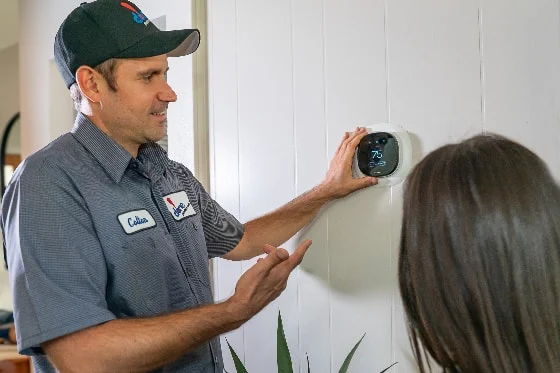
- Thermostat calibration: Verified that the thermostat is reading correctly and communicating accurately with the furnace.
- Filter inspection and replacement: Filter condition checked and replaced if needed (or homeowner advised on replacement schedule).
Why Altitude Makes Tune-Ups More Important in Denver
At 5,280 feet, the air is thinner — roughly 17% less oxygen per cubic foot than at sea level. Gas furnaces are calibrated for combustion at a specific air density, and a furnace installed without altitude adjustment, or one whose settings have drifted over time, may not be burning fuel cleanly or completely. The result can be reduced efficiency, increased carbon monoxide production, or accelerated heat exchanger wear. A technician familiar with Colorado conditions will verify and correct these settings as part of the tune-up — something a fly-by-night or out-of-market contractor might overlook.
What a Tune-Up Is Not
A tune-up is a preventive maintenance service, not a repair. If the technician finds a failing component during the visit — say, a cracked igniter or a capacitor that’s reading out of spec — that part will need to be replaced as a separate repair. A tune-up catches those problems early, while they’re usually minor and inexpensive to address. The alternative is waiting until the component fails completely, which tends to happen on the coldest night of the year and turns a $150 part into a $300 emergency service call.
How Often and When to Schedule
Once a year is the standard recommendation for gas furnaces, and fall is the ideal time — before you actually need the heat. Scheduling in September or October means you’re not competing with the rush of homeowners who discover their furnace doesn’t work on the first genuinely cold day of November. It also gives you time to schedule any identified repairs before you’re heating-dependent.
Homeowners who sign up for Done’s Care Club maintenance membership have their annual tune-up scheduled automatically, plus priority service if something does go wrong during the season.
The Long-Term Value of Regular Tune-Ups
A furnace that’s consistently maintained runs more efficiently than one that isn’t — meaning lower monthly energy bills. It also tends to last significantly longer. Most quality gas furnaces are designed for 15–20 years of service life; many reach or exceed that with proper maintenance, and many fall short of it without. When you look at the cost of a tune-up against the cost of premature furnace replacement, the math strongly favors staying current on maintenance.
Ready to schedule? Book a furnace tune-up with Done and go into winter knowing your heating system is ready. If your furnace is already having trouble, our furnace repair team can diagnose and fix it fast.