There are a handful of AC maintenance tasks you can safely do yourself — and a much larger set that require a licensed HVAC technician with proper tools and refrigerant certifications. Understanding which is which helps you keep your system running well between professional visits without creating new problems or voiding your equipment warranty. The short answer: DIY handles the outside of the system; professionals handle the inside.
What Homeowners Can Safely Do
These tasks are genuinely safe and effective for most homeowners to handle on their own:
- Replace the air filter: One of the highest-impact maintenance tasks. In Colorado during wildfire smoke season, check monthly — filters load up far faster than normal during smoke events
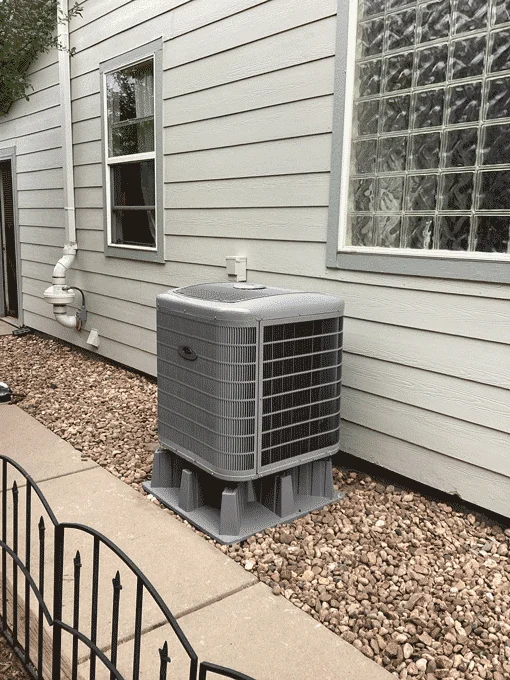
- Clear the area around the outdoor condenser: Remove leaves, grass clippings, and debris from around the unit; trim back vegetation to maintain at least 18–24 inches of clearance on all sides
- Rinse the outdoor condenser coil: A gentle rinse with a garden hose (fins down) removes dust and cottonwood debris — common on the Front Range in spring — from the outside of the coil. Never use a pressure washer; it bends the fins
- Keep condensate drain lines clear: If you know where your drain line terminates, you can pour a cup of diluted white vinegar down the indoor drain pan periodically to discourage algae growth
- Test your thermostat and change its batteries: A thermostat with weak batteries causes erratic behavior that looks like a system problem but isn’t
What Requires a Licensed Technician
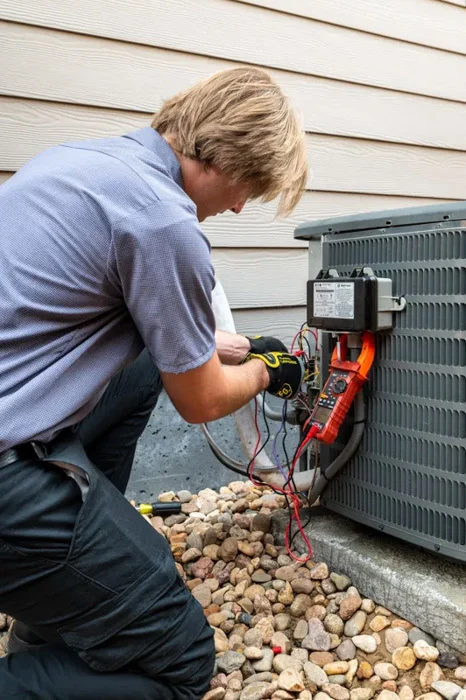
Beyond those surface tasks, AC maintenance requires professional training, tools, and in some cases federal certification (EPA 608 for refrigerant handling). Things a homeowner should never attempt include checking or adding refrigerant, cleaning the evaporator coil inside the air handler, testing electrical components, inspecting the compressor, or evaluating refrigerant charge. These aren’t gatekeeping — they involve real safety risks, specialized equipment, and the potential for expensive damage if done incorrectly.
At Denver’s altitude, refrigerant pressure readings differ from sea-level norms. A technician unfamiliar with high-altitude adjustments can misread a correctly charged system as undercharged, leading to unnecessary refrigerant addition that actually degrades performance. Done’s technicians know these altitude-specific adjustments.
What a Professional AC Tune-Up Covers
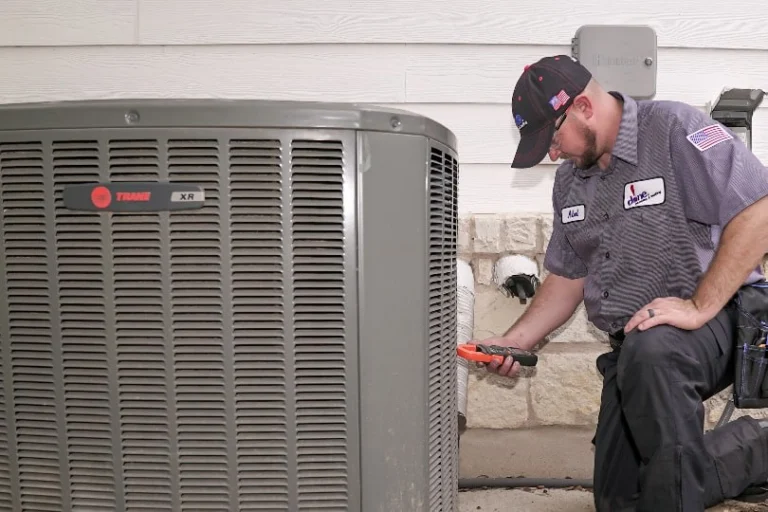
A professional AC maintenance visit goes well beyond what a homeowner can do. Done’s tune-up includes checking refrigerant charge and looking for leaks, measuring superheat and subcooling, testing electrical components (capacitors, contactors, disconnect), inspecting and cleaning the evaporator and condenser coils, checking the blower motor, measuring temperature split across the coil, verifying thermostat calibration, inspecting the condensate drain and pan, and testing the system through a full cycle.
These checks catch small problems — a capacitor showing marginal readings, a slightly low refrigerant charge, early signs of coil fouling — before they become mid-summer breakdowns when HVAC technicians across the metro are booked solid.
How Often Professional Maintenance Should Happen
Annual professional maintenance is the standard recommendation, and spring is the ideal time for Denver-area homeowners. Getting your system inspected in April or May means any issues are resolved before the Front Range hits its stretch of 90°F+ days. Waiting until July to schedule maintenance means you’re at the back of a very long line.
Done’s Care Club membership includes annual AC maintenance along with priority scheduling, which means you move to the front of the line when you need service. It’s the most practical way to ensure your system stays maintained without having to remember to book it every year.
To schedule your professional tune-up, visit our AC maintenance page or see Care Club membership details. Done serves the Denver metro and is available for tune-ups and AC repair throughout the Front Range.