Yes — flushing a water heater tank is one of the more accessible DIY maintenance tasks, and doing it annually significantly extends the unit’s life. The process removes sediment that accumulates on the tank floor, restores heating efficiency, and reduces the rumbling or popping sounds that signal heavy mineral buildup. In Denver’s hard-water environment, this maintenance matters more than it does in softer-water regions — sediment accumulates faster here, and skipping annual flushes is one of the main reasons Colorado water heaters fail earlier than their rated service life.
What You’ll Need Before You Start
Gather a standard garden hose long enough to reach a floor drain or the exterior of your home, a flathead screwdriver (for some drain valve types), work gloves, and eye protection. You don’t need to fully drain the tank for a basic sediment flush — a partial drain of several gallons is often sufficient to clear loose sediment, though a full drain is more thorough. Plan the job when the water heater hasn’t been running for at least an hour to reduce the risk of scalding from the drained water.
Step-by-Step Flushing Process
Here’s how to flush a standard tank water heater safely:
- Turn the heater to pilot (gas) or off (electric): You don’t need to wait for the water to fully cool — just reduce heat so you’re not running the burner against an empty or low tank
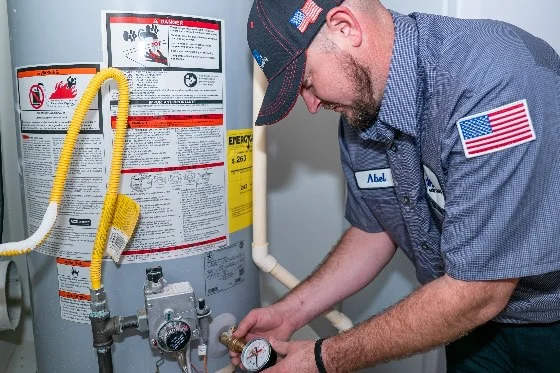
- Connect the hose to the drain valve at the base of the tank and run the other end to a floor drain or outside
- Open a hot-water tap somewhere in the house to prevent a vacuum from forming in the tank as it drains
- Open the drain valve: Water will flow out — initially murky or rust-colored if there’s significant sediment, then clearing as the flush progresses
- Once water runs clear (or you’ve drained the volume you intended), close the drain valve, remove the hose, close the hot-water tap you opened, and turn the cold-water inlet back on fully to refill
- Wait for the tank to fully refill before relighting the pilot or turning the element back on — running the element or burner with a low water level can damage the unit
The Most Common DIY Flush Problem: A Seized Drain Valve
The drain valve on water heaters that have never been flushed often seizes from mineral scale and corrosion. Forcing a stuck plastic drain valve can crack it — and a cracked valve at a full tank is an urgent plumbing problem, not just a minor inconvenience. If your valve doesn’t open smoothly with moderate hand pressure, stop and call a plumber. Done can replace the drain valve and flush the tank in a single visit, and we stock the correct parts for most common heater brands and sizes.
In Colorado, plastic drain valves on older units (especially those that have seen Denver’s mineral-heavy water for a decade or more) are particularly prone to seizing. Some plumbers recommend replacing the factory plastic valve with a full-port brass ball valve when the opportunity arises — it’s a small upgrade that makes every future flush far easier.
What Flushing Won’t Fix
A flush removes loose sediment from the tank floor. It doesn’t address scale that has already hardened into a concrete-like layer on the bottom, which is common in units that have gone five or more years without maintenance. At that point, the sediment insulates the burner plate or element from the water, causing the bottom of the tank to overheat, and no amount of flushing will dislodge it. If your water heater sounds like a percolating coffee maker or loud crackling even after a flush, the sediment has hardened and the heater’s remaining service life is likely limited.
Flushing also won’t rejuvenate a depleted anode rod, which is the sacrificial magnesium or aluminum rod that protects the tank interior from corrosion. Anode rod inspection and replacement is a separate task that Done includes as part of professional water heater maintenance — it’s harder to access without the right tools and is easy to skip, but it’s one of the most impactful things you can do to extend a tank’s life.
Professional Maintenance as a Complement to DIY Flushing
Annual homeowner flushing is a good habit, but a professional maintenance visit every year or two adds the anode rod check, a pressure test, TPR valve inspection, and a look at all connections that a DIY flush doesn’t cover. Done offers water heater maintenance visits, and Care Club members get scheduled maintenance built into their membership so it doesn’t slip through the cracks. For step-by-step professional service, visit our water heater maintenance page, or see our full water heater services overview if you’re also considering whether your unit is approaching replacement age.