Programmable thermostats let you set a fixed schedule — cool to 72°F at 7 a.m., ease back at 9 a.m. — and they follow that script whether you’re home or not. Smart thermostats go further: they learn your patterns, respond to your location, connect to your phone, and integrate with your other home systems. For Denver homeowners dealing with wide day-to-night temperature swings and unpredictable Front Range weather, that adaptability can mean real comfort improvements and measurable energy savings.
How a Programmable Thermostat Works
A programmable thermostat is essentially a timer with temperature setpoints. You program it once — weekday schedule, weekend schedule — and it repeats that routine indefinitely. It’s a significant upgrade over a manual thermostat because you can automatically set back temperatures during sleeping hours or when the house is empty. The limitation is that the schedule is rigid. Leave early for a trip, come home late, or have an unusually warm October afternoon in Colorado — the thermostat doesn’t know and doesn’t adjust.
What Makes a Smart Thermostat Different
Smart thermostats add intelligence on top of scheduling. The key differences include:
- Learning: Models like the Ecobee and Google Nest observe your adjustments over days and weeks and build a schedule that matches your actual behavior.
- Geofencing: Using your phone’s location, the thermostat knows when you’re heading home and starts conditioning the house before you walk in — and stops wasting energy when you leave.
- Remote access: Adjust temperature from anywhere via a smartphone app. If you’re traveling and forgot to change the schedule, fix it from the airport.
- Weather integration: Smart thermostats pull in local forecast data and factor it into their decisions — especially useful in Denver where a 70°F afternoon can drop 30 degrees by evening.
- Runtime reporting: Most smart thermostats show you exactly how long your system ran each day, flag unusually long cycles, and alert you when it’s time for maintenance.
Energy Savings at 5,280 Feet
Denver’s altitude and climate create some specific dynamics worth understanding. The city sits at a mile high, where the air is drier and thinner than at sea level. Humidity rarely climbs the way it does in the Midwest or Southeast, so the “feels like” temperature swings more dramatically with the sun. A smart thermostat that integrates outdoor temperature data and adjusts preemptively — ramping up cooling before a hot afternoon peaks, rather than playing catch-up — runs your system more efficiently than a fixed schedule that fires at the same time every day regardless of conditions.
The U.S. Department of Energy estimates that properly used programmable thermostats can reduce heating and cooling costs meaningfully, and smart thermostats often exceed those savings because they adapt rather than just follow a preset. Exact savings depend on your system, your home’s insulation, and how dramatically your schedule varies — but the payback period for a smart thermostat is typically a year or two for most households.
Compatibility Considerations
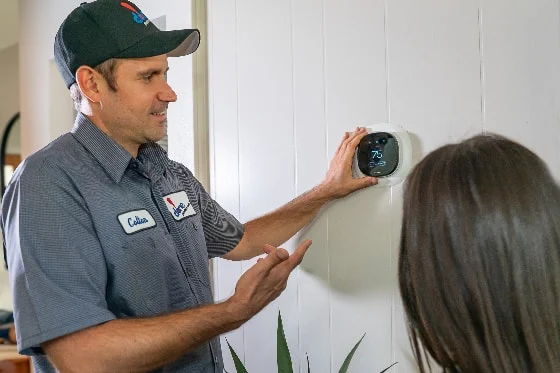
Not every smart thermostat works with every system. Homes with heat pumps, two-stage furnaces, or multi-zone setups require a thermostat rated for those configurations. Older systems sometimes lack a C-wire (common wire), which powers the smart thermostat’s continuous connection; many modern smart thermostats include an adapter or workaround, but it’s worth confirming before you buy. Done’s technicians can assess your system, recommend a compatible model, and handle the installation so you don’t lose a weekend to wiring and app configuration.
Pairing a Smart Thermostat With a Healthy System
A smart thermostat is only as effective as the system behind it. If your furnace or AC is running inefficiently, the thermostat will try to compensate — running longer cycles and driving up energy costs regardless of how well it’s programmed. Regular AC maintenance and furnace maintenance keep your equipment operating at rated efficiency, which is when smart thermostat savings really show up on your bill. Consider pairing a new thermostat installation with a system tune-up.
Thinking about upgrading to a smart thermostat or want to make sure your HVAC system is ready to make the most of one? Contact Done to schedule a visit, or explore our Care Club maintenance membership to keep your system in top shape year-round.