There is a meaningful difference between basic AC upkeep that homeowners should handle themselves and actual system servicing that requires professional training, certifications, and equipment. The short answer: yes to the upkeep tasks, no to the servicing tasks. Understanding which is which will save you money, protect your system, and keep you safe.
Homeowner Maintenance Tasks Worth Doing Regularly
These are tasks that genuinely make a difference to system performance and are safe and appropriate for homeowners:
- Replace the air filter every 1–3 months — this is the highest-impact thing any homeowner can do for AC performance and efficiency
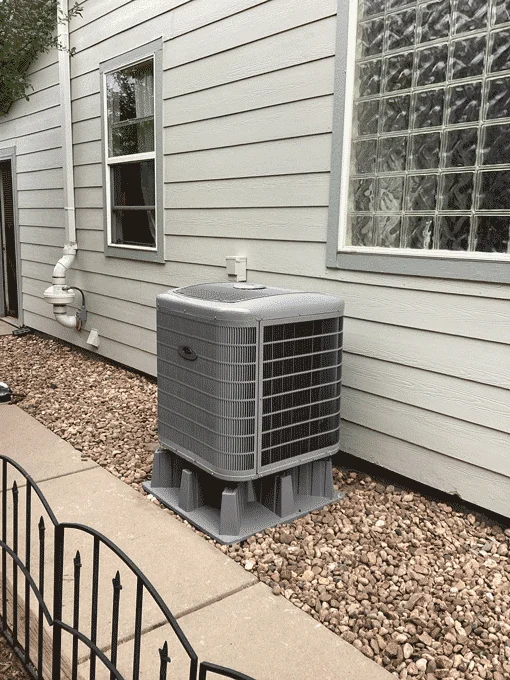
- Keep the outdoor condenser clear of weeds, shrubs, and debris — 18 inches of clearance all around allows proper airflow
- Rinse the exterior of the condenser fins with a gentle garden hose spray (power off at the disconnect first) to remove surface cottonwood and dust
- Keep interior supply and return vents open and unblocked by furniture
- Keep the area around indoor air handlers clear of stored boxes and clutter that restrict return airflow
- Check the condensate drain pan under the air handler occasionally for standing water, which signals a clog
What Professional Servicing Actually Involves
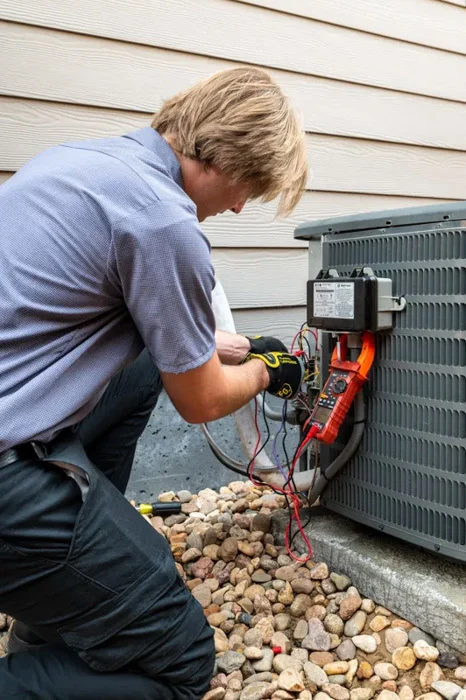
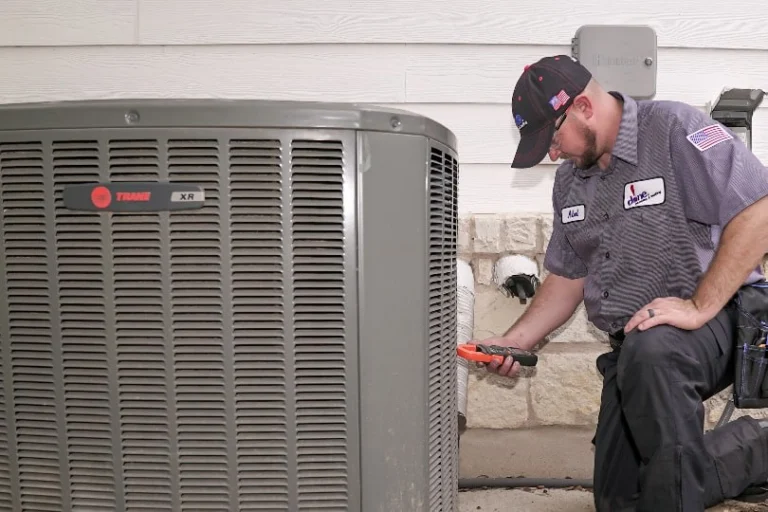
Professional AC servicing goes well beyond what’s accessible to a homeowner without specialized equipment. A technician measures refrigerant pressures with calibrated manifold gauges and compares them to manufacturer specifications for the specific refrigerant type at the ambient temperature and altitude — three variables that interact. They measure the temperature differential between supply and return air with calibrated instruments to verify the system is actually removing heat at the designed rate. They use a clamp meter to measure motor amp draw and compare it to nameplate ratings, which reveals a motor heading toward failure before it actually fails. They clean the evaporator coil — which is typically sealed inside the air handler and not accessible without removing panels — with appropriate coil cleaner that must be rinsed and captured properly. None of these tasks are feasible or safe for the average homeowner.
The Refrigerant Barrier — Federal Law, Not Just Policy
The clearest line between homeowner maintenance and professional servicing is refrigerant. Under EPA Section 608, purchasing, handling, or venting regulated refrigerants (R-410A, R-22, and others) without EPA 608 certification is a federal violation. This means you cannot legally buy refrigerant at a home improvement store, add refrigerant yourself, or even capture refrigerant without the proper recovery equipment and certification. Done’s technicians are EPA 608 certified and carry the proper equipment to handle refrigerant legally and safely. If your system is low on refrigerant, this is a task that requires a professional — not as an industry gatekeeping move, but because the law requires it and because the safety risks of refrigerant exposure are real.
Denver’s Cottonwood and Dust: A Local Servicing Challenge
On the Front Range, outdoor condenser coils take a particularly hard hit during spring cottonwood season and during summer months when dry winds carry fine particulate dust. A homeowner can rinse the visible exterior surfaces, but the coil fins run deep and the interior portions accumulate debris that exterior rinsing doesn’t reach. Professional coil cleaning involves applying a coil-safe chemical cleaner that penetrates the fin depth, loosens bound debris, and drains out through the bottom of the unit. This level of cleaning meaningfully restores airflow and heat-transfer efficiency — the difference between a system running at 85 percent capacity and one running at full design capacity.
Annual Professional Service Is Worth the Investment
The combination of consistent homeowner upkeep (filter changes, clear surroundings) plus annual professional AC maintenance from Done gives your system the best chance of a long, reliable service life. Professional tune-ups catch developing problems — a capacitor reading near the edge of its rating, a small refrigerant leak before it stresses the compressor, a condensate drain starting to slow — before they become emergency repairs or system failures. Done’s Care Club plan bundles annual cooling and heating tune-ups with priority scheduling and repair discounts, making it easy to stay on schedule without thinking about it. Schedule your annual AC service with Done today.