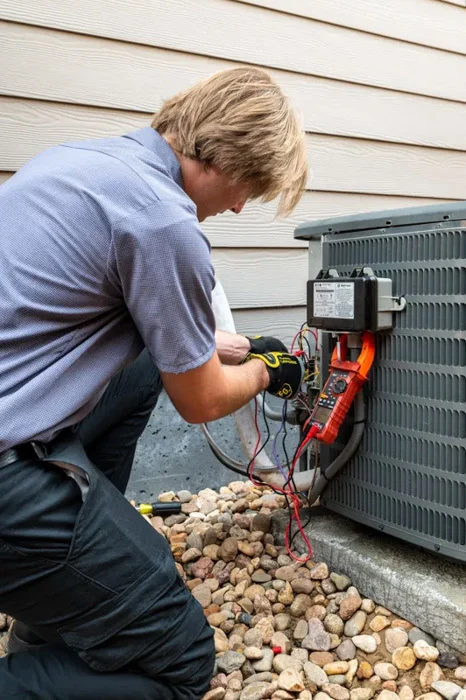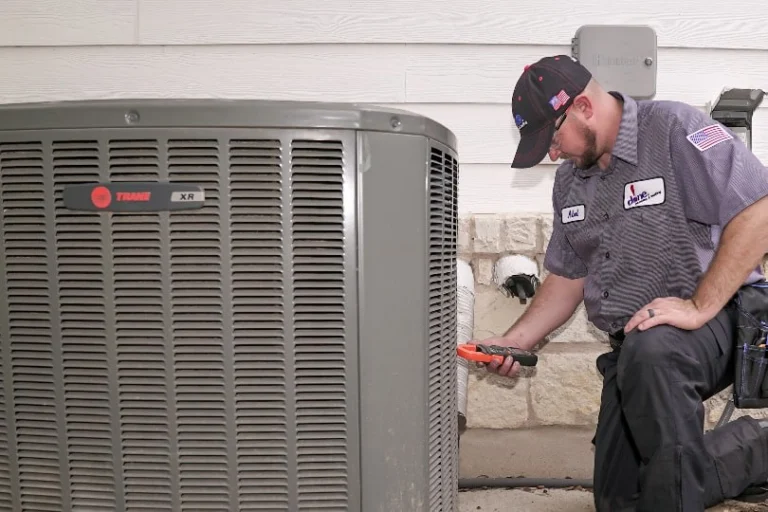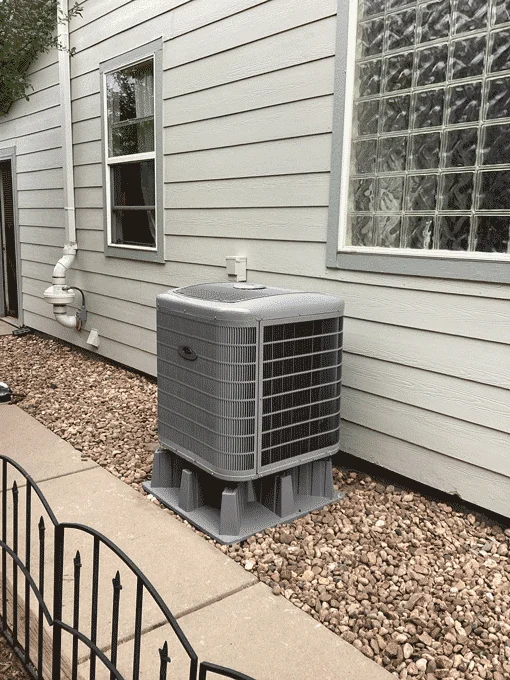
Yes — AC repair is one of Done’s core services across the Denver metro, Aurora, and the surrounding Front Range communities. Whether your system has stopped cooling entirely, is making unfamiliar sounds, is cycling on and off too frequently, or just isn’t keeping up on a hot Colorado afternoon, Done’s technicians are equipped to diagnose and fix the problem — most often in a single visit.
Common AC Repairs Done Handles
Done’s repair technicians work on the full range of residential cooling problems:
- Capacitor and contactor replacement — among the most common failures, usually presenting as a unit that hums but won’t start
- Refrigerant leak detection, repair, and recharge using electronic leak detectors and UV dye
- Blower motor and condenser fan motor replacement
- Evaporator coil and condenser coil cleaning or replacement
- Condensate drain clearing and pan repair
- Thermostat diagnosis and replacement
- Electrical wiring, disconnect, and control board issues
- Frozen evaporator coil diagnosis and resolution
Why Root-Cause Diagnosis Matters
Some companies will add refrigerant without finding the leak, which produces temporary cooling but costs you money again when the charge is low six months later. Done’s approach is to identify the root cause first. If refrigerant is low, we locate the leak using electronic detection equipment, repair it (or explain why repair isn’t cost-effective relative to replacement), and then recharge the system to manufacturer specifications. This is the only approach that actually solves the problem. Similarly, a frozen evaporator coil is a symptom — of low refrigerant, restricted airflow from a clogged filter, or a failing blower motor — and treating only the ice without addressing the cause means the coil will freeze again within days.
Colorado-Specific Repair Situations
Denver’s climate creates repair scenarios that are more common here than in other parts of the country. Hailstorms routinely damage condenser fin arrays, reducing airflow and efficiency so gradually that homeowners often attribute the change to general aging rather than a specific event. If your system seems to be running fine but your electric bills are higher than they used to be, hail fin damage could be a factor — Done’s technicians assess the damage and straighten fins with a fin comb where possible. The fine dust and cottonwood that move through the Front Range each spring also clog outdoor coils faster than in humid climates, showing up as reduced capacity and longer run times before causing an outright failure. And because Colorado’s shoulder seasons are short, systems often sit unused for months and reveal problems on the first hot day of the year — which is when every AC company in Denver is busiest.
When to Call for Emergency AC Repair
Some situations shouldn’t wait for a regular appointment. If your home is reaching dangerous temperatures for elderly family members or young children, if you smell burning or see visible electrical scorching near the unit, or if refrigerant is visibly leaking (white vapor or frost on lines), call Done’s emergency AC repair line rather than waiting. Colorado summers are real — a home without air conditioning in 95°F heat is not a trivial inconvenience, and some situations (especially electrical issues near HVAC equipment) carry safety risk.
Repair vs. Replace — How Done Helps You Decide
When Done diagnoses a repair, we also consider whether the repair makes financial sense relative to the age and overall condition of the system. A capacitor replacement on a 4-year-old unit is an obvious yes. A compressor replacement on a 14-year-old R-22 system is a different conversation. We lay out both options clearly, including estimated remaining service life and the efficiency differences between your current system and a modern replacement, so you can make an informed decision without pressure. If replacement makes more sense, we’ll show you replacement options and financing available. If repair is the right call, we fix it and get you back to comfortable.
Contact Done to schedule AC repair anywhere in the Denver metro and Front Range. We also offer maintenance plans that help prevent the most common repairs before they happen.