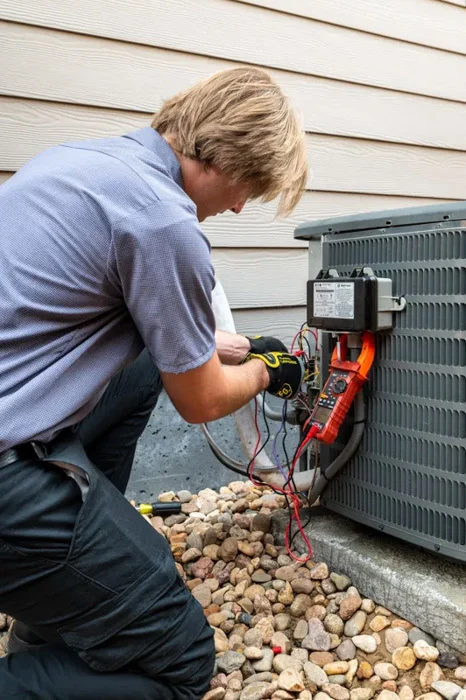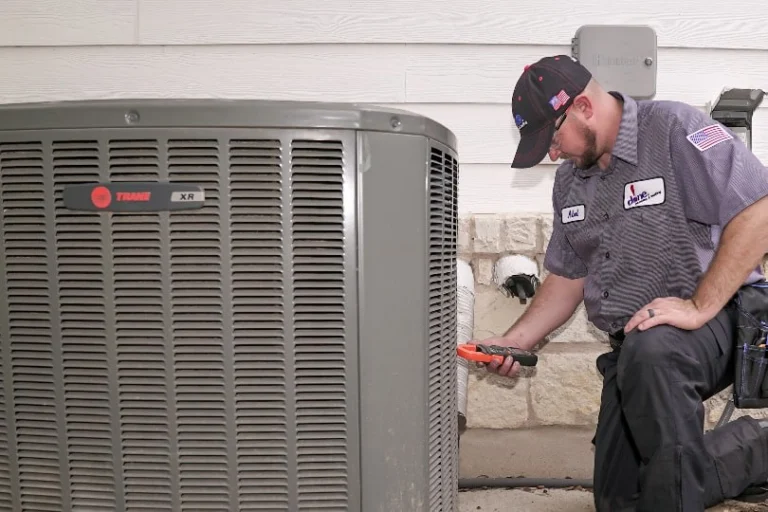
Yes — Done replaces AC condensers throughout the Denver metro, Aurora, and the broader Front Range. Whether your existing condenser has reached the end of its service life, suffered hail damage, or failed outright, our technicians evaluate the unit, recommend the right replacement, and complete the installation so you’re not stuck without cooling in the middle of a Colorado summer.
What the Condenser Does and Why It Fails
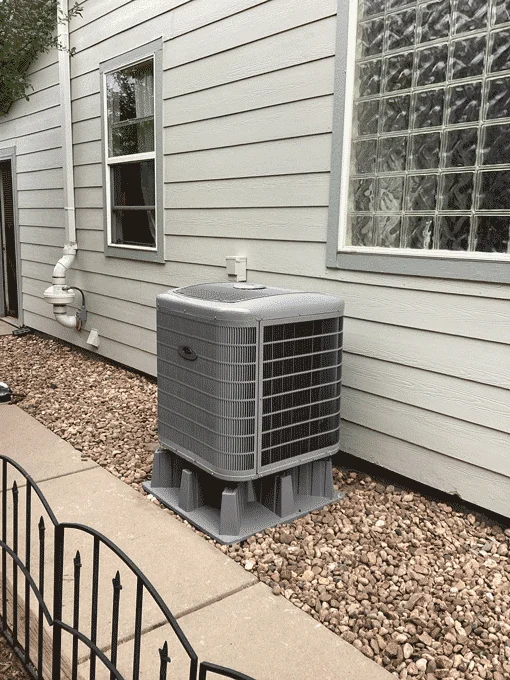
The outdoor condenser unit is the half of your air conditioning system that sits outside the home. It houses the compressor, the condenser coil, and a large fan. Its job is to release the heat that was absorbed from inside your home into the outdoor air. Common condenser failure causes in Colorado include compressor burnout (often from repeated short-cycling or prolonged refrigerant deficiency), capacitor failure (extremely common and often repairable without full replacement), condenser coil damage from hailstorms, and refrigerant leaks that let the compressor run without adequate lubrication and cooling. Age is always a factor — most condensers have a service life of 12–18 years, and Denver’s intense UV exposure and dramatic temperature swings can shorten that range.
Repair vs. Full Condenser Replacement
Not every condenser problem requires replacement. Done’s technicians diagnose before recommending anything. A failed capacitor, contactor, or fan motor is almost always worth repairing if the compressor is healthy. Full condenser replacement becomes the stronger choice when:
- The compressor has failed and the unit is more than 8–10 years old
- The refrigerant type is R-22 (Freon), which is phased out and now extremely expensive to source
- Hail has severely damaged condenser coil fins beyond restoration
- The unit has had repeated repairs over recent seasons and reliability is declining
- The indoor evaporator coil is also aging and a mismatched replacement would compromise efficiency ratings
Matched Systems and Altitude Sizing
A new condenser must be matched to your indoor evaporator coil and air handler to achieve the SEER2 efficiency rating on the label. Mixing an old coil with a new condenser creates a mismatched system that may cool your home but runs less efficiently than a properly matched new system or a well-maintained older one. Done’s technicians assess the full system before recommending condenser replacement, and they apply altitude correction when selecting equipment. At 5,280 feet, air density is meaningfully lower than at sea level, and equipment selection should reflect that — not a national average.
Hail Damage — A Colorado-Specific Concern
The Front Range sits in one of the most active hail corridors in the country. Large hailstones bend and crush condenser fins, reducing airflow and heat-transfer efficiency. In severe cases the structural damage means the coil can no longer be adequately cleaned or restored. Even moderate hail damage often goes unnoticed until the homeowner wonders why their electric bills are higher or the system runs longer. If your unit took a direct hail hit, Done can inspect it and document the damage. Homeowners’ insurance frequently covers hail damage to AC condensers — photograph the damage before any work begins and file a claim if the damage is significant.
What a Done Condenser Replacement Includes
Done manages the complete replacement: removing the old unit, properly recovering any remaining refrigerant per EPA regulations, setting the new condenser on a correctly sized pad, making electrical and refrigerant line connections, pressure-testing and evacuating the system, and verifying proper charge and system performance before we leave. We pull any permits required by local jurisdiction. After installation, we walk you through basic equipment care and answer your questions about the new system.
After Installation: Warranty and First-Season Expectations
New condensers carry manufacturer warranties — typically five to ten years on parts, with extended compressor coverage on many models — but most manufacturers require registration within 60–90 days of installation to activate the full warranty period. Done handles warranty registration as part of the installation so you do not have to track that deadline yourself. We also recommend a follow-up maintenance check roughly 30 days after a new condenser installation to verify refrigerant charge stability and confirm no installation connections have developed minor leaks. Colorado’s dramatic temperature swings stress new refrigerant connections through thermal expansion and contraction in the first weeks of operation, and a follow-up visit provides confidence that everything has settled correctly. Contact Done to schedule a diagnostic, or explore financing options on qualifying replacements.