Air conditioning repair costs in Denver range broadly — from a relatively minor charge for a capacitor swap or refrigerant top-off to several hundred dollars or more for a compressor, condenser coil, or evaporator coil replacement. The cost depends almost entirely on what’s wrong, the age and refrigerant type of your system, and whether parts are readily available for your unit. Done! uses upfront, flat-rate pricing, meaning you’re quoted the full cost of the repair before work begins and you decide whether to proceed — no surprises on the invoice.
Common AC Repairs and What Drives Their Cost
The most frequent AC repairs Done! sees on Front Range service calls fall into a few categories:
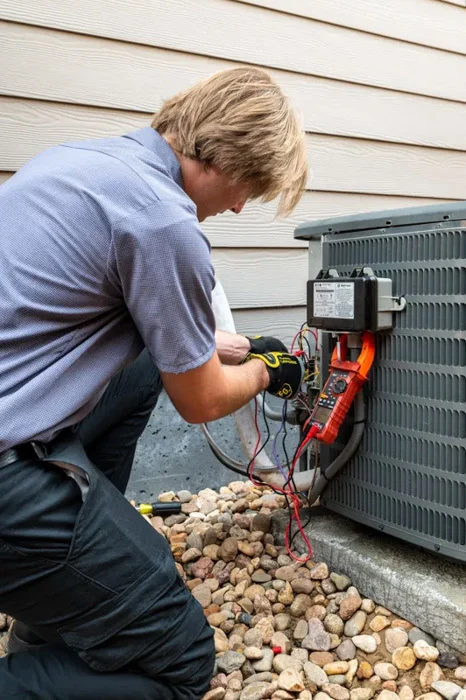
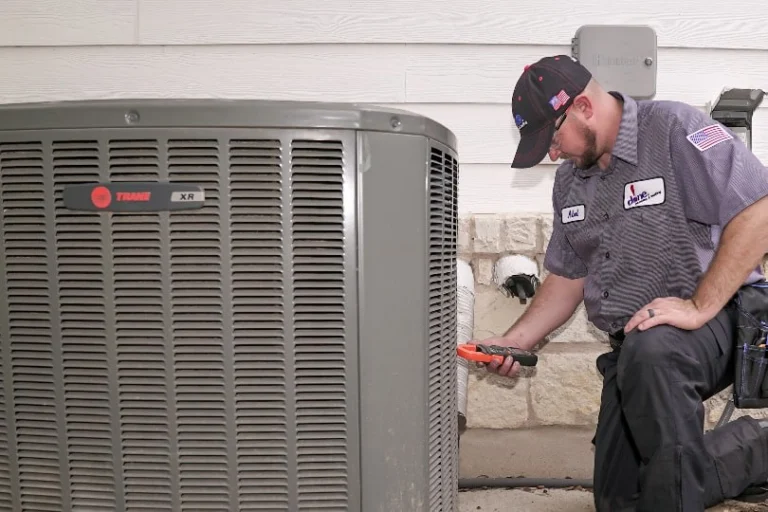
Capacitors and contactors — these are electrical components in the outdoor unit that start and run the compressor and fan motors. They’re among the most common failure points and among the lower-cost repairs when addressed before they cause motor damage. A failed run capacitor that goes unaddressed, however, can burn out the compressor it was supposed to support — turning a modest repair into a major one.
Refrigerant — AC systems don’t consume refrigerant; if yours is low, it has a leak. Adding refrigerant without finding and fixing the leak is a temporary measure at best. The cost of a refrigerant service call includes diagnostic time, leak detection, the repair, and refrigerant recharge. Refrigerant type matters significantly: older systems using R-22 (phased out under EPA regulations) face much higher refrigerant costs because supply is limited to reclaimed stock. Systems using R-410A are more economical to recharge, though this refrigerant is also being transitioned to R-454B in new equipment over the coming years.
Coil cleaning and airflow issues — a dirty condenser coil that can’t release heat efficiently, or an evaporator coil that has frozen over due to restricted airflow, can cause the system to underperform or shut down. Coil cleaning is maintenance-level work that costs less than a component repair, but deferred maintenance can lead to compressor failure.
Blower motor and fan motor failures — the indoor air handler fan and the outdoor condenser fan both fail from time to time. Cost depends on the motor type, horsepower, and whether it’s a standard or variable-speed unit.
Compressor replacement — the compressor is the most expensive single component in a central AC system. When a compressor fails on a system that’s 10 or more years old, the repair-versus-replace calculation almost always tips toward replacement of the entire outdoor unit or the full system.
The Repair vs. Replace Decision
A commonly cited guideline: if the repair cost exceeds roughly half the cost of a new comparable system, and your existing unit is more than 10 years old, replacement usually makes more financial sense over a 5-year horizon. A 15-year-old system that needs a $1,200 repair today will likely need another repair next summer, while a new system comes with a warranty, better efficiency, and modern refrigerant compatibility.
- System age over 10–12 years — factor replacement costs into the decision
- R-22 refrigerant system — expensive to maintain and replacement refrigerant supply is declining
- Second major repair in two years — pattern of failures suggests end of useful life
- Compressor failure — often the economic tipping point toward system replacement
Done!’s technicians walk you through this decision honestly — presenting both options, the cost of each, and their assessment of the existing system’s remaining useful life. The goal is to help you make the right financial decision for your household, not to push the highest-ticket outcome.
Colorado Factors That Affect AC Repair Frequency
Denver’s high UV intensity and intense summer hail storms are hard on outdoor condenser units. UV degrades electrical insulation and plastic components over time; hail can damage condenser fins and refrigerant line insulation. Annual maintenance that includes inspecting the outdoor unit, straightening bent fins, and checking refrigerant pressures — adjusted for Denver’s altitude, where refrigerant pressures read differently than at sea level — catches small problems before they become expensive failures.
Emergency AC Repair
When an AC fails during a Denver heat wave, waiting is not always an option — extreme heat is a health risk for young children, elderly family members, and pets. Done! offers emergency AC repair for situations that can’t wait for a standard appointment window. Emergency calls do carry after-hours pricing, but the ability to restore cooling the same day is the priority.
Explore your options on our AC repair page and emergency AC repair page. If replacement makes more sense, visit air conditioner replacement. And ask about financing if a larger repair or replacement is in the picture. Contact Done! to schedule service today.