A water heater should be serviced at least once a year. For homeowners in the Denver metro and Front Range — where hard water is the norm — annual service is a minimum, and twice-yearly maintenance is reasonable if your water is particularly high in mineral content. That regular service appointment covers the tasks that most directly affect the heater’s efficiency, safety, and lifespan: flushing sediment, checking the anode rod, testing the pressure relief valve, and inspecting the burner or heating elements.
Why Annual Service Matters More in Colorado Than Most States
Water hardness in the Denver area regularly measures 15 to 25 grains per gallon — among the harder municipal water supplies in the country. That dissolved calcium and magnesium settles out of the water as scale when it’s heated, and it accumulates on tank walls, heating elements, and the floor of the tank directly above the burner.
Scale acts as an insulator. In a gas heater, it sits between the burner flame and the water, forcing the burner to run longer to heat the same amount of water. You pay more in gas and get the same result. In an electric heater, scale coats the lower element and can cause it to overheat and burn out prematurely. Annual sediment flushing removes that buildup before it causes damage or inefficiency.
What Happens During a Water Heater Service Visit
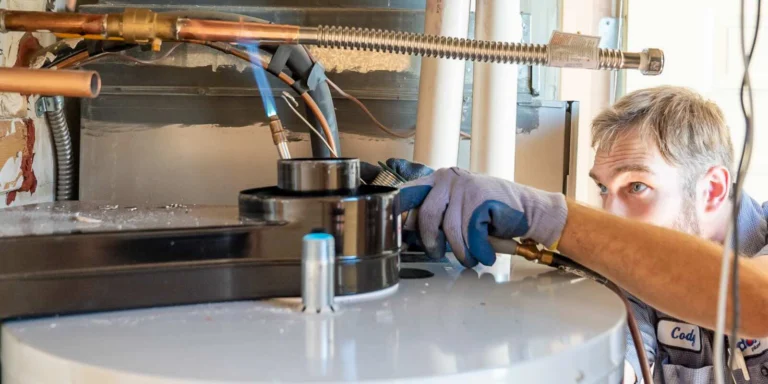
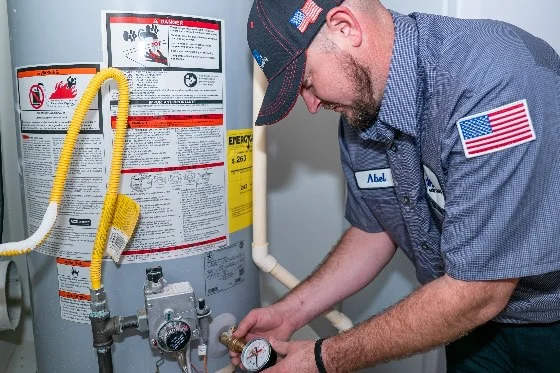
A thorough annual service from Done! covers:
- Sediment flush: Connecting a hose to the drain valve and flushing the tank until the water runs clear. The amount of sediment flushed out is often a reliable indicator of how the heater has been maintained and how much hard water it handles.
- Anode rod inspection and replacement if needed: The anode rod — typically magnesium or aluminum — sacrificially corrodes to protect the steel tank. In Denver’s hard water, rods deplete faster than the manufacturer’s schedule assumes. A depleted rod means the tank itself starts corroding from the inside.
- TPR valve test: The temperature-pressure relief valve is the primary safety device on any water heater. It should open freely and reseat without leaking. A valve that won’t open or leaks continuously after testing needs immediate replacement.
- Burner inspection (gas) or element check (electric): Confirming the heat source is operating correctly and efficiently.
- Thermostat and temperature verification: 120°F is the standard safe and effective setting for most households.
- Flue inspection for gas units: Verifying that combustion gases are venting properly — particularly important at Denver’s altitude where combustion dynamics are slightly different than at sea level.
Service Intervals for Different Heater Types
Conventional tank heaters (gas or electric) benefit most from annual flushing and anode rod inspection. The older the heater, the more critical that annual visit becomes — a 10-year-old heater with depleted corrosion protection and years of scale buildup is a water-damage risk waiting to happen.
Tankless water heaters need annual service too, though the maintenance tasks differ. Instead of flushing a tank, a technician descales the heat exchanger — circulating a mild descaling solution through the unit to dissolve mineral buildup inside the narrow passages where water contacts the heat exchanger fins. In Denver’s hard water, skipping this step can shorten the heat exchanger’s life significantly. Most manufacturers require annual descaling to maintain the warranty.
Signs You’re Overdue for Service
If you’ve missed a service cycle or two, watch for these indicators that the heater needs attention: a rumbling or popping sound during heating (sediment boiling on the tank floor), rusty or discolored hot water, water that doesn’t stay as hot as it used to, or visible moisture around the base of the heater. These aren’t emergencies yet, but they’re signals to schedule service now rather than waiting for a failure.
The most cost-effective way to stay on schedule is a maintenance plan. Done!’s Care Club covers annual water heater service along with other home system checkups, priority scheduling, and repair discounts. Schedule your water heater maintenance visit today and keep your system running efficiently through Colorado’s cold winters and beyond.