Air conditioner maintenance should be scheduled once a year, ideally in spring before you need the system. That single annual visit covers everything that keeps your AC running safely, efficiently, and reliably through a Colorado summer. If your home has both a furnace and an AC, pairing the AC tune-up with a separate fall heating tune-up gives your HVAC system the year-round attention it needs to perform at its best.
What Happens During an AC Tune-Up
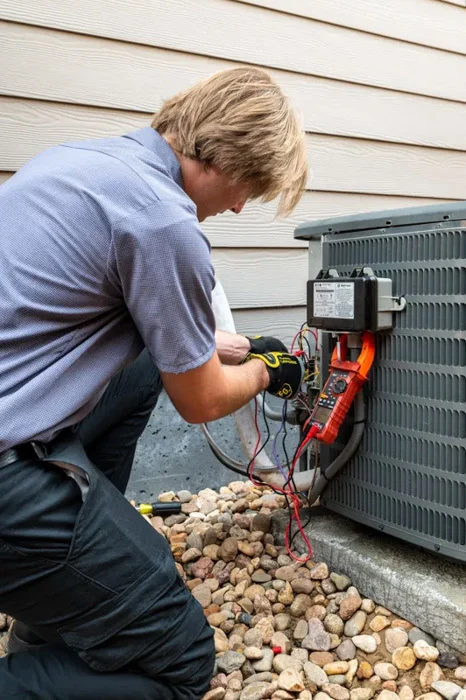
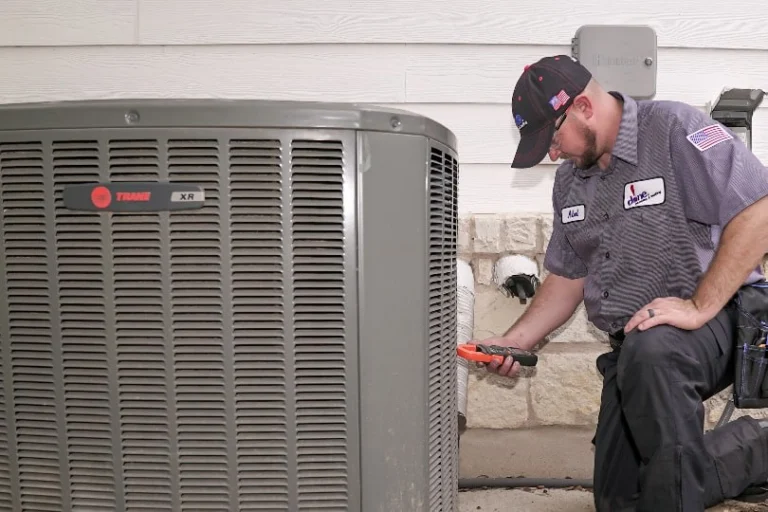
A professional AC maintenance visit is a systematic check of every component that affects performance, efficiency, and safety. A technician will clean the condenser coil (outdoor unit), inspect and straighten condenser fins, check refrigerant charge and look for any signs of a leak, measure electrical amp draws on the compressor and fan motors, test capacitors, inspect the contactor, verify thermostat calibration, check the evaporator coil and drain pan, clear the condensate drain line, and measure supply and return air temperatures to confirm the system is producing the right temperature split.
Each of those checks can catch a problem before it becomes a breakdown. A failing capacitor, for example, costs relatively little to replace during a tune-up. If it fails during a heat wave in July, you are looking at an emergency call, potential compressor damage from repeated hard starts, and possibly a multi-day wait for parts during peak demand.
Why Colorado’s Climate Makes Annual Maintenance Especially Important
Denver sits at about 5,280 feet above sea level, and that altitude has real implications for air conditioning equipment. Lower air density means refrigerant pressures behave differently than at sea level, and technicians calibrating charge levels need to account for that. Equipment that is slightly undercharged at altitude runs the compressor harder than necessary, accelerating wear. A technician who knows Front Range conditions will verify charge against altitude-adjusted specifications — not just the generic chart on the unit’s nameplate.
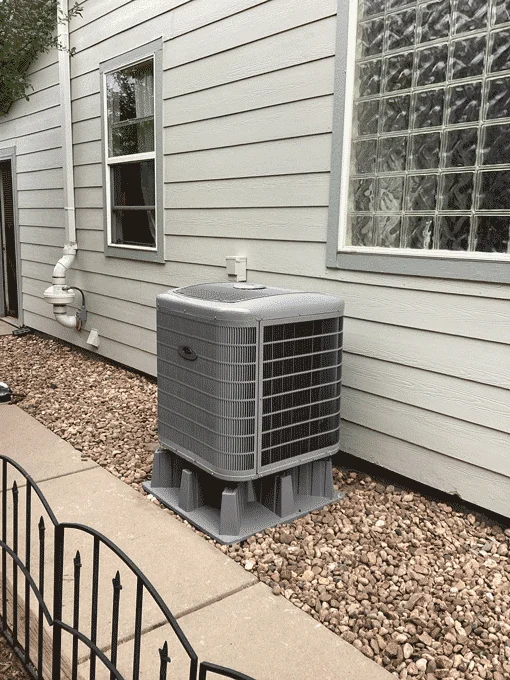
Colorado’s intense hail seasons also take a toll on condenser fins and coil surfaces. After a significant hail event, it is worth having a technician inspect the outdoor unit even if a tune-up was already done that year. Bent fins restrict airflow through the coil, which forces the compressor to work harder and reduces efficiency and lifespan. This is something homeowners rarely think to check.
How Maintenance Affects Efficiency and Your Energy Bill
A dirty or poorly maintained air conditioner runs longer cycles to achieve the same cooling, burning more electricity in the process. A clogged condenser coil alone can reduce system efficiency significantly — estimates vary, but a heavily fouled coil can increase operating costs noticeably over a cooling season. Annual cleaning restores the coil’s heat-transfer efficiency so the system reaches setpoint faster and shuts off sooner.
This also extends to refrigerant charge. Even a small undercharge shifts the system out of its designed operating range, reducing efficiency and stressing the compressor. Technicians check charge during every maintenance visit and correct it if needed.
Does Maintenance Frequency Change for Newer Equipment?
- New systems (under 5 years old): Annual maintenance is still recommended and is often required to keep the manufacturer’s warranty valid. Skipping it can void coverage.
- Heat pumps: Heat pumps run year-round in both heating and cooling modes, so they accumulate more operating hours than a traditional AC. Twice-yearly service — spring and fall — is appropriate for most heat pump systems.
- Older systems (10+ years): Annual maintenance becomes even more critical. Aging components are more likely to fail, and a technician can help you assess whether repair or replacement makes more financial sense before you are facing a decision in the middle of summer.
The Simplest Way to Stay on Schedule
The biggest maintenance mistake homeowners make is not skipping it intentionally — it is just forgetting to schedule it year after year. Signing up for a maintenance membership solves this: your annual visits are built in, you get priority scheduling during peak season, and members typically receive discounts on repairs if something does need to be fixed.
If your AC hasn’t been serviced this year, spring is the best time to schedule — before temperatures climb and the calendar fills up. Learn more about our AC maintenance service, or explore our Care Club membership to make annual tune-ups automatic. If you have a heat pump, visit our heat pump service page for maintenance specific to that equipment type.