Yes — annual AC service is one of the most cost-effective investments a Denver homeowner can make in their home comfort system. A central air conditioner has moving parts, electrical components, a refrigerant circuit, and airflow-dependent heat-transfer surfaces that all degrade gradually over time. Annual maintenance catches that gradual degradation before it becomes a sudden breakdown — often on the hottest day of the year when every HVAC company in the city is fully booked.
What Happens When You Skip a Year (or Several)
An AC system that hasn’t been serviced doesn’t fail all at once. It degrades in ways that are invisible until something stops working. Refrigerant migrates slowly through tiny leaks, so the system cools less effectively and the compressor runs hotter and longer to compensate. Evaporator coils accumulate a thin film of dust and organic material that insulates the coil surface and reduces heat transfer. Electrical components — capacitors especially — weaken with every start cycle and eventually fail to hold a charge, which is why so many “my AC stopped working” calls involve a capacitor that should have been flagged during a maintenance visit months earlier.
Each of these problems is inexpensive to address proactively. Each of them becomes significantly more expensive when it causes a secondary failure. Low refrigerant that overworks a compressor can eventually destroy the compressor — the single most expensive component in a central AC system, sometimes costing more to replace than an entirely new system.
Denver’s Environment Makes Annual Service More Important, Not Less
Some homeowners assume that because Denver summers are shorter than those in hotter states, their AC doesn’t need as much attention. The opposite is often true. Denver’s dry, dusty air — particularly during spring and early summer when wind events are common — deposits particulates on condenser fins and evaporator coils faster than in humid climates where moisture helps trap and clear debris. The intense high-altitude UV also degrades rubber components, refrigerant line insulation, and wiring insulation faster than at lower elevations. Colorado’s wide day-night temperature swings create repeated thermal expansion and contraction cycles in refrigerant lines and fittings, which can gradually loosen connections over time.
What Annual Maintenance Actually Prevents
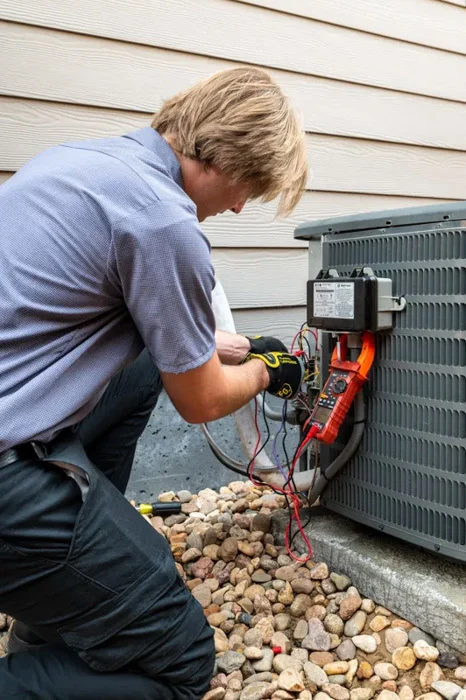
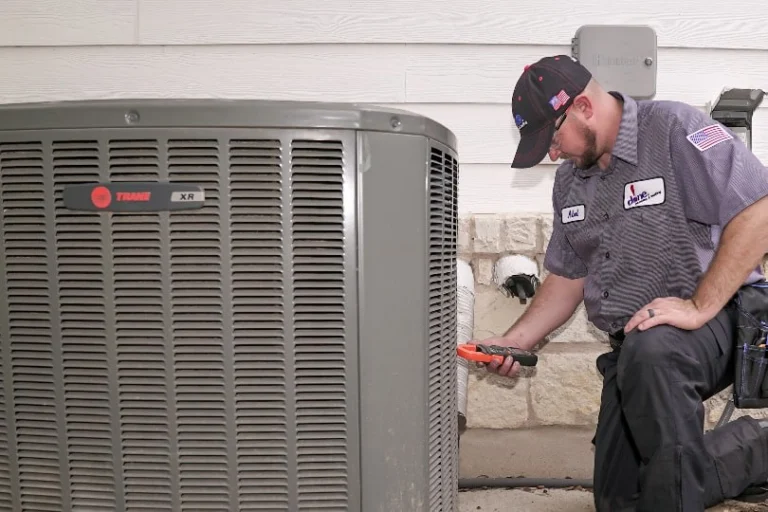
Here’s a practical list of what a professional AC tune-up catches and prevents:
- Capacitor failure — the number-one cause of no-cool calls in summer
- Refrigerant undercharge — reduces efficiency and stresses the compressor
- Dirty evaporator coil — reduces cooling capacity and can cause coil freeze-up
- Clogged condensate drain — can overflow and cause water damage to ceilings or walls
- Loose electrical connections — a fire and equipment damage risk
- Worn contactor points — causes hard starts and compressor strain
- Restricted airflow from dirty filters or blocked return registers
Manufacturer Warranties Often Require It
Many equipment manufacturers require documented annual maintenance as a condition of their extended warranty. If your system fails and you can’t demonstrate that it was serviced regularly, the manufacturer may deny the warranty claim. Done provides service records that document every maintenance visit, protecting your warranty coverage as well as your system.
Efficiency Losses Are Cumulative and Often Invisible
One reason homeowners skip annual service is that the system still runs — it just runs less efficiently. That’s the problem. A system that’s lost 10–15% of its efficiency from dirty coils and a marginal refrigerant charge will run longer cycles, consume significantly more electricity, and put greater mechanical stress on the compressor without triggering any alarm. You’ll see it on your Xcel Energy bill and in the wear on your equipment, but not necessarily in the form of a no-cool call — at least not right away. Annual maintenance resets that efficiency baseline before the losses compound.
The Best Time to Schedule Is Before You Need It
Spring — March through May — is the ideal window to service your AC before cooling season begins in earnest. Done’s Care Club members get priority scheduling, which matters when appointment slots fill up quickly in late spring. Learn what’s included in a Done maintenance visit and schedule your annual service before the first hot week catches you unprepared.