Yes — hiring a licensed plumber for water heater maintenance is the right call for most homeowners. A professional can safely inspect the anode rod, flush sediment, test the pressure-relief valve, and check gas connections or electrical components in ways that DIY maintenance simply cannot match. Skipping professional service shortens equipment life and, in some cases, creates genuine safety risks.
What a Professional Maintenance Visit Actually Covers
A plumber doing a proper water heater inspection goes well beyond draining a little water from the drain valve. The visit typically includes a full assessment of the anode rod — the sacrificial metal rod inside the tank that prevents corrosion. In Denver and along the Front Range, hard water accelerates anode rod depletion, so checking it every year or two is especially important. Most homeowners have no idea the rod even exists until their tank starts rusting from the inside out.
The technician will also flush sediment from the bottom of the tank. At 5,280 feet, Colorado’s water tends to carry dissolved minerals that settle and harden into a layer of scale at the tank’s base. That scale forces the burner to work harder, raises energy bills, and eventually causes the tank to overheat and fail prematurely. A thorough flush removes that buildup before it causes damage.
Safety Checks You Should Not Skip
The temperature-and-pressure relief valve — the T&P valve — is a critical safety device that releases pressure if the tank overheats. It should be tested annually. A stuck or corroded T&P valve is a serious hazard, and testing it incorrectly can leave it leaking. A plumber knows how to test it properly and replace it if it fails to reseat.
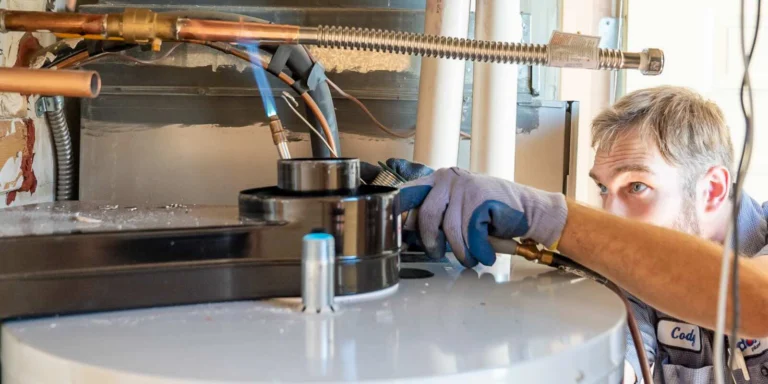
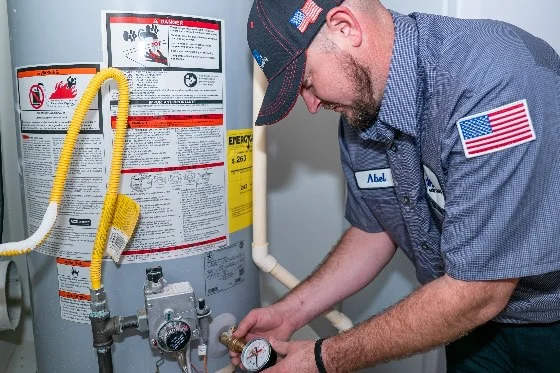
On gas water heaters, the technician checks the flue, burner, and gas connections for signs of incomplete combustion or leaks. Carbon monoxide is odorless and colorless — a cracked or obstructed flue is not something to troubleshoot yourself. On electric models, the inspection covers heating elements and thermostat settings. Either way, these are checks that require training and the right tools.
How Often Should Maintenance Happen?
Most manufacturers and plumbers recommend annual maintenance for tank water heaters. Tankless units generally need service every one to two years, though Colorado’s hard water can shorten that interval — mineral scale builds up inside the heat exchanger and must be flushed with a descaling solution. Skipping even one or two service cycles can void manufacturer warranties and lead to costly repairs.
If your water heater is more than eight to ten years old and has never been serviced, a professional visit is especially valuable. The technician can give you an honest assessment of how much life the unit has left — and whether investing in maintenance still makes financial sense versus planning for replacement.
What Happens When Maintenance Gets Skipped
- Sediment buildup reduces efficiency and can cause the tank bottom to overheat and crack
- A depleted anode rod leads to internal corrosion and rusty hot water
- A faulty T&P valve creates a pressure hazard inside the tank
- Gas connection issues go undetected until there is a leak or combustion problem
- Voided warranty coverage leaves you paying full price for repairs that might have been covered
Is There Anything a Homeowner Can Do Between Visits?
A few things. You can check the area around the water heater periodically for puddles, drips, or corrosion on fittings — early signs of a slow leak. You can also verify the thermostat is set to around 120°F, which balances comfort, energy efficiency, and Legionella prevention. And you should know where your water shutoff is in case of an emergency.
Beyond those basics, leave the hands-on work to a licensed plumber. The cost of annual professional maintenance is a fraction of what an emergency water heater replacement costs — especially when you factor in water damage from a failed tank. Done’s plumbing team handles water heater maintenance throughout the Denver metro, and the Care Club membership makes it easy to stay on a regular service schedule. If it’s been more than a year since your last service, reach out and get it on the calendar.