If your water heater is running but the water never gets hot — or takes far longer than it used to — the most common culprits are a failed heating element (electric water heaters), a faulty thermocouple or gas valve (gas water heaters), sediment buildup reducing efficiency, or a unit that has simply reached the end of its service life. The fix depends on which component is failing and how old the unit is.
Electric Water Heater: Failed Heating Element or Thermostat
Electric water heaters use one or two heating elements — upper and lower — controlled by separate thermostats. If the upper element fails, you’ll get little to no hot water. If the lower element fails, you’ll get a small amount of hot water that runs out quickly. A tripped high-limit switch (a safety device that cuts power if the water overheats) can also mimic a failed element — there’s usually a reset button behind the panel cover. If resetting it doesn’t solve the problem, a licensed plumber can test the elements and thermostats with a multimeter and replace the faulty component.
Gas Water Heater: Pilot Light, Thermocouple, or Gas Valve
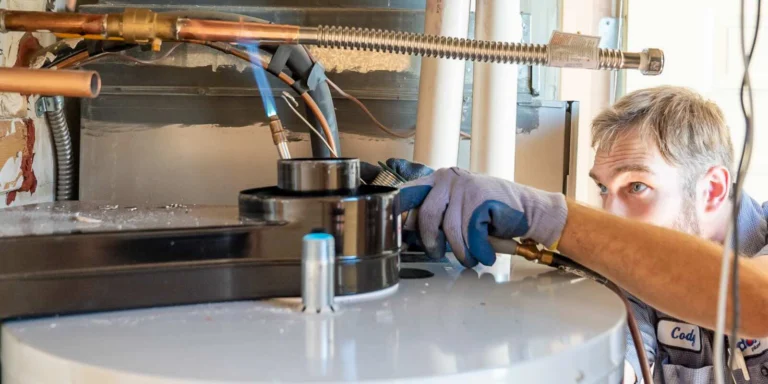
Gas water heaters rely on a pilot light and a thermocouple (a safety sensor that keeps the gas valve open as long as the pilot is lit). If the pilot goes out and won’t stay lit after relighting, the thermocouple is likely worn out — a relatively inexpensive repair. A gas valve that fails to open, a blocked burner orifice, or a faulty thermostat can also prevent the burner from firing. At Denver’s altitude of approximately 5,280 feet, gas appliances are often de-rated at the factory, and combustion issues can be more pronounced — another reason to have a professional diagnose gas-related problems rather than guessing.
Sediment Buildup From Hard Water
Denver and the Front Range have notoriously hard water. Dissolved calcium and magnesium settle to the bottom of a tank water heater over time, forming a layer of sediment that insulates the water from the burner or element. Symptoms include:
- Water that takes much longer to heat than it used to
- Popping, rumbling, or banging sounds from the tank (steam bubbling through sediment)
- Higher energy bills as the unit works harder
- Discolored or gritty hot water
Annual tank flushing removes sediment before it hardens and becomes impossible to remove. If flushing has been neglected for years, the sediment layer may be thick enough that the unit is beyond salvaging efficiently. Water heater maintenance is one of the simplest ways to extend tank life and keep recovery times short.
Is the Unit Simply Too Old?
Traditional tank water heaters typically last 8–12 years. If your unit is approaching or past that range and you’re experiencing lukewarm water, repair costs need to be weighed against the cost of replacement. A water heater that’s corroding, showing rust-colored water, or leaking around the base is at the end of its life — repairs are rarely worth it at that stage.
This is also a good moment to consider upgrading to a tankless water heater. Tankless units heat water on demand rather than storing it, so you never run out — and they typically last 15–20 years. They’re particularly well-suited to Denver’s dry climate and high-efficiency home upgrades.
Other Possibilities
A few less common but worth-checking scenarios: the thermostat may simply be set too low (check the dial on the tank — 120°F is the recommended setting for most households); a dip tube may have broken (the dip tube delivers cold water to the bottom of the tank; if it breaks, cold water mixes at the top and dilutes the hot supply); or if you’ve recently added bathrooms or appliances, your unit may be undersized for current demand.
Done’s plumbing team diagnoses and repairs water heaters of all makes and models. Whether you need a water heater repair or a full replacement, we’ll give you an honest assessment so you can make the right call. Schedule a visit today.